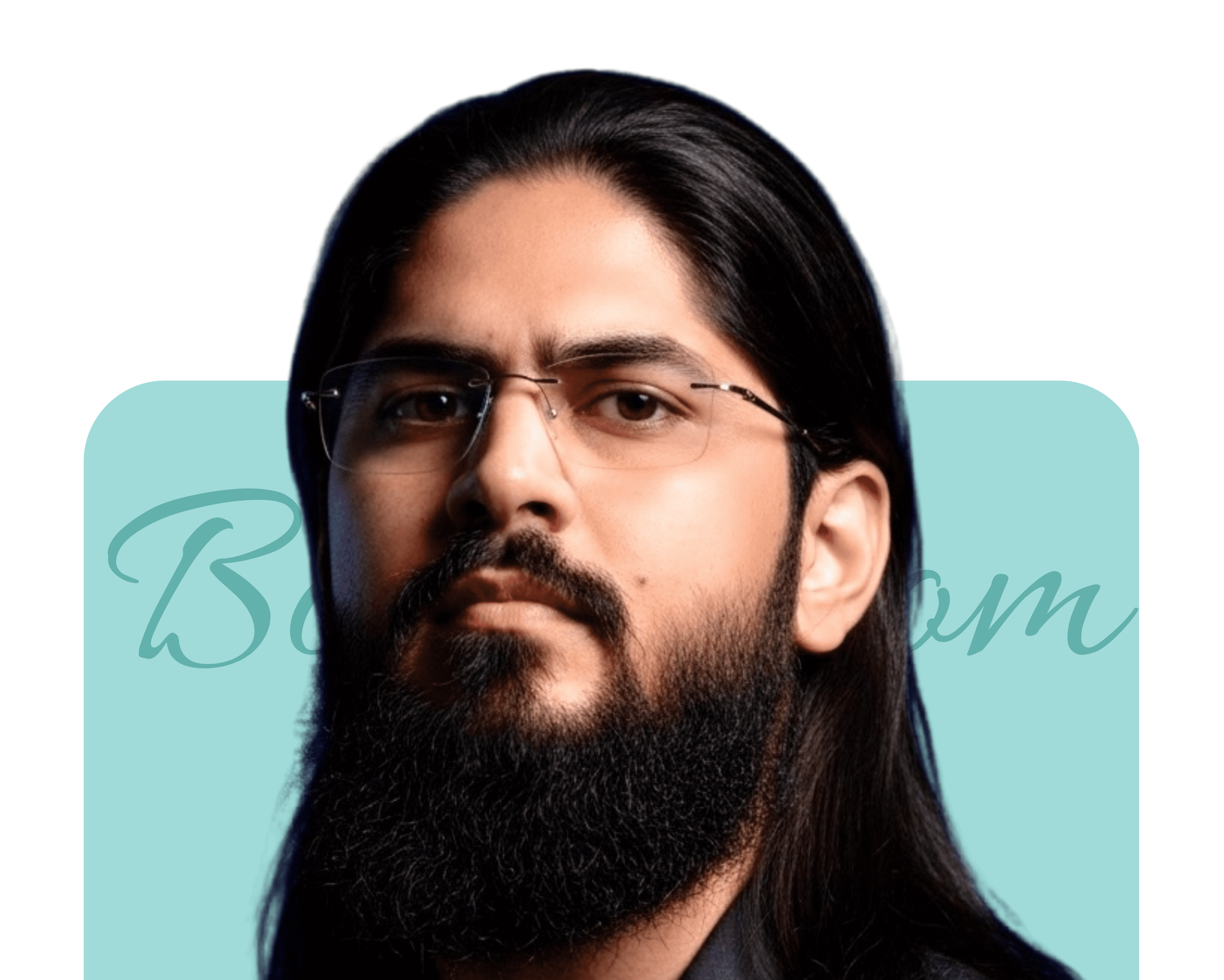

In this exclusive Boardroom interview, DFA Hafsa Ahad, Founder of Qanoon-e-Nisa, shares the vision behind building a digital legal ecosystem designed to empower women with accessible legal awareness, trusted support, and professional opportunities for female lawyers. She discusses the role of technology in transforming legal access, overcoming trust barriers in digital legal services, startup evolution through FCCU incubation, and her mission to make justice more inclusive and approachable for women across Pakistan.
Boardroom: What is the core inspiration behind Qanoon-e-Nisa, and what critical societal gaps are you aiming to address through this platform?
Hafsa Ahad: The idea actually hit close to home. My aunt is a practicing lawyer, and through her experiences, we witnessed a stark reality: countless brilliant female law graduates leave the practice shortly after entering the field. They succumb to intense social stigmas, systemic biases, and a culture that makes conventional courtroom practice incredibly hostile for women. We realized that to fix the system, we had to target the root cause. We needed to design a dedicated, safe digital ecosystem tailored for female legal professionals.
At the same time, we looked at the client side, specifically regarding family law. There is an immense amount of hesitation among women when it comes to seeking justice. The legal framework isn't inherently too complex to understand, but the avenues to access it are heavily gatekept. Traditional legal awareness is fragmented, and finding reliable support is intimidating. Hafsa Ahad bridges this dual gap: we provide legal awareness and reliable support for women seeking justice, while simultaneously offering flexible, dignified remote career opportunities for female lawyers.
Boardroom: How do you see technology and digital tools playing a role in simplifying legal awareness and making justice more inclusive?
Hafsa Ahad: Technology is the ultimate democratizer. Today, everything from education to basic groceries has been digitized; people are working from home globally. Yet, when we began the research for our Final Institutional Project (FIP), we noticed that the legal sector remained stubbornly archaic. Our platform digitizes legal resources into accessible formats, allowing users to safely acquire preliminary knowledge before they ever speak to a lawyer. Furthermore, it fundamentally changes the economics for legal practitioners. Traditionally, independent lawyers or small firms might only manage a handful of clients a month due to physical and geographical constraints. By moving to a digitized marketplace, a single firm or practitioner can scale their reach to connect with hundreds of potential clients across the country.
Boardroom: Pakistan's socio-legal framework is often monopolized, and building consumer trust in digital legal services can be incredibly difficult. What operational challenges have you faced, and how does your business model sustain itself?
Hafsa Ahad: Trust is our biggest currency and our steepest challenge. In Pakistan, the general public is wary of the legal process, and regulations strictly govern how lawyers can market their services. To solve this, we introduced our proprietary Women Support Officer (WSO) model. The WSO acts as an empathetic, trained intermediary. When a distressed client reaches out, their first contact is not with an intimidating legal matrix; it is with a Support Officer who offers initial counseling, maps out the issue, and builds trust. Once the client feels secure, they are seamlessly guided toward the appropriate verified lawyer on our marketplace. From a business model perspective, we are purely a social entrepreneurship venture, but we maintain commercial viability. We are balancing social impact with realistic revenue streams, ensuring it is not just a charity project but a sustainable business that offers a high-yielding marketplace for clients and law firms alike.
Boardroom: Startups require constant evolution. How did your time at FCCU and mentorship shape the current structure of your platform?
Hafsa Ahad: Entering the startup ecosystem teaches you one brutal lesson very quickly: your initial idea will never look exactly like your final product. We entered incubation with a specific vision, but through rigorous mentorship, we learned the importance of pivoting. Initially, we viewed our project through a narrow lens. Our mentors challenged us to look at the macro picture, pushing us to transform from a simple directory into a dynamic, multi-layered legal marketplace. We sat through intensive one-on-one coaching sessions to constantly test our success metrics and validate our business assumptions.
Being incubated at an institution like FCCU provided us with vital institutional credibility. For a startup dealing with sensitive legal issues, that structural validation is everything. It shifts the perception of our platform from a casual digital tool to a trusted, legitimate avenue for legal recourse.
Boardroom: In a startup, execution and presence are everything. What kind of strategic growth, collaborations, and partnerships are you currently targeting?
Hafsa Ahad: Content, digital presence, and strategic partnerships are the core pillars of our growth engine right now. We are actively looking to collaborate with established non-governmental organizations (NGOs), civil society groups, and corporate legal entities that align with our mission.
By integrating our platform with organizations that already possess deep-rooted community trust, we can scale our outreach far more effectively. We want to collaborate with corporate law firms to create a robust pipeline of high-traction clients, proving that social impact and commercial profitability can seamlessly coexist.
Boardroom: Looking ahead, what is your ultimate long-term vision for Qanoon-e-Nisa, and what systemic shift do you hope to inspire across Pakistan?
Hafsa Ahad: Our ultimate goal is for Qanoon-e-Nisa to become synonymous with justice for every woman in Pakistan. We want to build a society where a woman facing a legal crisis doesn't instantly feel isolated, helpless, or terrified of societal backlash. She shouldn't have to look at the legal system and think it belongs only to the powerful or the privileged. We want to empower every single woman in this country with the confidence, knowledge, and tools to know that justice is within her reach and that she has an entire network of professional women standing right behind her to help her claim it.