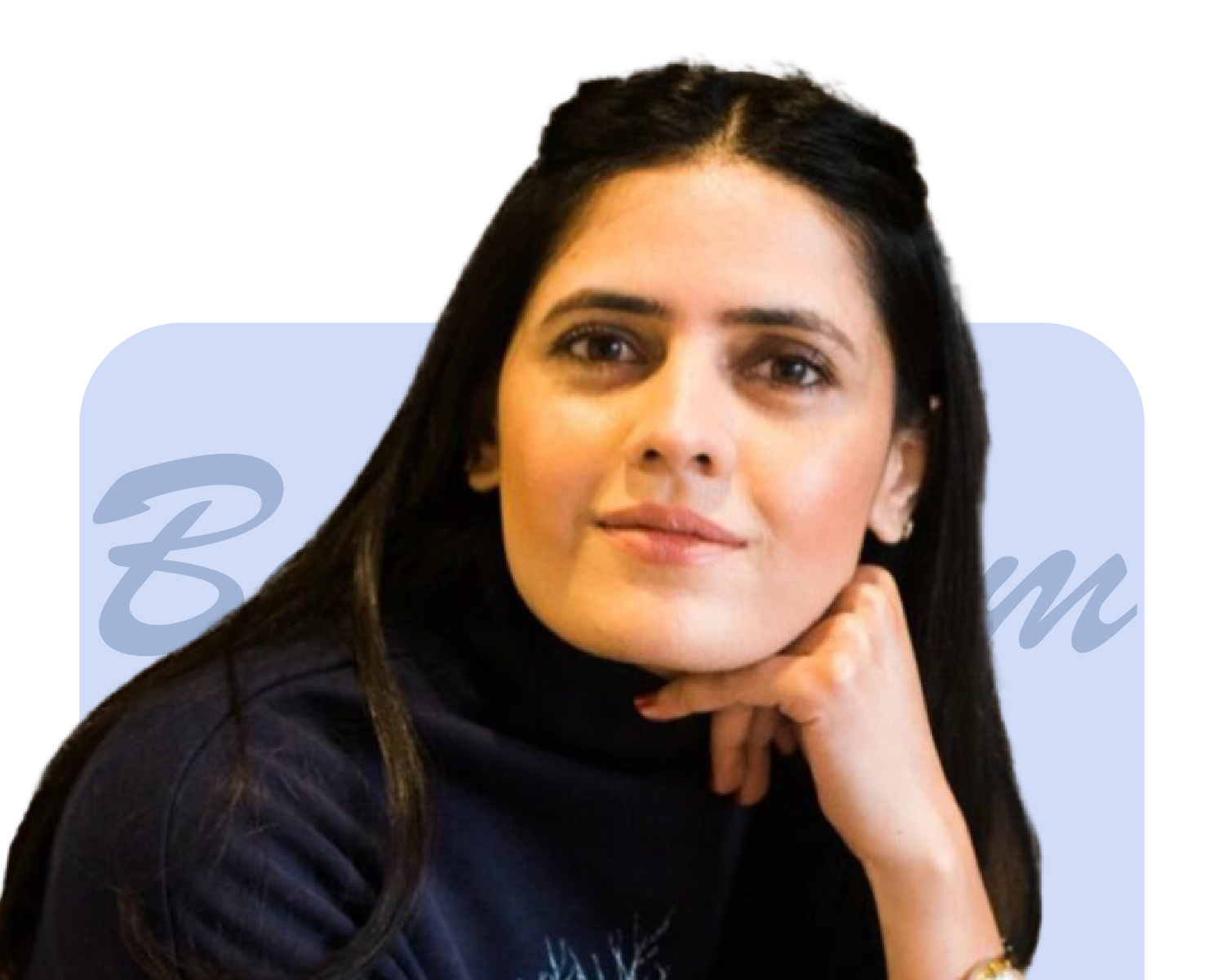
Dr. Iram is a counselor, coach, and academic whose 19-year professional journey reflects resilience, transformation, and purpose. Beginning as an English Language and Law teacher, she rose to Vice Principal before discovering her true calling in psychology and human behavior. A PhD in Positive Psychology allowed her to align passion with profession, guiding individuals and organizations toward growth and well-being. As founder of her own practice, she has navigated challenges including launching during the pandemic through adaptability and innovation. Today, she champions servant leadership, psychological safety, and authentic self-discovery, inspiring others to lead with empathy, resilience, and integrity.
Boardroom: Kindly share your professional journey and what inspired you to pursue this profession?
Dr. Iram: My professional journey spans over 19 years and has been shaped through continuous learning, exploration, and trial and error. I began my career in 2006 as an English Language teacher, which gave me my first exposure to the world of education and the joy of teaching. Soon after, I pursued a degree in Law and went on to serve as a Law teacher for 13 years, eventually rising to the position of Vice Principal. While teaching law, I gradually realized that my true passion lay not just in the subject matter, but in understanding people—their motivations, behaviors, and inner worlds. This realization marked a turning point in my life.
Boardroom: How would you describe your leadership style, and how has it evolved over the years?
Dr. Iram: It was then that I discovered my muse in Psychology and human behavior, a discovery that transformed both my personal and professional path. Driven by an insatiable curiosity for truth, a deep longing for knowledge, and a quest for intellectual depth, I pursued a PhD in Positive Psychology. This academic and personal journey has not only enriched my understanding of human potential but has also allowed me to align my career with my authentic purpose: helping individuals and organizations thrive through psychological insight and growth.
Today, I can say with certainty that my leadership style is rooted in coaching and servant leadership. However, reaching this point has been a long journey shaped by both challenges and hard-learned lessons. In the earlier stages of my career, I found myself working under senior leaders who embodied an authoritarian approach—marked by control, insecurity, and a tendency to hoard power. Their style left little room for trust, collaboration, or personal growth.
Inevitably, being immersed in such environments influenced my own leadership in those years. I, too, adopted a “know-it-all” style of leading, applying it not only in my professional life but also in personal relationships. This approach, however, quickly revealed its limitations. It created disconnection, resistance, and eventually led to failure. Those difficult experiences forced me to step back, reflect, and rediscover what it truly means to lead.
Through this process of unlearning and relearning, I embraced a more transformational way of leadership—one that prioritizes empowerment over control, listening over dictating, and service over authority. Today, my focus is on guiding other senior leaders to make a similar shift: moving away from rigid, power-driven models and stepping into the role of coach-like or servant-like leaders who inspire growth, trust, and long-term impact.
Boardroom: What has been the most difficult decision you have made in your professional life, and what did you learn from it?
Dr. Iram: The most difficult decision of my professional journey was leaving the security of a permanent job to start my own company. It was not a choice I made lightly—it took me nearly two years of living in a constant state of inner conflict, oscillating between the safety of stability and the calling of my deeper aspirations. I found myself caught in that classic dilemma of “to be or not to be,” questioning whether I should continue on a path that paid my bills but did not ignite my spirit, or take the leap into something that aligned with my passion and purpose.
Eventually, I chose to listen to my heart and follow my conviction: to devote myself to work I truly love, even if it meant stepping away from the comfort of predictability. Looking back, I can confidently say that this has been the best decision of my life. Not once have I regretted it. On the contrary, with every passing year, I feel more reassured that my intuition and judgment were sound. In fact, I often reflect that I should have made this transition even earlier. The journey has reaffirmed for me that when we honor our deepest values and passions, success follows—not just in terms of achievement, but in the sense of fulfillment and meaning that sustains us.
Boardroom: Every leader faces setbacks. Can you share an example of how you navigated a major challenge and built resilience from it?
Dr. Iram: When I took the leap of faith and started my company, the timing coincided with the sudden outbreak of COVID-19—a challenge I could never have anticipated. What should have been an exciting new beginning quickly turned into a period of deep uncertainty and struggle. The pandemic brought a major setback, particularly in financial terms, making it incredibly difficult to sustain the organizational structure I had envisioned. With a heavy heart, I had to make the difficult decision of letting go of some of my very few but valuable resources and significantly shrinking my liabilities in order to survive.
Those times tested my endurance, patience, and belief in my vision. Yet, it was resilience and adaptability that carried me through. Instead of giving up, I chose to explore new possibilities, pivoting towards opportunities that the changing world was beginning to embrace—such as online webinars and virtual workshop engagements. What initially seemed like a compromise soon unfolded into an unexpected blessing. It opened new avenues for connecting with people, sharing knowledge, and generating revenue in ways I hadn’t considered before.
Over time, these efforts not only helped me stabilize but also strengthened my capacity to navigate uncertainty. Slowly and steadily, I redeemed my financial position, and in the process, discovered the power of innovation and flexibility in entrepreneurship. That difficult phase, though painful, became a defining chapter in my journey—teaching me that resilience, creativity, and courage to adapt are the cornerstones of long-term success.
Boardroom: In your view, what role do governance, ethics, and accountability play in building sustainable organizations?
Dr. Iram: Governance, ethics, and accountability play a vital role in building and sustaining an organizational structure that is both resilient and future-oriented. Strong governance provides the framework within which decisions are made transparently and responsibly, ensuring that processes are aligned with the organization’s vision, mission, and long-term goals. Ethics serve as the moral compass, guiding behaviors, policies, and practices in ways that build trust not only within the organization but also with external stakeholders such as clients, partners, and the wider community.
Accountability, on the other hand, creates a culture of ownership where individuals at every level feel responsible for their actions and outcomes. It ensures that commitments are honored, performance is measured fairly, and corrective actions are taken when necessary. Together, these three pillars foster credibility, strengthen stakeholder confidence, and reduce risks of misconduct or inefficiency.
Most importantly, governance, ethics, and accountability collectively nurture a culture of transparency and integrity. They enable organizations to withstand crises, adapt to changing environments, and grow in a manner that is not only profitable but also socially responsible and sustainable in the long run.
Boardroom: How do you balance tradition with innovation, especially in an environment where disruption is constant?
Dr. Iram: In my line of work, tradition and innovation move side by side, complementing rather than replacing one another. On one hand, the essence of human connection remains timeless—it is through empathy, presence, and authentic relationships that people truly heal and grow. No technology can substitute the depth of trust and understanding that emerges in human-to-human interactions, especially in counseling and coaching.
On the other hand, innovation—particularly the rise of Artificial Intelligence—has opened up unprecedented possibilities. AI and digital platforms are enabling mass access to knowledge, offering self-education resources, and making psychological insights and training tools available to people across the globe at the click of a button. This democratization of learning and support is transforming how individuals engage with personal growth and professional development.
The fields of counseling, coaching, and training have therefore gained immensely from this synergy. While the human touch provides depth, compassion, and transformation, AI and online resources bring breadth, accessibility, and scalability. Together, they create a holistic ecosystem where healing, learning, and growth can flourish in ways that were unimaginable just a decade ago.
Boardroom: What strategies do you use to motivate and empower your teams to perform at their best?
Dr. Iram: My core strategies and tools for empowering teams revolve around fostering psychological safety and strengthening people management skills. I firmly believe these two elements are the foundation of high-performing, resilient, and collaborative teams.
Psychological safety creates an environment where individuals feel free to express their ideas, take risks, and share feedback without the fear of judgment or retaliation. It encourages open dialogue, innovation, and trust—qualities that are essential for both personal growth and organizational success.
Equally important are people management skills, which equip team members to navigate relationships effectively, resolve conflicts constructively, and lead with empathy and accountability. By developing these skills, individuals learn to value diversity of thought, support one another, and align their efforts toward shared goals.
I actively enable my teams to cultivate these two areas because I see them as multipliers of impact. When people feel safe to contribute and are skilled in managing relationships, they not only perform at their best but also create a culture where others can thrive. This, in turn, strengthens the overall organizational fabric and ensures sustainable success.
Boardroom: Who have been your mentors or role models, and what lessons have you carried from them into your own leadership?
Dr. Iram: I have never had a formal mentor in the traditional sense, but my journey has been deeply shaped through self-education and the influence of thought leaders from diverse traditions. Over the years, I have drawn inspiration from several prominent Western thinkers who expanded my understanding of leadership, psychology, and human potential. At the same time, the principles of Islamic leadership have provided me with grounding, values, and a strong ethical framework.
This blend of perspectives has enriched my worldview and allowed me to integrate wisdom from both modern thought and timeless spiritual teachings. More importantly, the process of self-education itself has been my greatest teacher. It has cultivated in me the ability to seek knowledge proactively, to question, to reflect, and to continuously grow without waiting for external guidance.
I believe this commitment to lifelong learning and self-directed growth has shaped not only my professional path but also my leadership philosophy—reminding me that true wisdom often comes from a willingness to remain a student of life.
Boardroom: What do you see as the biggest opportunities and challenges for Pakistan’s business ecosystem in the coming years?
Dr. Iram: The counseling ecosystem in Pakistan presents both significant opportunities and complex challenges. On the opportunity side, there is a growing awareness of mental health, emotional well-being, and the importance of psychological support. Younger generations, in particular, are becoming more open to seeking help, breaking long-held stigmas around therapy and counseling. The rise of digital platforms, online counseling services, and AI-assisted tools has also expanded access, making it possible to reach individuals in remote or underserved areas. Additionally, organizations are beginning to recognize the role of counseling, coaching, and workplace wellness programs in enhancing employee performance and retention. This creates a strong potential for counselors to contribute not just at an individual level, but also within institutions and communities.
However, the challenges remain substantial. Social stigma continues to be a major barrier, with many people still viewing counseling as a sign of weakness rather than strength. Accessibility is another issue—both in terms of affordability and availability of qualified professionals, particularly outside major urban centers. Moreover, the profession itself often struggles with a lack of standardized regulation and accreditation, which can compromise quality and public trust. Cultural taboos, gender norms, and intergenerational attitudes also shape how people approach counseling, making it difficult at times to introduce more progressive or science-backed approaches.
Thus, the Pakistani ecosystem stands at a critical juncture: while there is unprecedented opportunity to expand the reach and impact of counseling, these gains can only be sustained if challenges of stigma, accessibility, professional development, and cultural adaptation are actively addressed.
Boardroom: What advice would you give to young professionals and entrepreneurs who aspire to leadership roles?
Dr. Iram: My advice to young people aspiring to step into leadership roles is to begin by investing in self-discovery. Leadership is not about imitating others or conforming to preset molds—it is about understanding who you truly are, what values guide you, and what unique strengths you bring to the table. Figuring out your authentic self-lays the foundation for a style of leadership that is genuine, trustworthy, and sustainable.
Equally important is the development of relational skills. Leadership is never a solo journey; it is built on the ability to connect, inspire, and collaborate with others. Young leaders must learn how to listen actively, communicate with empathy, manage conflicts constructively, and build trust within teams and communities. These relational skills not only help in achieving collective goals but also in creating an environment where people feel valued, safe, and motivated to contribute their best.
When authenticity and strong relational capacity come together, leadership transforms from a position of authority into a platform of influence and service. This is the kind of leadership the world needs today—one that empowers others, fosters collaboration, and creates meaningful impact.
Boardroom: How do you maintain a balance between professional responsibilities and personal well-being?
Dr. Iram: I strive to maintain a healthy balance between my professional responsibilities and personal well-being by practicing mindfulness in my daily life. For me, balance does not come from rigid separation of work and personal space, but from being fully present in each moment and consciously managing my energy. By staying mindful, I am able to navigate day-to-day tasks with greater clarity, focus, and calm, which prevents stress from accumulating and allows me to respond thoughtfully rather than react impulsively.
In addition to this daily practice, I also make it a point to take occasional breaks from work. These pauses are not merely for rest, but for renewal—they allow me to step back, recharge, and return with fresh perspectives. Such intervals create space for creativity to emerge and help me approach my professional commitments with greater enthusiasm and innovation.
Through this combination of mindfulness and intentional breaks, I am able to sustain my productivity without compromising my health or inner peace, ensuring that both my professional growth and personal well-being remain aligned and mutually supportive.
Boardroom: Looking back, what impact do you hope to leave behind on your industry, organization, or community?
Dr. Iram: The impact I wish to leave behind is rooted in two guiding qualities: being a seeker of truth and embodying empathy. I want to be remembered as someone who pursued truth with courage and curiosity—someone who did not shy away from difficult questions, but instead embraced them as pathways to deeper understanding and growth. For me, truth-seeking is not just about knowledge; it is about authenticity, integrity, and living in alignment with one’s core values.
Equally, I aspire to embody empathy in every aspect of my life and work. To me, empathy is the ability to step into another’s world, to listen with an open heart, and to respond with compassion. It is the bridge that connects us as human beings and allows us to heal, collaborate, and thrive together.
I believe these two qualities—truth-seeking and empathy—are what carve out a truly meaningful life. When combined, they create a legacy that is not measured by titles or achievements, but by the depth of connection, authenticity, and positive change one leaves in the lives of others.