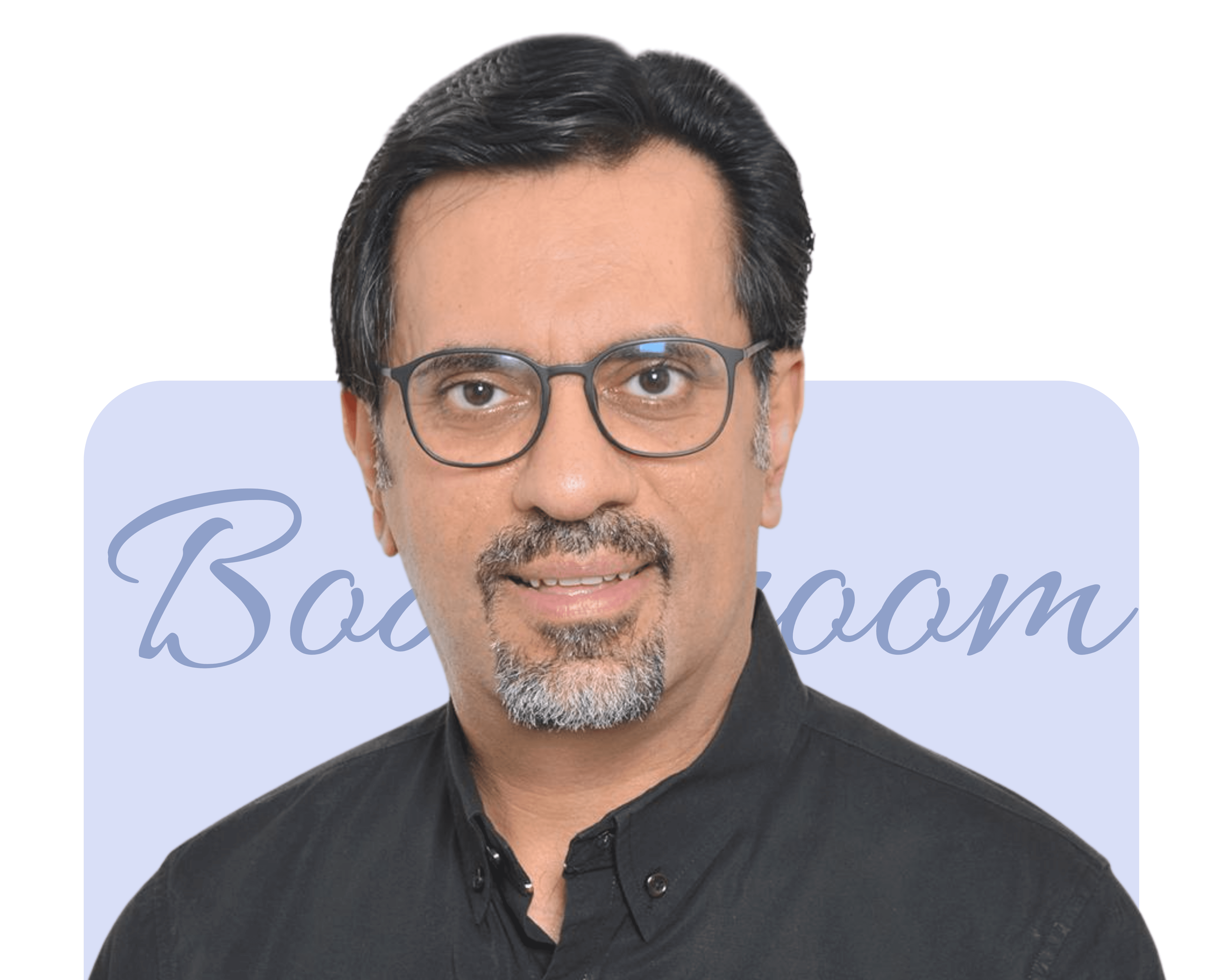

Ms. Fiza Farhan represents a distinctive blend of disruption, discipline, and development economics. From graduating at Lahore University of Management Sciences (LUMS) to serving on its Board, and refining her global perspective at Warwick Business School, her journey reflects a deliberate pursuit of impact-driven enterprise. As Founder of Buksh Foundation and Buksh Energy, and now CEO of ORA Global Development Advisors, she has pioneered scalable models at the intersection of renewable energy, women’s economic empowerment, and institutional governance. Her work extends from rural electrification initiatives to global policy platforms, including appointment to the UN Secretary-General’s High-Level Panel on Women’s Economic Empowerment.
BOARDROOM: Your journey has been described as organic yet disruptive. How did it begin?
Fiza Farhan: My professional journey has evolved around a few enduring principles. I graduated from Lahore University of Management Sciences (LUMS), and it is deeply meaningful that I now serve on its Board. It represents a full-circle moment in my career.
Following LUMS, I pursued my Master’s degree at Warwick Business School. Even during my undergraduate years, I was certain about one thing: I did not want to pursue a conventional career path devoid of measurable impact. I aspired to build solutions that were both transformative and commercially viable.
I have always maintained that social entrepreneurship must not be mixed with traditional NGO models. For me, it represents the disciplined business of doing good where impact and financial sustainability are not competing objectives, but complementary outcomes. It also provides me with an opportunity to continuously evolve and create disruptive and innovative solutions to diverse development challenges, creating unique partnerships and sustainable development models along the way.
BOARDROOM: What influenced your perspective during your time at Warwick?
Fiza Farhan: At Warwick, I was significantly influenced by global case studies and disruptive leaders such as Richard Branson, Walt Disney, Bill Gates, Mark Zuckerberg, and Elon Musk. Their ability to challenge entrenched norms, question the status-quo and build industry-disrupting solutions reshaped my thinking. I began to conceptualize development through a disruptive lens, questioning conventional approaches and exploring systemic solutions to entrenched socio-economic challenges, bringing multiple stakeholders together and creating magical and mutually beneficial development models.
BOARDROOM: What transpired upon your return to Pakistan?
Fiza Farhan: Upon returning from Warwick, I established Buksh Foundation and Buksh Energy Pvt Ltd, two social enterprises leading innovative solutions for access to energy and women economic empowerment. While I did not possess a rigid career blueprint, I was clear in my intent to identify development challenges and engineer scalable solutions rather than pursue a traditional corporate role, taking one development challenge at a time and building purposeful products and solutions that make a business case for the stakeholders involved.
For instance, a small model of rural off-grid village electrification, whereby we created the unique nexus between access to energy and women’s economic empowerment through a model of “Light Ladies” or “Roshnah Bibi’s” in our flagship project “Lighting a Million Lives”.
Over time, these evolved into powerful symbols of grassroots transformation addressing multiple development challenges with a simplified and unique model. The model gained international attention and continues to feature in global discussions, including climate and development forums connected with the UK Government. This also led to my lifelong core philosophy of “from problems to solutions”- questioning problems and challenges, envisioning what success looks like and working backwards to curate a pathway of solutions bringing in partnerships and collective impact through diverse stakeholders. Basically, what evolved into the core business philosophy of my advisory firm, ORA Global Development Advisors.
BOARDROOM: Buksh Energy became a renewable energy pioneer in Pakistan. What challenges did you encounter?
Fiza Farhan: Buksh Energy emerged as Pakistan’s first renewable energy company of its kind. At the time, I was among the very few women operating in the energy sector, if I remember correctly there were only 2 of us in the entire energy ecosystem at the time. Frequently, I found myself in rooms of 50 to 100 senior male professionals often being the only woman on a table where conventionally only men had a place.
The challenge was less about overt discrimination and more about navigating youth and gender dynamics within a traditionally male-dominated industry. I made a conscious decision to focus on technical and strategic competence. Professional excellence became my differentiator. Under our leadership, we introduced several industry firsts in Pakistan:
First solar-powered ATM, first solar milk chiller, first solar Independent Power Producer (IPP) tariff. Disruption invariably invites skepticism; however, consistent results ultimately earn institutional credibility and the very fact of me being the only woman in the room, transformed into becoming my greatest strength, rather than a weakness.
BOARDROOM: Could you elaborate on the “Lighting a Million Lives” initiative?
Fiza Farhan: “Lighting a Million Lives” was a catalytic initiative at the intersection of women’s economic empowerment and renewable energy. We operated in unelectrified rural communities, enabling women to become micro energy entrepreneurs. These women distributed solar products, generated income, improved household health outcomes, and stimulated local economic activity. We also trained village technicians (usually the male members of the family) for maintenance and repair, creating secondary income streams. At the time, the women-energy nexus was unconventional. Today, it forms a central pillar in global development discourse and had led me to represent Pakistan & South Asia on the Women, Faith & Climate Network of the UK Government.
BOARDROOM: What was a defining global milestone in your career?
Fiza Farhan: In 2016, I was appointed by the UN Secretary-General’s to serve on his first-ever High-Level Panel on Women’s Economic Empowerment, amidst global development leadership. This was a pivotal moment. My role expanded beyond organizational leadership to a global scale. I was contributing to policy discourse representing women across Pakistan and South Asia. That experience underscored the need to scale impact globally and operate within multilateral frameworks. On a personal level, it made me not only represent the woman of Pakistan on such prestigious high level forums but take the ownership of creating a lasting impact on the status of women’s economic empowerment in the country, becoming a strong agency and voice for the women of Pakistan.
BOARDROOM: How would you define your leadership philosophy?
Fiza Farhan: My leadership is anchored in conviction, belief in purpose, belief in people, and belief in collective outcomes. Over the years, I have cultivated partnerships across governments, multilateral institutions, private sector entities, and international networks. My leadership strength lies in authentic relationship-building grounded in trust and long-term commitment. Leadership, in my view, entails clear visualization of the end objective, reverse-engineering execution strategies, creating shared ownership, and inspiring teams to internalize the mission sparking collective action. When individuals understand the larger picture, performance consistently exceeds expectations.
BOARDROOM: What has been your most challenging professional experience?
Fiza Farhan: Complex decisions are part of leadership, and I approach them decisively. Not all initiatives succeed; several failed quietly. However, resilience is a strategic asset. If I required ten partnerships, I approached thirty. Expanding the network increases probability of success.
Balancing professional ambition with personal life has also been a recurring challenge. The prevailing narrative often suggests women must choose between career and family. I reject that approach. With deliberate choices and a supportive life partner both can coexist. It’s not about surviving, but about thriving- and only a balance between your professional and personal life can make you fully realize your true potential. I firmly believe in transforming perceived constraints into strategic strengths, and creating your own unique pathway based on your own set of beliefs and strengths, not what you have been told.
BOARDROOM: What role do governance, ethics, and accountability play in building sustainable institutions?
Fiza Farhan: Governance, ethics, and accountability are non-negotiable pillars of sustainability. In Pakistan, many family-owned enterprises decline across generations due to governance gaps. In contrast, countries such as Japan demonstrate how robust governance frameworks enable businesses to endure across 10–20 generations. Encouragingly, Pakistani corporations are evolving professionalizing leadership structures, institutionalizing compliance, and recognizing that ethical governance is essential for longevity. Governance is not an administrative function; it is the foundation of institutional survival.
BOARDROOM: How can organizations balance tradition with innovation in an era of disruption?
Fiza Farhan: Innovation must inform product design, pricing models, digital transformation, and market strategy to stay abreast of the evolving global business landscape. Tradition, however, should be embedded within organizational culture not within operational rigidity. Tradition defines core values, principles, institutional respect, loyalty, and organizational identity while Innovation defines technology integration, market positioning, and competitive advantage. The distinction is clear; preserve cultural integrity internally while innovating aggressively in external market engagement.
BOARDROOM: How do you motivate and empower diverse teams?
Fiza Farhan: Passion is contagious. I genuinely enjoy my work and feel extremely passionately towards it, and that energy influences team dynamics. My operating principles include creating an engaging work environment, maintaining strict timelines and accountability frameworks, aligning teams around a shared vision, and reverse-engineering execution pathways. In every initial engagement, I ask: “What does success look like for you?” Once success parameters are clearly defined, strategy and execution become structured and measurable. It is imperative however, to enjoy what you do and have full belief and faith in your ability to realize the success you are seeking.
BOARDROOM: Who have been your mentors?
Fiza Farhan: I have learned from global leaders, policymakers, entrepreneurs, collaborators, and critics alike. However, my most consistent mentor have been the experiences I have gone through. Every experience, good or bad, can be a learning curve and can shape your leadership style, strategic thinking, risk taking appetite and ability to question your strengths and build further- stronger. Every setback has functioned as a classroom. Every challenge has been a leadership laboratory. Ultimately, sustained belief in purpose and in people has been my most reliable guide.