
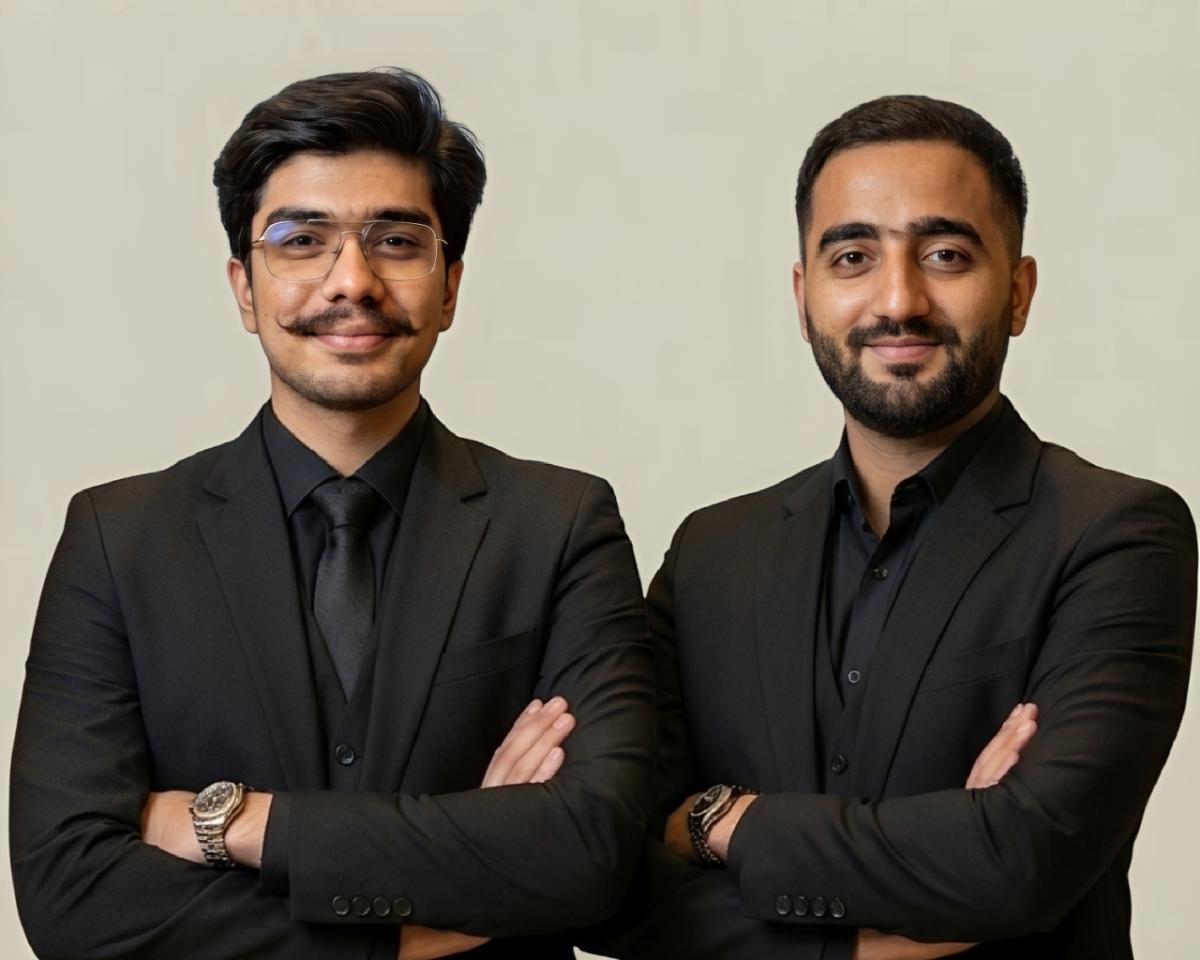
The startup ecosystem often celebrates bold ideas and rapid growth, yet the real journey from concept to scalable venture is far more complex. In this conversation with Armaghan Ahmad and Moeez Ahsan, the founders discuss the disciplined thinking required to build sustainable technology ventures, the often-ignored gap faced by startups at the MVP stage, and how emerging tools from companies such as OpenAI, Anthropic, and Google are reshaping product development. They also share the vision behind their learning platform Lerny and reflect on the challenges and opportunities within Pakistan’s evolving technology and education landscape.
Boardroom: Kindly share with our readers your entrepreneurial philosophy that guides the way you build and scale ventures?
Armaghan Ahmad: Yes, I do. One of the biggest misconceptions among startup founders is the belief that once they have an idea, the next step is immediately building the product. In reality, the first step should always be market research. You have to identify the problem clearly, understand the current solutions in the market, and then determine how your solution will be different. Many founders underestimate this stage and rush into development, but without understanding the market gap, the product often struggles to scale later. Entrepreneurship, in my view, is about disciplined thinking. It requires patience, learning from failure, and understanding that building something meaningful takes time.
Boardroom: How do you identify the gaps in the startup ecosystem where your organization can contribute?
Moeez Ahsan: If you look at the global startup ecosystem, there are many well-known accelerators and programs such as Y Combinator, Techstars, and Plug and Play. These platforms typically support startups that already have strong products and are ready to scale. The focus is often on growth, marketing, and expansion. However, there is a significant gap before that stage. Many founders are still at the MVP stage, trying to build their initial product, validate their idea, and become investment ready. That is the stage where most of the support is missing. Our focus is on those early-stage startups, particularly SMEs and founders who are still building their first version of the product. We help them move from the idea phase to a working solution and prepare them for the next level of growth.
Boardroom: What kind of support do you typically provide to startups at this stage?
Armaghan Ahmad: At the early stage, founders often need more than just advice. They need technical support, operational guidance, and structured processes to help them move forward. We provide technical services, product development support, and guidance on how to build scalable systems. Many startups have great ideas but lack the operational discipline required to turn those ideas into functioning products. Over time, we have developed processes that help founders structure their development cycle, understand their customers, and prepare for market entry. Our goal is to help them reach the point where they are ready to raise investment or scale their product.
Boardroom: As a technical founder, how do you see the rapid rise of artificial intelligence shaping the startup landscape?
Armaghan Ahmad: Artificial intelligence is changing the dynamics of technology faster than anything we have seen before. The pace of innovation is extraordinary. Tools powered by AI are enabling developers and founders to build products much faster than in the past. What used to take weeks or months can sometimes be done in a matter of days.
For example, if someone asked a developer to build a simple web application with multiple pages and authentication systems for different types of users, it might traditionally take a couple of weeks. Today, with the right tools and AI-assisted development, the same task can be completed in a fraction of that time.
Boardroom: Which technologies or platforms do you believe are currently driving this transformation?
Armaghan Ahmad: There are many powerful tools available today. Platforms such as OpenAI, Anthropic’s Claude, and Google’s Gemini have dramatically expanded what developers can do. These systems can assist in research, coding, documentation, and even product design. The challenge now is not the lack of technology; the challenge is knowing how to use it effectively. Founders must understand how to integrate these tools into real products that solve genuine problems. AI should not just be used as a novelty feature. It must add real value to the user experience.
Boardroom: Let’s talk about your flagship SaaS platform, Lerny. What inspired its creation?
Armaghan Ahmad: The idea behind Learning came from observing several problems in the education technology space. Many platforms claim to provide quality education, but the actual experience often falls short. Courses are frequently outdated, engagement is low, and learners struggle to stay motivated. If you look at major global platforms, they have done a great job in building large communities, but there are still gaps in how content evolves and how learners stay engaged.
Boardroom: How do you see your platform competing with established global players in the learning space?
Moeez Ahsan: Platforms like Duolingo have been very successful in building engagement through gamification. They use streaks, badges, and other techniques to keep users active. However, engagement alone does not always translate into meaningful skill development. Our focus is on practical learning and keeping course material aligned with real industry needs. For example, many widely known courses such as some project management programs do not always keep up with the speed at which technology evolves. That creates a gap between what learners’ study and what the market actually requires.
Boardroom: What challenges do education technology platforms face in markets like Pakistan?
Armaghan Ahmad: One of the biggest challenges is adapting to local realities while also keeping a global perspective. International markets move quickly, and global trends shift rapidly. At the same time, Pakistan has its own economic and technological environment. Currency fluctuations, purchasing power, and access to resources all influence how educational platforms operate here. This means that companies must remain adaptable. They need to understand the local market while still building solutions that are globally relevant.
Boardroom: Do you believe government policy plays a role in shaping the education technology sector?
Armaghan Ahmad: Government policy can certainly help create a supportive environment, but innovation often moves faster than policy frameworks. In many cases, private sector initiatives lead the way, and governments later develop policies around them. What matters most is creating platforms that enable people to access education and build skills. If the ecosystem encourages innovation, both the public and private sectors can contribute to expanding opportunities for learners.
Boardroom: You often emphasize the idea that technology is ultimately about people. What do you mean by that?
Moeez Ahsan: Technology is not just about code or algorithms. At its core, it is about people and the problems they face. A successful product is one that understands human behavior, motivations, and needs. If you focus only on the technical side, you may build something impressive from an engineering perspective but irrelevant from a user perspective. The real challenge is bridging that gap between technology and human needs.
Boardroom: Finally, what message would you give to students and young professionals who want to enter the technology and startup ecosystem?
Armaghan Ahmad: My advice would be to focus on skills rather than credentials alone. Many students spend years pursuing degrees without developing practical capabilities that the industry demands. The real question is not just what degree you hold, but what you can actually build or contribute. If someone can acquire real skills through focused learning and practical exposure even at a much lower cost, they can often become far more competitive in the job market. That philosophy is at the heart of what we are trying to build with Lerny: making practical, relevant skills accessible to people who want to grow in the technology-driven world.