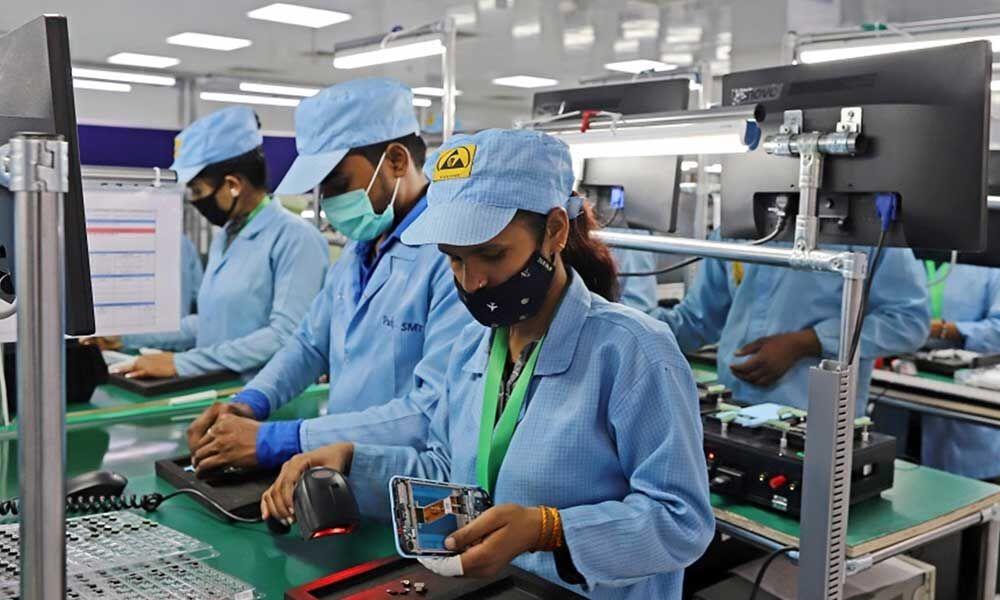
Pakistan's Mobile & Electronics Manufacturing Policy 2026–33 signals an ambition to move beyond device assembly toward a broader electronics ecosystem. The opportunity is significant, but global competitiveness will depend on local supply chains, skills, scale, quality, policy consistency and export economics.
By Boardroom Research Desk
Pakistan Wants to Make More Than It Imports
Pakistan's industrial policy has increasingly focused on one question:
Can the country move from being a market for manufactured products to becoming a producer and exporter of them?
The mobile and electronics sector offers a particularly important test.
In February 2026, the Engineering Development Board finalized the framework for the Mobile & Electronic Devices Manufacturing Policy 2026–33.
The government said the policy is intended to begin large-scale local manufacturing of mobile phones and electronic devices, strengthen exports and promote technology transfer and foreign investment.
The framework also envisages attracting global companies, including Apple and Samsung, to establish manufacturing plants in Pakistan.
These are policy ambitions.
They should not be confused with confirmed investment commitments.
That distinction is important.
But the strategic direction is significant.
Why Electronics Matters
Electronics manufacturing sits at the intersection of several economic priorities.
Imports
Exports
Technology transfer
Employment
Skills
Foreign investment
Industrial development
If Pakistan can develop a competitive electronics ecosystem, the impact could extend far beyond mobile phones.
It could eventually include components, batteries, chargers, displays, appliances, industrial electronics, automotive electronics and other higher-value products.
That is an opportunity, not a guaranteed outcome.
Assembly Is Not the Same as Manufacturing
This distinction should sit at the centre of Pakistan's industrial debate.
A country can assemble imported components without developing a deep industrial base.
True industrialization requires local capabilities to grow around the final product.
That means suppliers.
Tooling.
Testing.
Quality control.
Engineering.
Packaging.
Component manufacturing.
Logistics.
After-sales services.
Design.
Research and development.
The more of that ecosystem develops domestically, the greater the economic value retained inside the country.
Pakistan Already Has a Base to Build On
Pakistan is not starting from zero.
The country already has experience in mobile-device assembly and a large domestic market for electronics.
The government has also highlighted the possibility of significant revenue from the re-export of refurbished mobile phones, with the EDB projecting $300 million to $400 million annually from that segment under the proposed framework.
Again, this is a government projection, not realized revenue.
But it points toward a potentially broader circular electronics economy involving refurbishment, re-export and eventually more sophisticated manufacturing.
The Export Question Is the Hardest One
Domestic demand can help an industry start.
Exports determine whether it becomes internationally competitive.
Pakistan's electronics industry will eventually have to compete with manufacturing ecosystems in China, Vietnam, India, Malaysia and other Asian markets.
Those countries have advantages in scale, supplier networks, infrastructure, logistics and accumulated manufacturing expertise.
Pakistan therefore cannot compete simply by offering cheap labour.
It needs a broader proposition.
Competitive energy
Reliable logistics
Efficient customs
Skilled workers
Stable policy
Quality standards
Supplier development
Export incentives that are sustainable
and access to international markets.
Foreign Investment Should Bring More Than Capital
If multinational manufacturers enter Pakistan, the economic objective should not simply be the factories themselves.
The larger opportunity is technology transfer.
A successful foreign investment ecosystem can create domestic suppliers, train engineers, improve quality standards and connect Pakistani firms to international value chains.
But that requires deliberate supplier-development policies and strong local capabilities.
Otherwise, the country risks becoming primarily a final-assembly location.
The Energy Question Cannot Be Ignored
Electronics manufacturing is sensitive to reliability.
Factories need predictable electricity.
They need stable communications.
They need efficient logistics.
They need consistent customs procedures.
A manufacturing policy cannot be separated from the broader business environment.
This is why industrial competitiveness should be treated as an ecosystem rather than a single-sector policy.
Pakistan's Digital Infrastructure Is Improving
There are some encouraging signs on the wider technology side.
Pakistan's ICT Development Index score increased from 56.4 in 2025 to 67.7 in 2026, according to the Ministry of IT and Telecommunication, with the ministry reporting a 20% relative improvement and a 22.8 point improvement in the connectivity pillar.
This does not directly prove that Pakistan is ready to become a major electronics exporter.
But stronger digital connectivity can support industrial automation, supply-chain management, engineering services and technology adoption.
The Real Opportunity Is the Ecosystem
The best outcome would not be:
Pakistan makes more phones.
It would be:
Pakistan builds an electronics ecosystem.
That ecosystem could include:
Component suppliers.
Software developers.
Hardware engineers.
Testing laboratories.
Industrial designers.
Repair and refurbishment businesses.
Logistics companies.
Packaging manufacturers.
Specialised financial services.
Exporters.
Training institutes.
That is how one industrial policy can create a much larger economic footprint.
Boardroom View
Pakistan's electronics manufacturing ambition is worth watching closely.
But the country should avoid measuring success simply by the number of devices assembled locally.
The more meaningful questions will be:
How much value is created locally?
How many components are produced domestically?
How much technology is transferred?
How many skilled jobs are created?
How much is exported?
How many Pakistani suppliers enter global value chains?
Those are the metrics that will tell us whether Pakistan has created an industry or simply expanded assembly.
The opportunity is significant.
But industrial transformation is rarely created by policy documents alone.
It is created when policy becomes capability.