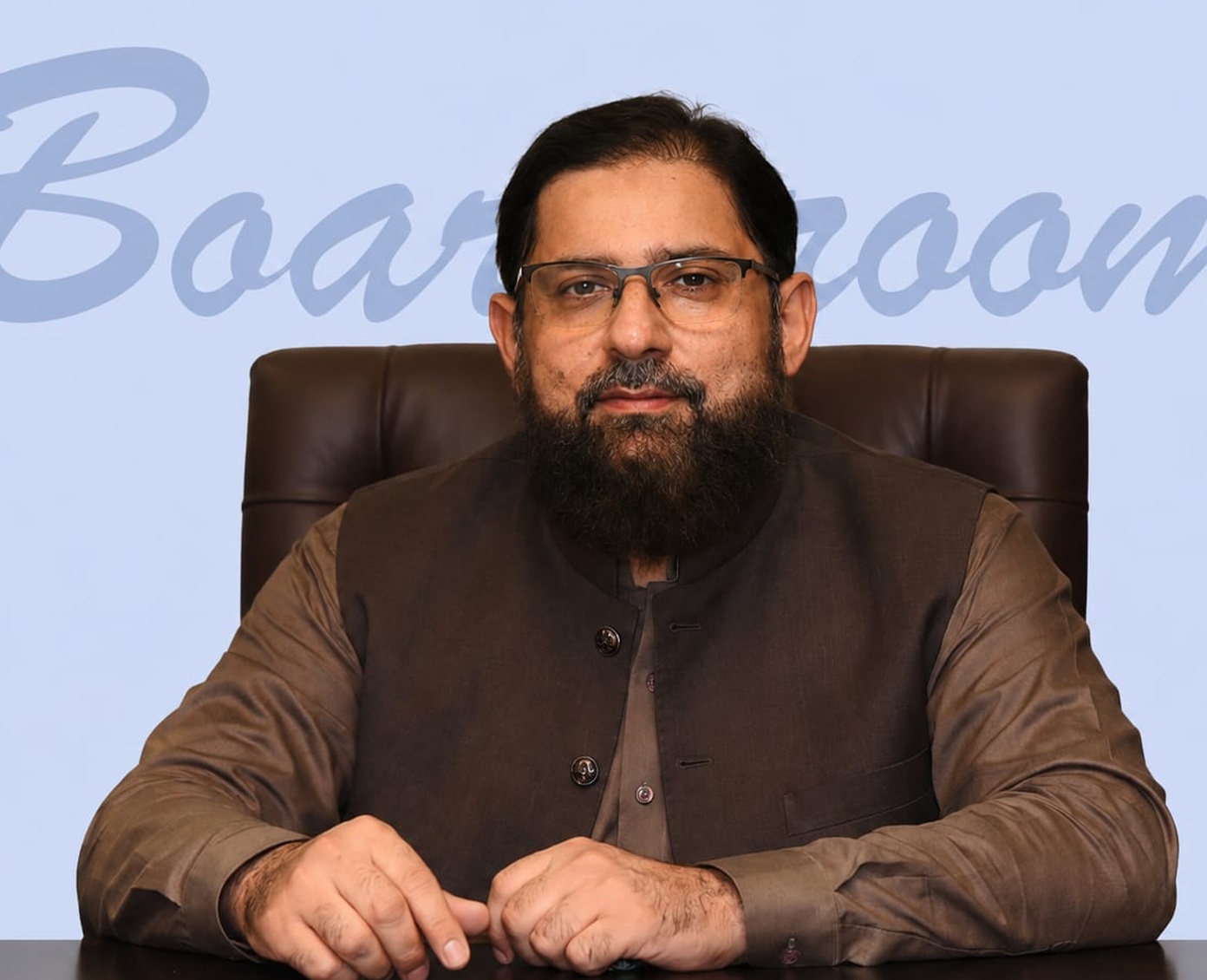
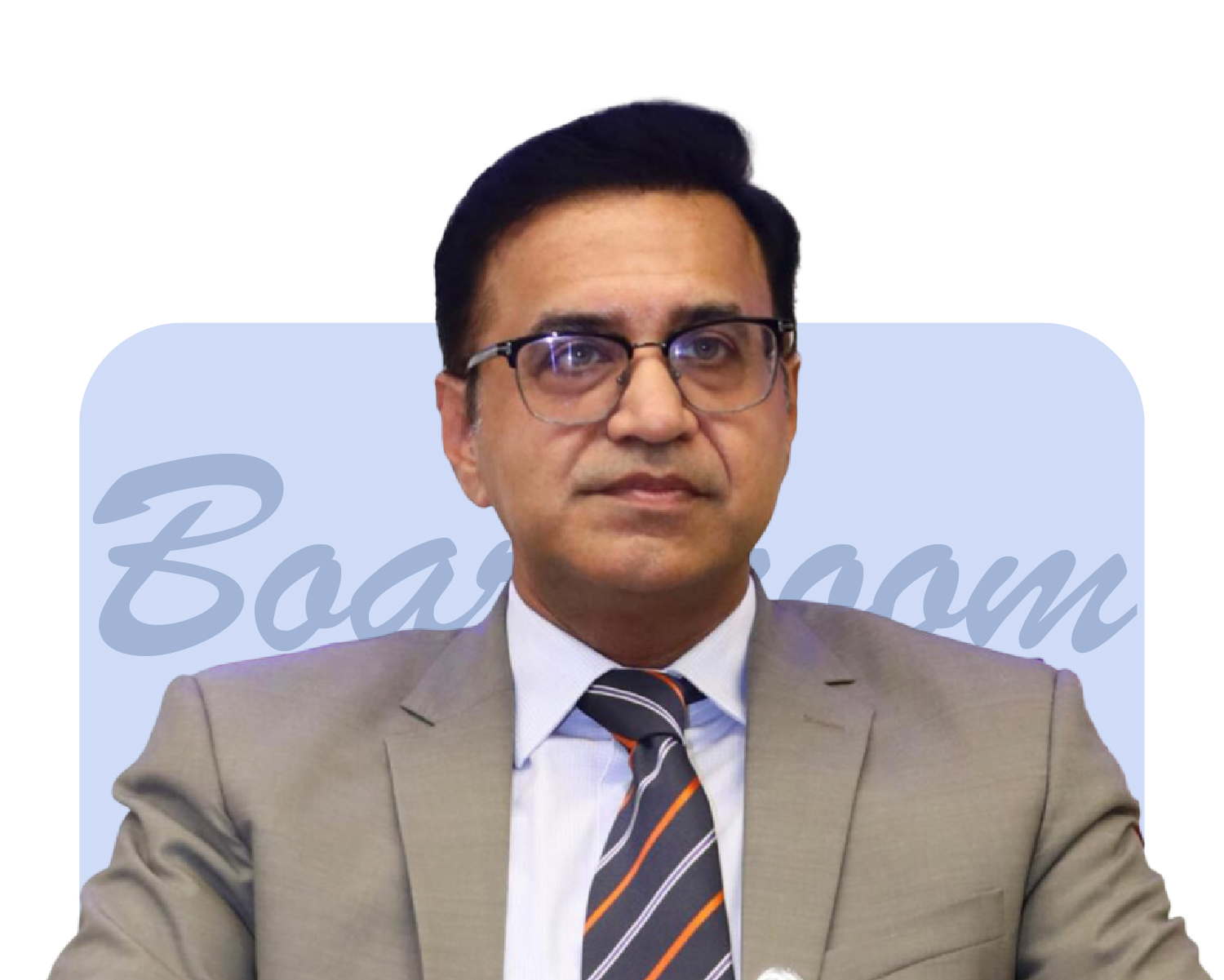
Zeeshan Ijaz, Partner at KPMG and Vice President of the Institute of Chartered Accountants of Pakistan (ICAP), has built a distinguished career as a leading tax expert and industry voice. Guided by mentors and shaped by ICAP’s rigorous discipline, he has combined technical excellence with values of integrity and service. Transitioning from tax specialization to leadership, he has played a pivotal role in strengthening ICAP’s progressive vision and contributing to national tax reforms. With deep expertise in direct taxation and regulatory frameworks, Zeeshan is committed to advancing ethical practices, mentoring future professionals, and fostering a more transparent business ecosystem.
Boardroom: What key milestones or experiences have most significantly shaped your career path?
Zeeshan Ijaz: Throughout my career, two influences have played a defining role in shaping my professional journey: my mentors and my alma mater, the Institute of Chartered Accountants of Pakistan (ICAP), which I proudly regard as my mother institution. The values, discipline, and vision instilled by ICAP laid the foundation for my growth, while my mentors provided the guidance and perspective needed to navigate challenges and opportunities alike.
At every important juncture of my professional career the wisdom and encouragement of my visionary seniors helped me recognize the importance of staying the course. Their belief in my potential inspired me to rise to the challenge, enabling me to contribute meaningfully to both ICAP and KPMG. That turning point not only defined my career path but also reaffirmed my commitment to leadership, excellence, and service to the profession.
Boardroom: Could you share insights into your career transition from a tax expert to a leadership role at ICAP?
Zeeshan Ijaz: My focus had always been on excelling in my field as a hardcore tax specialist. However, it was the encouragement of my well-wishers and professional peers that compelled me to contest the ICAP elections and contribute for the betterment of my mother institute and its fraternity.
To my honor, I secured the second-highest number of votes an outcome that was both humbling and significant. This strong mandate reinforced my belief that professional integrity and performance speak volumes.
Serving as council member for the term 202 –2025 (and serving as the Vice President for the 2024), I remain committed to contributing meaningfully to the profession and to ICAP’s continued evolution as a progressive, forward-thinking institution.
Boardroom: What led you to specialize in tax, considering other areas like audit were also options?
Zeeshan Ijaz: I owe my career path in taxation to my mentors; Mr. Farid ud din, Mr. Danish Kamal and Mr. Kamran Butt, who guided me with visionary leadership and deep insights into the profession’s future. Apart from that my past and present colleagues have played an important role in my professional career and growth.
Taxation is incredibly dynamic and intellectually stimulating filled with both innovation and challenge. It aligns perfectly with my competitive spirit, which has always driven me, whether in my profession or in sports. This mindset has enabled me to contribute meaningfully at KPMG, including expanding into direct taxation, navigating the complexities of other jurisdictions , and helping clients address increasingly sophisticated tax challenges.
Boardroom: Keeping in view the tax evasion mindset, how do you balance client advocacy with regulatory compliance in an evolving fiscal landscape?
Zeeshan Ijaz: I hold a different view on the general perception that the business community lacks regulatory compliance. I firmly believe that our business community is sincere and committed to contributing to Pakistan through taxes. However, as professionals, we have sometimes fallen short in equipping them with effective tax planning and management tools, and in addressing their concerns proactively. Fortunately, we are now seeing a growing presence of professionals dedicated to guiding businesses in full in accordance with the law.
Question: How do you believe qualifications and expertise impact the integrity and professionalism of tax consultants, and what role do these factors play in maintaining trust in the profession?
Zeeshan Ijaz: Challenges exist in every sector, whether public or private. While academic qualifications and technical expertise are essential and provide a solid foundation, they are not sufficient on their own to ensure professionalism or integrity. The real differentiator is the ethical framework a professional adheres to. It is one’s values; honesty, transparency, and commitment to doing the right thing, that truly guide behavior and decision-making in practice.
If a tax consultant chooses to uphold integrity as a core principle, no amount of external pressure or complexity can compromise their professional conduct. On the other hand, without a clear moral compass, even the most prestigious degrees or years of experience cannot guarantee ethical behavior. It is this alignment of knowledge with strong ethics that fosters trust and credibility in the profession.
Boardroom: How do you differentiate between local companies and MNCs in terms of organizational behavior?
Zeeshan Ijaz: Over the years, we have seen a notable shift in the organizational behavior of local companies, bringing them closer in alignment with global standards. This evolution has been driven by several key factors: the rapid advancement in technology, the emergence of a second generation of business leaders who are often foreign-educated, and growing market competition.
These dynamics have encouraged local businesses to adopt more structured, ethical, and professional management practices. The increasing awareness and enforcement of compliance and regulatory frameworks have also played a crucial role. Additionally, Pakistan’s rising entrepreneurial culture has infused a fresh energy and openness into the corporate ecosystem. I believe we are on a positive trajectory, local companies are becoming more transparent, better governed, and increasingly competitive on both local and international fronts.
Boardroom: What role ICAP as an institution has played in transformation of Pakistan’s modern business ecosystem?
Zeeshan Ijaz: Before discussing the ICAP role, I would like to share with pride that ICAP has been recognized and benchmarked by a UK-based leading global accounting body for its syllabus, teaching methodologies, and modules, and has been declared equivalent to international standards. It is also a matter of national pride that the integrity and confidentiality of our systems and processes are not only recognized globally but also ranked among the best in Pakistan.
As far as our role is concerned that is very candid and defined; to strengthen Pakistan’s accounting ecosystem by developing equivalent models with leading global accountancy qualifications, such as those from Canada, Wales, and the UK, enabling our professionals to earn these certifications by passing just 2–3 additional papers.
Over the past 20 to 25 years, ICAP itself has undergone a significant transformation. From its inception in 1961 until 2010, the Institute had around 5,000 members. However, between 2010 and 2025, the membership has grown by an additional 7,500, an impressive increase within just 15 years. This growth reflects the global demand for our professionals. Today, Pakistani chartered accountants are securing high-profile roles both locally and internationally. ICAP has aligned its training with the evolving needs of the business world, emphasizing technology, quality assurance, ethics, and international best practices. These competencies are now essential for success, particularly in the context of the sophisticated and structured environments of MNCs compared to many local organizations.
Boardroom: Pakistan’s tax system continues to face criticism for complexity and inefficiency. What structural reforms do you think are most urgent?
Zeeshan Ijaz: To me there are four (04) key areas of focus:
Deleting a separate category for non-filers as this category grants a form of amnesty to tax evaders. It also undermines the integrity of the tax system and should be abolished.
Inclusion of currently under-taxed or untaxed sectors such as retail, agriculture, and real estate. Expanding the tax net is critical to ensuring fairness and equity in revenue collection.
There must be a targeted approach that will distinguish between compliant taxpayers and habitual evaders, proposing stricter enforcement and differentiated mechanisms to address each group appropriately.
The importance of bringing the undocumented economy into the formal sector is inevitable. The current lack of documentation places an undue burden on compliant taxpayers and limits the government’s revenue potential.
Boardroom: How ICAP & KPMG support FBR in policy implementation, digital transformation, and broadening the tax base?
Zeeshan Ijaz: At KPMG, we actively engage with the FBR in tax policy formulation and represent clients across various sectors, helping to navigate the multifaceted tax landscape of Pakistan. Our role involves offering strategic input to ensure that policies are both practical and aligned with the evolving needs of the economy.
From ICAP’s perspective, I take great pride in the growing recognition of chartered accountants within the public sector. For the first time in Pakistan’s history, chartered accountants have been appointed as members of the tax appellate tribunals, a significant step that reflects FBR’s confidence in our profession’s technical expertise and integrity.
Furthermore, ICAP is set to co-host a National Tax Dialogue in collaboration with FBR, bringing together key stakeholders from both domestic and international platforms. This initiative underscores the credibility ICAP has built over the years and its commitment to contributing meaningfully to Pakistan’s tax reforms and digital transformation.
Boardroom: How do you balance energy, maintain motivation, and manage stress while fulfilling the demands of a challenging role at ICAP and in your other professional endeavors?
Zeeshan Ijaz: To stay motivated, it’s essential to genuinely enjoy what you do because all motivation begins with your mindset. In any professional environment, especially one as dynamic and complex as taxation, perfection is rare. The real differentiator lies in how you perceive and respond to challenges.
If you view obstacles as misery, you risk falling into self-pity, which hinders progress. However, when you approach the same challenges as opportunities, you cultivate a solution-oriented mindset that drives growth and innovation.
It’s also important to recognize that we operate in a highly competitive world; no one is indispensable. This awareness helps me stay focused, and continuously evolving, both in my role at ICAP and in my broader professional journey.
Boardroom: What’s your advice to young professionals entering the accounting and tax advisory profession today?
Zeeshan Ijaz: First and foremost, I would advise young professionals to take genuine interest in their work and approach it with a sense of purpose. Remember, while you may have expectations from your organization, the organization equally expects integrity, professionalism, and commitment from you.
Secondly, always maintain a positive mindset. Skills and capabilities can be developed over time, but negativity not only hampers personal growth, it also disrupts the professional environment around you.
Thirdly, understand that workplace dynamics, including internal politics, are a reality in every organization. Rather than being discouraged by it, treat it as part of a healthy competitive environment that encourages learning, resilience, and growth.
Lastly, be patient with your career progression. Growth is a gradual process. I began as a student, moved up to become a manager, and today I serve as a partner at the same firm. It took time, dedication, and persistence to reach where I am today