
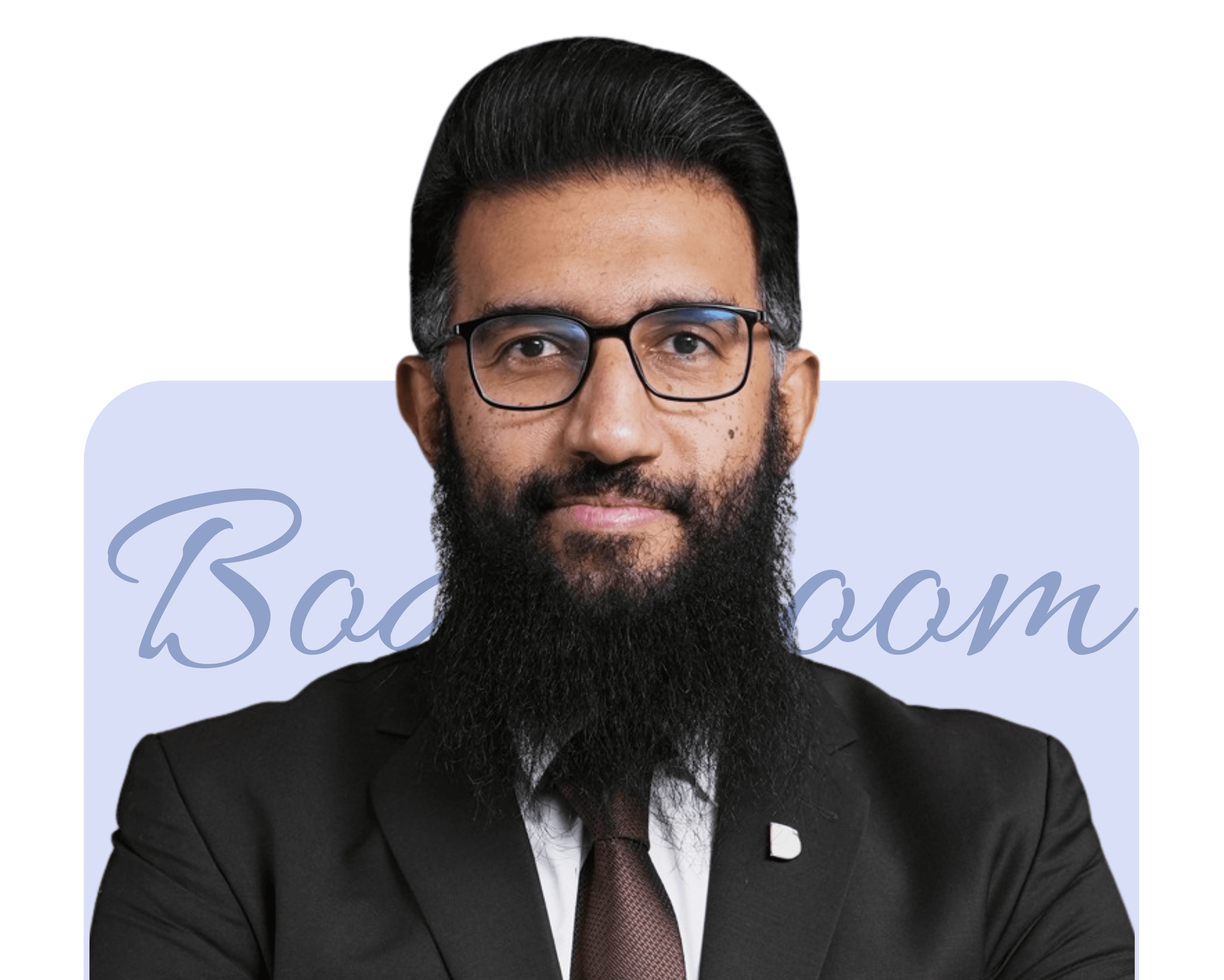
Usman Asif is the Founder and CEO of Devsinc, a global technology and digital transformation company that has grown from a local startup into an international enterprise serving clients across North America, the Middle East, and Asia. Known for his entrepreneurial vision, leadership philosophy, and commitment to talent development, Usman has built a culture centered on innovation, execution, and continuous learning. Through his work as a technology entrepreneur, investor, and industry advocate, he has played a significant role in promoting Pakistan's technology sector on the global stage while inspiring the next generation of founders to think bigger, move faster, and create lasting impact.
BOARDROOM: What differentiate Devsinc from other software houses operating in Pakistan?
USMAN ASIF : The business model centered on building a strong sales function responsible for engaging with prospective clients and identifying their specific technology requirements. Sales professionals would initiate discussions with clients to gain an understanding of their business objectives, technical needs, and project scope. Once the requirements had been clearly defined and assessed, engineering teams would become involved to evaluate the technical feasibility of the project and develop the initial solution architecture. This collaborative process ensured that client expectations were aligned with technical capabilities before the development phase commenced. This process presented significant challenges; by the time a project progressed through the sales cycle and detailed requirements were communicated to the engineering team, there was often a distance between what the client had envisioned and how the technical team interpreted those requirements. In some cases, information was diluted as it passed through multiple layers of communication, resulting in discrepancies between client expectations and the final product. One major challenge was the lack of time. Another was keeping up with the rapid changes in technology. Another challenge,the lengthy transition from initial client engagement to product development sometimes meant that market conditions had evolved by the time a solution was ready for deployment. You complete the sales process and scope out the details; different engineers heard and implemented different things, and by the time it was transferred, technology had become more advanced, and now what you are developing, does it even have any demand or have any market? We created a differentiation by directly involving engineers as our sales process. When engineers came forward, we faced difficulty, as they are not good communicators or do not use soft language.The advantage we gained was that the clients were satisfied, which helped build trust and strengthen our professional relationships
Every time you use an iPhone, you can see the result of thoughtful design and engineering focused entirely on the user experience. Behind every successful product is a deep understanding of what users truly need, value, and expect. Great products are not built solely through technology; they are built through empathy and a strong understanding of human behavior. This philosophy shaped our approach from the beginning. We believed that effective Human-Computer Interaction (HCI) emerges when engineers understand not only technology but also the business and customer problems they are solving. As a result, we built an engineering-driven organization where automation streamlined functions such as marketing, operations, and HR. Rather than following traditional corporate hierarchies, we adopted a holacratic structure that emphasized autonomy, accountability, and decentralized decision-making. By empowering individuals and reducing bureaucratic barriers, we accelerated innovation, improved execution, and achieved rapid organizational growth.
BOARDROOM: There come moments when you start developing yourself. Was there a defining moment that convinced you that Devsinc could become a globally recognized business?
USMAN ASIF: I was never driven by the idea of building a personal brand. My motivation was much simpler: I wanted financial security. Growing up in Lahore, originally from Rahim Yar Khan, raised by a single mother and living in a rented house, my goal was to build a comfortable and stable life.A turning point came on my first day at work when someone asked me where I saw myself in ten years. That question made me realize that achieving long-term financial security would require creating significant value, not just earning a salary. I came to understand that wealth is created by solving meaningful problems for society. My entrepreneurial journey began after my FSc examinations. Like many students, I received my results without knowing where I had gone wrong. To address this issue, I developed a software solution that identified mistakes and provided detailed feedback. The system was later adopted by the government of Sindh, and by 2012, Sindh Board examinations were being evaluated using our software. This experience showed me the power of entrepreneurship. I later moved to the United States, where I developed software solutions for businesses and pursued studies in technology entrepreneurship at Stanford University. While the experience broadened my perspective, I realized that true fulfillment was not coming from professional success alone. Despite achieving many of the goals I had once dreamed of, I found myself asking a simple question: “When was I genuinely happy?” The answer was clear—I was happiest in Pakistan. That realization inspired me to return and focus on creating meaningful impact in the country that shaped me. As I studied Pakistan’s economy, I identified a critical challenge: the shortage of quality employment opportunities. I set myself an ambitious goal—to help create 80,000 jobs in Pakistan. In 2017, our company had just six employees. Today, that number has grown to more than 2,200. As we expanded, we recognized that job creation alone was not enough. Rising inflation, increasing numbers of graduates, and broader economic challenges required larger solutions. Our mission evolved from creating jobs to building an ecosystem where talented Pakistanis can access world-class opportunities without leaving the country. What began as a personal pursuit of financial stability has become a mission to contribute to Pakistan’s economic growth. Today, our focus is not only on building successful businesses but also on creating opportunities, solving national challenges, and helping shape a future where talent can thrive within Pakistan.
BOARDROOM: To retain these 2000 employees, as they all are engineers and they need to be interviewed and developed, some leave the company before the project has even ended; this would have also been a challenge for you?
USMAN ASIF: Over time, I have come to realize that employee mobility is a natural part of the technology industry. If someone receives a better opportunity, they should be free to pursue it. Likewise, companies must continuously improve to attract and retain the best talent.
Technology evolves rapidly, with demand shifting between areas such as cryptocurrency, data science, and artificial intelligence. A company may hire hundreds of specialists in a growing field, but when market trends change, those skills may no longer align with business needs. In such cases, layoffs can become an unfortunate reality, and organizations may need to hire talent with different expertise.
Unlike traditional industries that sell physical products, technology service companies primarily sell human talent, skills, effort, and expertise. Therefore, the employer-employee relationship should be based on mutual value rather than long-term obligation. At Devsinc, our goal is to create an environment where people choose to stay. Every employee receives equity participation, and 12% of company profits are shared with employees. We also provide meaningful long-term benefits and growth opportunities. Ultimately, when employees are respected, well compensated, and given a stake in the company's success, retention becomes a result of value creation rather than necessity.
BOARDROOM: The technical people don’t do sales, but you developed a culture in DevSinc that adapts them to sales. How important are technical skills when you compare them to attitude, adaptability, and problem-solving ability?
USMAN ASIF: Technical skills are important, but they are ultimately learnable and can be acquired over time. With the rise of generative AI and large language models, computers can now understand and respond to natural language, making technology more accessible to everyone. While AI itself has existed for decades, recent advancements have significantly reduced the barriers to using technology.
As a result, technical expertise alone is no longer a sustainable competitive advantage. Many technical tasks can be learned or assisted by AI tools. However, skills such as communication, teamwork, leadership, and problem-solving remain uniquely valuable and are far more difficult to replace.
In the future, as AI continues to automate routine work, organizations will increasingly rely on individuals who can collaborate effectively, manage systems, and drive innovation. Therefore, while technical skills remain important, soft skills and communication abilities are becoming even more critical for long-term success
BOARDROOM: AI works on the provided data. Aren’t data analysis, data entry, and data maintenance technical skills?
USMAN ASIF: Artificial intelligence primarily works by identifying and learning patterns from existing data. Similar to how humans learn from experience, AI improves its performance by analyzing large amounts of information and recognizing trends. The key difference is that machines can process data at a much greater speed and scale.
As AI becomes more accessible, many technical skills are becoming easier to acquire. Fields such as data science, data engineering, and software development still require expertise, but AI tools have significantly reduced the learning curve. Today, motivated individuals can learn complex skills in a relatively short period of time with the support of AI-powered learning tools.
However, AI has important limitations. It performs best when given clear objectives and structured data. In many real-world situations, such as predicting future stock market movements, there is no definitive data that guarantees the correct answer. In such cases, human judgment, intuition, creativity, and independent thinking remain essential.
While AI relies on historical patterns and statistical probabilities, humans possess the ability to imagine, innovate, and create entirely new ideas. Therefore, although technical skills remain valuable, the qualities that truly differentiate people are critical thinking, creativity, adaptability, and the ability to make decisions in uncertain situations.
Through social media, you have an image that you have supported and set up many startup companies and observed over the years, supporting the startup companies. What is the biggest mistake that especially Pakistani-based startup owners make in spending and allocating that capital, and how should they build a strong team that can keep the company stable and well-governed if the funding stops and becomes unavailable for a long period?
Over the past year, I have supported around 20 startups, which has given me valuable insight into the Pakistani economy. One of my key observations is that Pakistan has more consumers than producers, and consumer purchasing power remains limited. As a result, startups targeting the general population often struggle to scale unless they operate in essential sectors such as education, women's products, or other high-demand categories. For this reason, I prefer businesses with strong export potential, as they are less dependent on local market constraints.
Investing in Pakistan is also heavily dependent on the integrity of founders. The legal system does not always provide strong protection for investors, so trust and character become critical factors in investment decisions. I prefer founders who are driven by ambition, purpose, and long-term vision rather than fear, self-pity, or the desire for a quick exit.
A strong founder does not wait for perfect conditions. If funding is unavailable, they find alternative ways to move forward—a principle commonly known as bootstrapping. Whether through equity partnerships, creative problem-solving, or resourcefulness, successful entrepreneurs continue making progress despite limitations.
I also look for founders who are genuinely passionate about solving a problem, not simply seeking freedom from a traditional job or chasing shortcuts to success. The most successful entrepreneurs demonstrate resilience, accountability, and the ability to create momentum even when faced with challenges.
A good example is Dropbox. Despite competing against much larger players such as Google and the launch of Google Drive, Dropbox continued to grow because its founders remained focused on execution and momentum rather than fear of competition. Ultimately, great businesses are built by determined people who keep moving forward regardless of obstacles.
BOARDROOM: Most Pakistani IT companies do outsourcing, but Devsinc works on enterprise automation. What technical and architectural kinds of capabilities are needed to win that fortune level of clients that are happy, and how do these things make you different from your other national and international competitors?
USMAN ASIF: Expecting Pakistan to produce a globally dominant technology company on the scale of Amazon, Claude, or ChatGPT in the near future may be unrealistic. Even when successful companies emerge, they often relocate because the local ecosystem tends to push high-growth businesses outward, while international ecosystems are designed to attract and support them.
For most startups, the journey begins with services. Companies are built by solving real problems and developing expertise in a specific niche. Universities and early professional experiences help individuals understand industry challenges, which can then be transformed into business opportunities. As companies gain experience and credibility in one market, they can expand those capabilities to other regions.
A successful business must focus on delivering measurable outcomes rather than simply providing services. Taking ownership of results, managing customer acquisition, and creating value for clients are key drivers of long-term growth.
Another effective path is to build expertise within an industry before starting a company. Individuals who deeply understand a sector's operations, challenges, and opportunities are often better positioned to launch businesses and sell directly to enterprise clients, as they can offer solutions based on real-world experience and proven knowledge.
BOARDROOM: The things you have done so far have created a full process for the check and balance of this process. You have set some key point indicators, and then if those key point indicators are not met, how do you cover those loopholes? How did you make it work?
USMAN ASIF: I strongly believe that organizations should focus on the right incentives because poor incentive structures often create unintended consequences.
A well-known case study by economist Paul Romer illustrates this point. In a food packaging company, dead insects occasionally ended up in packaged pea pods. When customers discovered them, they would post photos online, damaging the company's reputation. Management calculated that each incident cost approximately $200 and decided to offer the pest control department $200 for every insect they caught. However, the incentive backfired. Employees realized they could earn more money by introducing insects and then "catching" them. As a result, the number of insects increased rather than decreased. This is a classic example of how poorly designed incentives can encourage the wrong behavior.
The same principle applies to management. In many organizations, there is a tendency to schedule frequent meetings and constantly monitor employees. I believe that outcomes matter more than activity tracking. If responsibilities and expectations are clearly defined, managers should evaluate people based on their results rather than the number of meetings they attend.
For example, a CFO's role is to ensure that key financial and operational objectives are achieved. Their performance should be assessed through measurable outcomes over time, not through hourly updates. If a team misses a target, the focus should be on understanding what happened, identifying lessons learned, and improving future performance. If individuals have genuinely done their best and external factors led to an unfavorable outcome, there is little value in assigning blame. What matters is accountability, learning, and continuous improvement.
BOARDROOM: As you are mentioning all your processes. First-generation tech founders struggle to build companies that can operate successfully, and they have built their legacies. What are you doing at Devsinc right now to ensure that the company is dependent on your personal involvement?
USMAN ASIF: I have never been motivated by the idea of creating a personal legacy. In my view, the desire to leave a legacy often comes from a fear of mortality. Ultimately, when we leave this world, our accountability is between us and Allah; companies and material achievements are secondary.
I would never expect my children to follow in my footsteps unless that is genuinely what they want. They have their own ambitions, interests, and paths to pursue. In fact, I would be more proud of them for writing their own story rather than simply continuing mine. Allah has blessed us with resources so that our children do not have to struggle unnecessarily, but they are under no obligation to run my business.
My goal is to build businesses that can operate independently and sustainably. Life is constantly evolving, and I want the freedom to explore, learn, and experience as much as possible. When our company grew from a startup into a corporate organization, we had to unlearn many old habits and relearn new ways of thinking. That experience taught me that growth is a continuous process.
I believe that if Allah gives someone the opportunity to create jobs, support families, and positively impact people's lives, it is a great responsibility and privilege. Success is not only about building a business; it is about creating opportunities for others and contributing something meaningful to society.
Ultimately, as your business grows, you grow with it. The knowledge, experience, and perspective you gain along the journey are often more valuable than the business itself.
BOARDROOM: Are you going to nominate this company as a limited company?
USMAN ASIF: We were preparing to take the company public during the tenure of Imran Khan's government. However, the subsequent political uncertainty had a significant impact on the stock market, making the environment less favorable for such a move. We also explored the possibility of establishing our presence in Abu Dhabi Global Market (ADGM), but geopolitical developments in the region, including the Iran conflict, introduced additional uncertainty and caused us to reassess the timing of that plan.
Today, most of our operations are highly automated, which allows the organization to function efficiently without constant oversight. Rather than focusing on day-to-day management, we concentrate on long-term strategy and growth. We hold monthly board meetings where we review performance, discuss emerging opportunities, and determine the company's next steps.
Beyond business growth, one of our key priorities is contributing to the development of a stronger and more diverse ecosystem, particularly within universities. We believe that investing in talent development and education will play a critical role in shaping the future of the industry.
How are you dealing with those enrollments in your long-term institutions with lasting independence over 10 years?
Difficult times are inevitable, but if your processes are strong enough, you can overcome almost any challenge. I believe that mathematics and history are among the greatest tools Allah has given us. History allows us to learn from the experiences of others, while logic and reason help us make better decisions in the present.
For example, I may not always know whether an individual acted with integrity or engaged in wrongdoing, but I can evaluate whether the proper processes and controls were followed. If someone manages to exploit a weakness in the system, the solution is not simply to assign blame; it is to improve the process so that the same issue cannot occur again.
Rather than focusing on punishing the past, organizations should focus on strengthening themselves for the future. Continuous improvement, learning from mistakes, and building better systems are far more effective than trying to teach someone a lesson after the fact.
BOARDROOM: Many universities have started their incubation centers that help students in their startups, but there isn’t any progress shown by the centers. Why is that?
USMAN ASIF: An incubation center's key performance indicators (KPIs) are often based on the number of cohorts it supports. For example, the objective may be to onboard and complete at least 20 cohorts, regardless of whether each startup achieves long-term success. In some cases, startups are also brought in for honorary participation to meet program targets.
Nabeel Qadeer established one of the early incubation centers in 2009, contributing to the development of Pakistan’s startup ecosystem.
In my view, the local ecosystem is structured in a way that encourages successful companies to eventually move abroad. While tech companies and freelancers often benefit from relatively lower tax burdens, salaried employees carry a comparatively higher tax responsibility. This imbalance has influenced a growing preference for freelancing, which is increasingly seen as a more flexible and attractive option.
As a result, freelancing is becoming a dominant norm, sometimes at the expense of structured product-based startup development. I believe the ecosystem needs stronger support for startups, particularly those focused on scalable and sustainable products, rather than primarily service-based models.
From an investment perspective, as a private entity, we prioritize profit-generating ventures with clear sustainability. At the same time, incubation centers such as NIC should expand their reach into smaller cities to raise awareness and encourage entrepreneurship, especially in service-driven startups that can later evolve into scalable businesses.
BOARDROOM: As compared to other countries, Pakistan is behind in generating AI systems. Why is that?
USMAN ASIF: Pakistan currently does not have the level of resources required to build large-scale AI models, as such development demands significant capital investment, infrastructure, and long-term funding. Many global companies, such as Dropbox, have operated at a loss for extended periods while continuing to receive investor funding based on future potential. Similarly, companies like Uber have also sustained losses while maintaining strong market confidence and ongoing investment.
In some cases, even when students and researchers in institutions such as FAST National University of Computer and Emerging Sciences develop promising AI models, they often relocate internationally to scale their ideas into fully developed companies.
From this perspective, if the global economy and technological ecosystem are considered to be at an advanced stage, Pakistan’s ecosystem is still in a relatively early phase of development. This gap highlights the need for greater investment, infrastructure, and support to enable long-term innovation and retention of talent within the country.