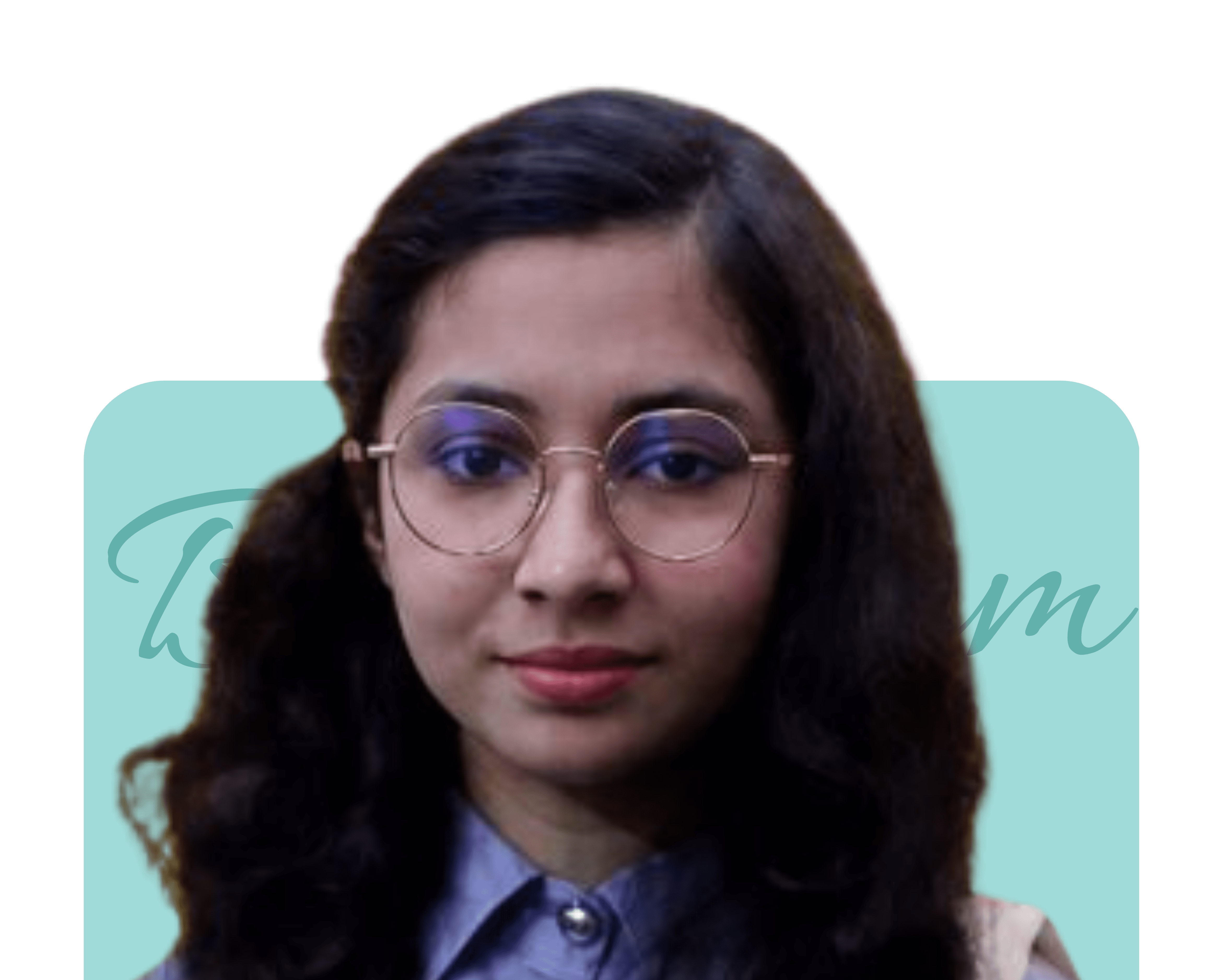
Starting her journey in technology at just nine years old, Amna is redefining what young talent can achieve in the world of AI, Data Science and innovation. From balancing education with professional learning to building real-world projects and advocating for girls in STEM, she shares a powerful message: age is not a limitation—curiosity, consistency and the courage to start can turn potential into possibility.
1. From Curiosity to Code
Amna Shahzad: I started exploring technology when I was just 9 years old. In the beginning, I was simply curious about computers and wanted to understand how technology worked. As I learned more, I realized that technology was not just a hobby—it was something I could use to create things, solve problems, and turn my ideas into reality. That was when I decided I wanted to make technology a part of my career.
2. Becoming a Data Scientist So Young
Amna Shahzad: My journey into Data Science started after I explored development, UI/UX, and AI. I didn't just want to build technology; I wanted to understand how data could make technology smarter. I learned about Atomcamp and received a scholarship to complete my Data Science training there. One of my biggest challenges was balancing school with professional learning and projects. I continued my studies at Future Learn School while also working on my technology skills and projects. This journey taught me that consistency and dedication matter more than age.
3. Beyond the Title
Amna Shahzad: For me, being a Data Scientist is not just about having a title or certificate. A true Data Scientist should be curious, analytical, and have a strong problem-solving mindset. Technology is changing very rapidly, so continuous learning is extremely important. I believe practical skills, curiosity, problem-solving, and the ability to create real-world solutions matter much more than a title alone.
4. AI and the Future of Pakistan
Amna Shahzad: I believe Pakistan has huge opportunities in AI, especially in education, healthcare, agriculture, business, and public services. AI can help personalize education, improve data analysis in healthcare, and support better decision-making in agriculture. However, we should not use AI simply because it is a trend. We should use it to solve real problems that matter to Pakistan.
5. Building Real-World Projects
Amna Shahzad: My AI projects have taught me that having an idea is only the beginning. When you turn an idea into a real project, you have to think about the users, data, accuracy, design, and practical implementation. This experience taught me to think beyond simply being a coder and become more of a problem-solver and innovator.
6. The Mathematics Behind AI
Amna Shahzad: Initially, mathematics and statistics can feel challenging, but I believe we shouldn't be afraid of them. I learned concepts step by step and connected them with practical examples. My advice to young learners is not to try to learn everything at once. Build a strong foundation, practice consistently, and instead of just memorizing formulas, try to understand why and how something works.
7. Learning in the Age of Generative AI
Amna Shahzad: I believe young developers should learn programming logic, problem-solving, mathematics, and the fundamentals of technology themselves. AI should be used as a tool, not as a replacement for thinking. If we let AI do everything, we may get an answer without truly understanding it. But when we understand the fundamentals and use AI to support our work, we can become much more productive and creative.
8. From Developer to Innovator
Amna Shahzad: For me, all these fields complement each other. Development helps me build the product, UI/UX helps me understand the user experience, and Data Science and AI help make the product intelligent. Having experience across these different fields allows me to look at a problem from multiple perspectives rather than thinking only from a coding point of view.
9. Mentorship, Education & Growth
Amna Shahzad: Mentorship and practical exposure have played a very important role in my journey. My teachers and mentors helped me understand things that I might not have discovered as easily on my own. Atomcamp gave me the opportunity to learn Data Science professionally and work on practical concepts. At the same time, Future Learn School has provided me with a supportive and flexible learning environment where I can continue growing in technology alongside my academic studies. I believe education provides the foundation, but mentorship and practical experience teach you how to apply that knowledge in real life.
10. Inspiring Girls in STEM
Amna Shahzad: I believe some girls in Pakistan still have limited exposure to technology and opportunities in STEM. We need to give girls more opportunities to explore technology, attend workshops, build projects, and pursue careers in STEM. Sometimes, seeing someone like you succeed gives you one simple thought: “If she can do it, maybe I can do it too.” And for me, that is one of the most beautiful parts of inspiring others.
11. Your Vision for the Next Generation
Amna Shahzad: I want Pakistan to build a technology ecosystem where young people have access to quality education, mentorship, technology, research opportunities, and platforms where they can build and showcase their ideas. Pakistan has incredibly talented young people. We need to give them the right opportunities and environment so that their talent doesn't remain just potential, but turns into real innovation.
12. Boardroom Signature Question — Defining Your Legacy
Amna Shahzad: Twenty years from now, I don't want people to remember me only because I started at a young age. I want people to say that Amna helped young Pakistanis believe that age is not a limitation. I want my journey to prove that if you have curiosity, consistency, and the courage to start, you can achieve things that may initially seem impossible. Most importantly, I want my journey to inspire young Pakistanis, especially girls, to believe in themselves and have the courage to pursue their dreams.