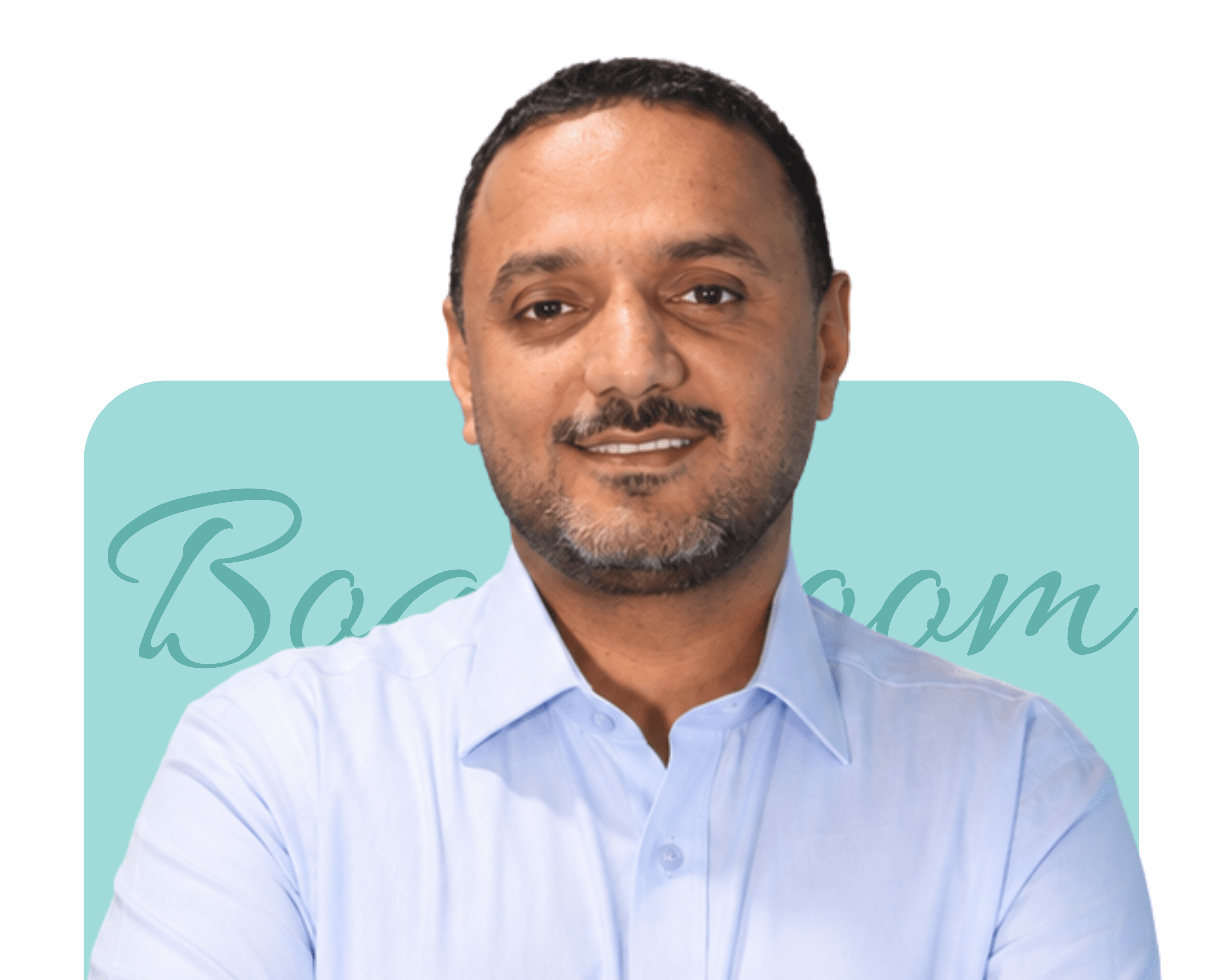

From technology and entrepreneurship to leadership and mentorship, Muhammad Uzair Asif shares his journey of building Axiolink Systems, developing innovative ventures, empowering young talent, and creating technology with global potential. His philosophy is simple: don’t just learn about the future—build something for it.
Boardroom: Kindly share your professional journey and what inspired you to pursue this profession?
Muhammad Uzair Asif: My professional journey has been shaped by a combination of technology, entrepreneurship, leadership, and an enduring curiosity about how things work and how they can be made better.
I am currently pursuing my BS in Computer Science, while also serving as the Founder and CEO of Axiolink Systems Pvt. Ltd., a technology company that I founded with the vision of building scalable technology products and solutions from Pakistan for a broader market.
My journey into entrepreneurship began with technology. As I developed my understanding of software development, I became increasingly interested not only in writing code, but in understanding problems at a larger level—how technology can solve them, how products are built, how teams operate, and how organizations can create sustainable value.
At Axiolink, our work includes OrderKro, a hyperlocal instant-delivery platform designed around local commerce, real-time inventory, delivery logistics, and technology-enabled customer experiences. I am also the Founder of AxioGame Studios, a separate venture within my entrepreneurial journey focused on the gaming and interactive entertainment space.
However, entrepreneurship is only one part of my professional journey. I have always believed that leadership should extend beyond business. I serve as President of Sitara-oHilal Foundation and Rah-e-Taqwa Welfare Society, and I have held leadership responsibilities at UMT, including Event Director at the UMT Freelancing Society and Tech Director at the UMT Cyber Security Society.
Education and mentorship are equally important to me. Through the Buland Parwaz Program, I have worked with and mentored more than 200 students, helping them develop technical, leadership, and professional skills.
What ultimately inspired me was curiosity. I have always been drawn toward research, unanswered questions, emerging technologies, and the process of turning an idea into something real.
That curiosity gradually evolved into a simple philosophy: do not only learn about the future—build something for it.
Boardroom: How would you describe your leadership style, and how has it evolved over the years?
Muhammad Uzair Asif: I would describe my leadership style as vision-driven, accountable, execution-oriented, and people-focused.
Early in my leadership journey, I associated leadership primarily with decision-making and directing people. Experience has taught me that effective leadership is much broader. A leader's responsibility is to establish a clear vision, create the right culture, develop people, allocate resources intelligently, and ultimately accept responsibility for outcomes.
As the Founder and CEO of Axiolink Systems, I have learned an important distinction between doing the work and building the system that allows the work to be done effectively.
I cannot personally execute every function of an organization. My responsibility is to build capable teams, give them clarity and ownership, remove obstacles, and ensure that everyone understands how their contribution connects to the larger mission.
My leadership has therefore evolved from trying to be the person with all the answers to becoming the person responsible for asking the right questions and building people capable of finding the answers.
I also strongly believe in leading by example. I continue to develop my technical knowledge, study emerging technologies, and challenge my own assumptions because I believe a leader should remain a learner.
Boardroom: What has been the most difficult decision you have made in your professional life, and what did you learn from it?
Muhammad Uzair Asif: One of the most difficult lessons in my professional journey has been learning to prioritize.
As a young founder, student, technology enthusiast, mentor, and community leader, I have had access to many opportunities. There is always another project to start, another skill to learn, another initiative to lead, or another idea that appears exciting.
The difficult decision has often been deciding what not to pursue.
Building Axiolink requires strategic focus. At the same time, I have responsibilities at the university, community organizations, mentorship initiatives, and my own technical development.
I learned that leadership is not measured by how many things a person is involved in. It is measured by the quality and impact of the things they choose to take responsibility for.
That lesson fundamentally changed how I approach work.
Today, before committing resources to an initiative, I ask whether it contributes to the organization's strategic direction, creates meaningful value, or develops capabilities that will matter in the long term.
I learned that focus is not a limitation; it is a competitive advantage.
Boardroom: Every leader faces setbacks. Can you please share an example of how did you navigate a major challenge and built resilience from it?
Muhammad Uzair Asif: Building a technology company while simultaneously developing myself as a technologist has presented many challenges.
There have been technical setbacks, product-development difficulties, deployment problems, learning curves, resource limitations, and situations where the outcome was very different from what I initially expected.
One of the most valuable lessons came from realizing that a setback becomes dangerous only when you stop learning from it.
I developed a very engineering-oriented approach to challenges:
Understand the problem → identify the root cause → solve it → test the solution → learn from the failure → improve the system.
This mindset has helped me both technically and professionally.
I also learned that resilience is not simply the ability to tolerate pressure. Real resilience is the ability to maintain judgment, adapt your strategy, and continue moving forward without allowing a temporary setback to redefine the long-term vision.
Entrepreneurship has taught me that failure is often information.
The objective is not to avoid every failure. It is to ensure that every failure makes the organization and its people smarter.
Boardroom: In your view, what role do governance, ethics, and accountability play in building sustainable organizations?
Muhammad Uzair Asif: Governance, ethics, and accountability are not optional components of a serious organization. They are the infrastructure on which sustainable growth is built.
As an organization grows, informal decision-making becomes insufficient. There must be clarity around responsibilities, authority, financial management, information, decisionmaking, risk, compliance, and organizational conduct.
For me, accountability begins at the top.
A CEO cannot demand accountability from employees while avoiding accountability themselves. If an organization succeeds, leadership should recognize the people responsible for that success. If it fails, leadership must be willing to examine its own decisions first.
Ethics are particularly important in technology because technology increasingly influences people's information, privacy, finances, communication, and daily lives.
At Axiolink, my long-term objective is not simply to build profitable products. I want to build an organization that customers, employees, partners, and stakeholders can trust.
Growth without integrity is not sustainable growth.
Good governance provides structure. Ethics provide direction. Accountability ensures that both are actually practiced.
Boardroom: How do you balance tradition with innovation, especially in an environment where disruption is constant?
Muhammad Uzair Asif: I believe the answer lies in distinguishing between principles and methods.
Principles such as integrity, responsibility, trust, discipline, respect, and service should remain stable.
Methods, however, must evolve.
Technology is changing at an extraordinary pace. Artificial intelligence, cybersecurity, automation, digital commerce, gaming, cloud computing, and other emerging technologies are transforming industries.
A company that refuses to change eventually becomes irrelevant. But innovation without discipline can become equally dangerous.
My approach is therefore to remain highly curious but strategically skeptical.
I ask:
Does this technology solve a meaningful problem?
Does it create measurable value?
Can it be implemented responsibly?
Is it sustainable?
At Axiolink, I want innovation to be part of our culture, but not innovation for the sake of novelty.
The objective is not to chase every trend.
The objective is to identify where technology is moving, understand why it matters, and position the organization intelligently ahead of that movement.
Boardroom: What strategies do you use to motivate and empower your teams to perform at their best?
Muhammad Uzair Asif: I believe high-performing teams are built around three things: clarity, ownership, and growth.
First, people need clarity. They should understand what they are responsible for, what success looks like, and why their work matters.
Second, they need ownership. I do not believe in building organizations where every decision has to pass through the founder. As organizations grow, leaders must create more leaders.
Third, people need opportunities to grow.
This is something I have learned particularly strongly through mentoring. Through Buland Parwaz and other initiatives, I have seen that people often perform beyond expectations when someone genuinely believes in their potential and gives them responsibility.
My objective as a leader is therefore not to create employees who simply complete assigned tasks.
It is to create professionals who develop judgment, initiative, technical competence, and leadership capability.
Recognition is also important. People should know that meaningful contributions are noticed.
Ultimately, the strongest organization is one where the founder is not the only person capable of solving problems.
Boardroom: Who have been your mentors or role models, and what lessons have you carried from them into your own leadership?
Muhammad Uzair Asif: I have learned from many people rather than following a single role model.
Teachers and mentors have taught me the importance of knowledge and intellectual curiosity. Entrepreneurs have taught me the realities of execution and risk. Technical professionals have reinforced the importance of continuous learning. Community leaders have taught me that leadership carries a responsibility toward society.
One lesson that has remained consistent is that you should never stop being a student.
Despite being a founder and CEO, I continue to study software engineering, cybersecurity, networking, operating systems, emerging technologies, and research because I believe leadership in technology requires intellectual relevance.
Another lesson is that titles do not create leadership.
A title can give someone authority, but credibility comes from competence, integrity, consistency, and responsibility.
That is the kind of leadership I aspire to practice.
Boardroom: What do you see as the biggest opportunities and challenges for Pakistan's business ecosystem in the coming years?
Muhammad Uzair Asif: Pakistan has an extraordinary opportunity in the digital economy.
We have a large young population, a growing technology community, increasing digital adoption, and significant potential in software development, artificial intelligence, cybersecurity, gaming, freelancing, digital commerce, and technology-enabled services.
I particularly believe that Pakistani companies should think beyond serving only the domestic market.
We should be building products from Pakistan that can compete internationally.
At Axiolink, that is part of the philosophy behind our work. Whether we are building products in digital commerce through Order Kro or exploring interactive technology and gaming through AxioGame Studios, the broader ambition is to develop capabilities that can operate in a global environment.
However, we also face significant challenges: gaps between academic education and industry requirements, access to capital, infrastructure limitations, policy uncertainty, talent retention, and a tendency toward short-term thinking.
I believe Pakistan's future will depend heavily on how effectively we convert our young population into skilled creators, researchers, entrepreneurs, engineers, and problem solvers.
We should move beyond asking only how to create more jobs and increasingly ask how we can create more companies, intellectual property, technology, and global value from Pakistan.
Boardroom: What advice would you give to young professionals and entrepreneurs who aspire to leadership roles?
Muhammad Uzair Asif: My advice is simple: do not chase leadership; build the capability to deserve it.
Learn deeply. Build real things. Solve real problems. Take responsibility when things go wrong. Learn how businesses operate, not just how technology works.
One of the biggest mistakes young professionals can make is confusing information with competence.
Today, almost every subject can be learned online. The competitive advantage is no longer simply access to information. It is the ability to understand, apply, execute, communicate, and continuously improve.
I would also encourage young people to develop both technical and human capabilities.
A brilliant engineer who cannot communicate effectively will eventually face limitations. A charismatic leader without competence will face different limitations.
The strongest leaders develop both.
And finally, do not be afraid to start small.
A company does not become significant because of its initial size. It becomes significant because of the problem it solves, the value it creates, and the discipline with which it grows.
Boardroom: How do you maintain a balance between professional responsibilities and personal well-being?
Muhammad Uzair Asif: I have learned that sustainable performance requires sustainable personal habits.
As a founder, student, mentor, and community leader, there is always more work that can be done. If I allowed every responsibility to consume all available time, there would never be a natural stopping point.
Therefore, I try to work with structure rather than simply working longer.
I maintain dedicated periods for professional responsibilities, technical learning, leadership commitments, family and social relationships, and recovery.
I also believe that personal well-being is not separate from professional performance.
A tired, distracted, or mentally exhausted leader does not make better strategic decisions simply because they worked more hours.
For me, balance does not mean giving every responsibility equal time every day. It means ensuring that important dimensions of life are not permanently sacrificed for professional ambition.
A company may require intensity during certain periods, but the leader must be capable of sustaining that intensity over the long term.
The objective is not to burn out while building something successful. The objective is to build something successful while remaining capable of leading it for decades.
Boardroom: Looking back, what impact do you hope to leave behind on your industry, organization, or community?
Muhammad Uzair Asif: I would like my impact to exist at three levels: technology, people, and society.
At the organizational level, I want Axiolink Systems to become an example of what a technology company originating from Pakistan can build and achieve.
I want us to create products that solve meaningful problems, develop strong engineering and business capabilities, and eventually compete beyond our domestic market.
Through AxioGame Studios, I want to contribute to the growing gaming and interactive technology ecosystem and demonstrate that Pakistan can participate in industries that are traditionally dominated by international companies.
At the human level, I want to create people who are better because they worked with me.
Through my mentorship initiatives, university leadership, and community work, I have already seen the value of helping people discover capabilities they did not know they possessed. I want to continue building environments where young people can learn, experiment, lead, and create.
And at the societal level, I want my work to contribute toward a culture of curiosity, entrepreneurship, technical excellence, and responsible leadership.
Ultimately, I do not want my legacy to be measured only by revenue, company valuation, titles, or the number of products we launch.
I would consider my career meaningful if the organizations I build create opportunities for others, the products we develop solve real problems, and the people I mentor go on to build something even greater.
My ambition is therefore not simply to become a successful CEO.
I want to build institutions that outlive my individual contribution.
That, to me, is the real measure of leadership.