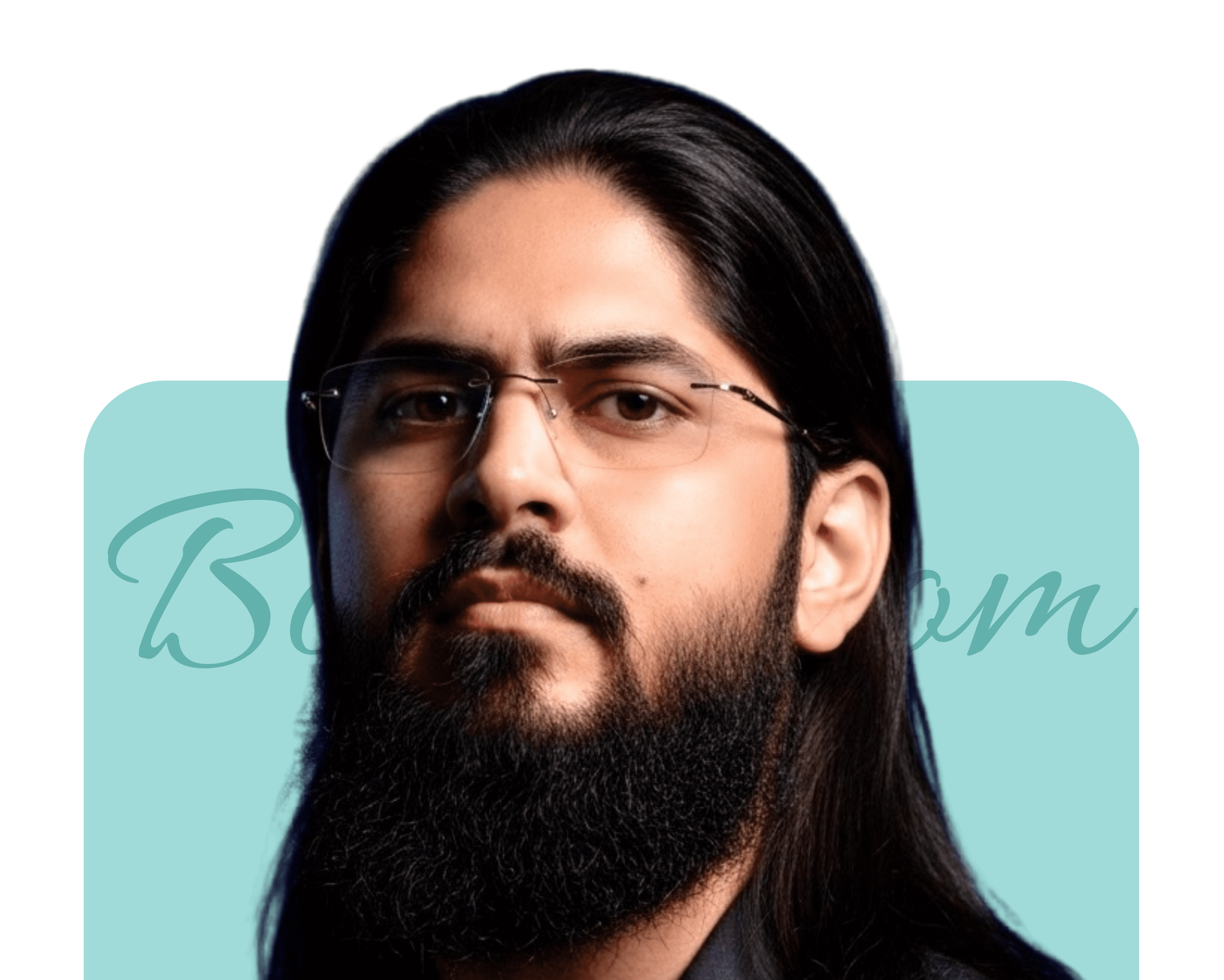

Explore MSM Yaqoob’s journey from traditional SEO to AEO and GEO as the Founder & Head of Digital Strategy at DigiMSM shares insights into AI-powered search, brand visibility, customer acquisition, content strategy, and the changing digital marketing landscape. Discover how Pakistani businesses and professionals can prepare for AI search, strengthen their digital authority, compete globally, and build brands that are discoverable, understood, and recommended by platforms like ChatGPT and Perplexity.
Boardroom: Looking back at your professional journey across digital marketing, content, publishing, and entrepreneurship, what experiences shaped your transition from traditional SEO toward AEO and GEO, and what convinced you that AI-powered search represents the next major frontier?
MSM Yaqoob: My route into search was unusual. I trained as a linguist, not a technologist. I did my Master's in English Literature and Linguistics at NUML, and before that, a degree in Political Science. I spent years studying how meaning is carried in language, how arguments are structured, and how a reader is persuaded. It never occurred to me at the time that this would become a technical qualification.
Then I started writing and ranking content professionally, and I ranked over 500 articles on Google. What struck me quite early was uncomfortable to realise. The pieces that ranked were rarely the pieces that were best written. They were the ones best structured for a machine to understand. So I learned the machine's grammar, and for several years I worked in that gap between good writing and machine-readable writing.
The turning point was a client project where everything looked healthy. Rankings were up, traffic was up, and the reports were green. Then I asked ChatGPT the exact question their buyers ask before purchasing, and it recommended a competitor. Not us. Our client was not even mentioned. Every metric we were reporting said we were winning, but the place where the customer was actually deciding said we did not exist.
That was the moment. Language models are language systems. Suddenly, the thing I had studied for years—how meaning is carried and extracted from text—was the thing that decided visibility. I did not move into AEO and GEO because it was a trend. I moved because, for the first time, the machine had started reading the way a reader does, and I already understood readers.
Boardroom: How do AEO and GEO fundamentally change the way businesses should think about visibility, branding, and customer acquisition?
MSM Yaqoob: The core shift is from position to mention. For twenty-five years, we optimised for a slot on a page. You were number three or number seven, and everyone understood what that meant. In an AI answer, there is no page. There is a paragraph, and either your name is in it or it is not. There is no second place in a sentence.
For branding, this is bigger than most people realise. In traditional search, your website is your presence. In AI search, your brand is an entity, a thing the model has an understanding of, assembled from everywhere you appear rather than only from your own domain. What a review site says about you, what a Reddit thread says, and what an industry publication says—all of it feeds that understanding. You no longer fully control the shop window.
For acquisition, the uncomfortable part is that you cannot buy your way in. There is no bidding on an AI recommendation. That is genuinely new. For a decade, a company with a weak organic presence could simply outspend the problem. In AI answers, that option does not exist yet.
So the question a board should be asking has changed. It is no longer only, where do we rank? It is, when a customer asks an AI to recommend a company like ours, does our name come up, and if not, whose does?
Boardroom: Where does Pakistan currently stand in the global AI-search and digital marketing landscape, and what opportunities are Pakistani businesses missing?
MSM Yaqoob: I will be honest rather than patriotic about this. On adoption, most Pakistani businesses are behind. A large number still treat digital as social media posting, and many still measure success by follower counts rather than revenue.
But that lag matters less than usual here, and this is the part I think people miss. Answer engine optimisation is roughly two years old as a discipline. There is nobody in London or New York with fifteen years of GEO experience, because those years do not exist for anyone. For the first time in my career, Pakistani practitioners are not starting a decade behind. We are starting in the same month as everyone else.
What businesses here are missing is mostly measurement. Almost no Pakistani company I audit has ever checked whether AI platforms mention them. Not once. They will spend on ads and rankings while having zero visibility into a channel their buyers are already using. It is not that they decided AI search was unimportant. Nobody told them it could be measured.
The second gap is structural. A great many local sites are technically invisible to AI crawlers, either because those crawlers are blocked or because the content only appears after JavaScript runs. The content exists, and the machine cannot see it. That is a fixable problem, and fixing it usually takes hours rather than months.
Boardroom: What is the vision behind your latest work at DigiMSM, and how are you helping businesses prepare for an era where consumers increasingly ask AI platforms rather than traditional search engines?
MSM Yaqoob: The vision is one line. We want our clients to be the answer, not just a result.
Practically, that means we work at three levels. The first is whether machines can physically read your site, which involves server-side rendering, crawler access, and log analysis. The second is whether machines understand who you are, which is entity work, structured data, and consistency across the web. The third is whether machines have any reason to cite you, which is content and authority.
We also built eleven free AI SEO tools and put them online with no signup and no limits. Anyone can check their AI visibility, test whether their site blocks GPTBot, or generate schema without speaking to us. Some people think that is commercially reckless. I think it is the most honest form of marketing available, because a business that discovers its own problem is a far better client than one that has been told it has one.
The other principle is proof before payment. Every engagement opens with a free audit, and if the audit shows a client does not need us, we say so. We have lost work that way. We have also kept clients for years because of it.
Boardroom: What practical strategies can a Pakistani brand adopt today to increase the likelihood of being discovered, mentioned, and recommended by AI platforms such as ChatGPT and Perplexity?
MSM Yaqoob: Five things, in the order I would do them.
First, check that you are not blocking the crawlers. Visit your own domain followed by /robots.txt and look for GPTBot, ClaudeBot, PerplexityBot, and Google-Extended. These are separate from Googlebot, and a surprising number of sites block them without knowing. If they are blocked, nothing else you do matters.
Second, make sure your content exists in the HTML rather than appearing after JavaScript runs. Most AI crawlers do not execute JavaScript the way your browser does. If your site is built in React or a similar framework and renders in the browser, those crawlers may receive an almost empty page.
Third, restructure how you write. Put the answer in the first two lines rather than building up to it. Use real questions as your headings. Be specific with numbers and names, because vague marketing language gives a model nothing to extract and quote.
Fourth, be consistent about who you are. Use the same business name, address, and phone number everywhere, with proper schema markup and clear author identity. Models get confused by contradictions, and a confused model chooses a competitor it understands.
Fifth, get mentioned somewhere other than your own website: industry publications, credible directories, and community platforms. Your own claims about yourself carry the least weight of any signal available.
Boardroom: Do you believe traditional SEO will eventually become less important, or will SEO, AEO, and GEO work together as different layers of a successful digital strategy?
MSM Yaqoob: Layers, without question. Anyone telling you SEO is dead is either selling something or has not looked at the traffic data.
The honest picture is more interesting than either extreme. AI systems are not inventing knowledge about your company. They are reading the web, and the pages they rely on are largely the pages that already rank well and carry authority. So traditional SEO has quietly become the supply chain for AI visibility. Weak SEO produces weak AI presence because there is nothing credible for the model to find.
What is genuinely changing is the click economy. Zero-click behaviour is rising, so a business can be more visible than ever while receiving fewer visits. That is a real problem for anyone whose entire model depends on session counts, and it is why measurement has to evolve.
The way I explain it to clients is that SEO earns you the right to be found, AEO makes your content extractable once you are found, and GEO earns the citation inside the generated answer. Skip the first, and the other two have nothing to stand on.
Boardroom: What makes a brand "AI-ready," and what are the biggest weaknesses you currently see in Pakistani companies' digital presence?
MSM Yaqoob: An AI-ready brand is legible to a machine. It can be crawled, it can be understood as a distinct entity, and it says things specific enough to be worth quoting. Those three things, in that order.
The weaknesses I see repeatedly here are consistent enough that I could almost predict them before opening the site. Crawlers blocked without anyone realising. Content that only exists after JavaScript loads. No structured data at all, or broken structured data, which can be worse than having none. Business details that differ between the website, Google Business Profile, and Facebook page. Content with no named author and no credentials, which matters enormously in any field touching money or health.
The deepest weakness is not technical, though. It is that a great deal of content is written to fill a content calendar rather than to answer a question properly. Fifty shallow articles will lose to five genuinely authoritative ones, both in Google and in AI answers. Volume was a viable strategy for a while. It is not any longer, and I say that as someone who has published a lot of volume.
Boardroom: Having built your career across digital marketing, content, publishing, and education, what lessons from your entrepreneurial journey have shaped your approach to your new AI-focused work?
MSM Yaqoob: School of Literature taught me the most. I started it in 2019, and over the years we have served around 2,500 clients, delivered over a thousand research projects, and helped clients reach roughly 300 journal publications. I have interviewed more than 200 candidates and trained over 50 students in digital marketing.
Three lessons came out of that, and I still run on them.
The first is that teaching builds a business faster than selling does. Almost every serious client I have gained came from someone I taught, helped, or gave something to for free. That is exactly why we put eleven tools online for free. It is not generosity; it is the only marketing strategy I have seen work reliably over seven years.
The second is that hiring is the hardest thing in this business, and it does not get easier. Skills can be taught quickly. Judgment cannot. I have learned to hire for how someone thinks about a problem they have never seen before.
The third came from academic work, and it is the one I value most. In research, you cannot make a claim without evidence, and a reviewer will find the gap. That habit shaped how I run DigiMSM. When we say a placement reached page one in thirty-eight minutes, that is our fastest verified result, and I always say so because a record is not an average. In an industry full of guarantees nobody can honestly make, saying precisely what you can prove turns out to be a competitive advantage.
Boardroom: Will AI-driven marketing create more opportunities for young Pakistani professionals, or will it replace significant portions of traditional digital marketing jobs?
MSM Yaqoob: Both, and I do not think it helps anyone to soften that.
Roles that consist of producing volume are already being compressed: writing forty generic blog posts a month, building basic backlinks, and assembling routine reports. If that is the whole of someone's job, the next few years will be difficult, and pretending otherwise does young professionals no favours.
At the same time, work is appearing that did not exist two years ago: AI visibility analysts; people who can diagnose why a crawler cannot read a site; entity and structured data specialists; and strategists who can tell a client which of three approaches is actually right for them. These roles pay considerably better than the ones being automated, because judgment is scarce and output is not.
My advice to young professionals in Pakistan is specific. Do not compete with AI on production, because you will lose. Compete on the things it cannot do, which are diagnosis, judgment, and taking responsibility for a recommendation. Learn how things actually work underneath rather than only which buttons to press in a tool. Someone who understands why a page is not indexed will always be more valuable than someone who can only report that it is not.
Boardroom: Can Pakistani digital agencies and professionals compete globally in emerging fields such as GEO and AI-search optimisation? What capabilities must they develop?
MSM Yaqoob: Yes, and we already do. We serve clients worldwide from an office in Islamabad, and in AI search work nobody has ever asked me where I am sitting. They ask whether the work holds up.
The advantages are real: English fluency at a professional level, a genuinely large technical talent pool, a time zone that overlaps both Europe and Asia, and cost structures that let us take on projects at a scale that would be uneconomic elsewhere. And as I said, in this particular field, nobody has a fifteen-year head start.
What we have to develop is less about skill and more about discipline. Documentation is the first. International clients expect written methodology, clear reporting, and traceable decisions, not a WhatsApp message saying rankings improved. Reliability is the second. Delivering on the promised date consistently is worth more than being brilliant occasionally.
The third is the hardest and the most important. We have to stop competing on being cheap. When a Pakistani agency prices advanced technical work at a fraction of its value, the client does not think they found a bargain. They think the work is basic. I have made that mistake myself in earlier years. Price based on the value of the outcome, and the conversation changes entirely.
Boardroom: Looking ahead, how do you expect AI to transform digital marketing, content creation, search behaviour, and brand building in Pakistan over the next five years?
MSM Yaqoob: Search behaviour will become conversational rather than keyword-based. People will describe a situation in full sentences and expect a recommendation back. Practically, that means the phrases businesses optimise for get longer and much more specific.
Content will split into two tiers. Generic informational content will lose almost all commercial value because a machine can generate it instantly, and a user no longer needs to visit a page for it. Content built on genuine expertise, original data, real experience, and named authors will become considerably more valuable than it is today. The middle ground disappears.
For Pakistan specifically, I expect Urdu and regional-language AI search to matter far sooner than most businesses are planning for. When people can ask an AI assistant a question in Urdu and get a useful answer, an enormous audience that was never comfortable typing English search queries enters the market. Very few local businesses are preparing content for that, and I think it will be one of the larger missed opportunities of the next few years.
Measurement will change too. Boards will start asking about share of AI mentions the way they ask about market share now. Some of those metrics do not properly exist yet, which is precisely why building them is interesting work.
Boardroom: If you had to identify one major digital opportunity in Pakistan today that most businesses have not yet recognised, what would it be, and what would you advise CEOs to do about it before their competitors do?
MSM Yaqoob: The opportunity is that AI visibility in almost every Pakistani category is currently unclaimed, and it will not stay that way.
Think about what happened with Google. In 2005, you could rank for a competitive commercial term with modest effort. Today, the same term costs a fortune and years of work because the position is occupied and defended. That window closed. Right now, in most categories in this country, the AI window is wide open. When someone asks ChatGPT to recommend a builder in Lahore or a software company in Karachi, often no local brand is well established in that answer at all. The seat is empty.
Occupying it today costs a fraction of what it will cost once three competitors are fighting for it, because AI systems, like search engines, develop a preference for the sources they already trust. Early presence compounds.
My advice to a CEO is four concrete steps, and none of them require a large budget. Firstly, this week, ask ChatGPT, Gemini, and Perplexity the exact question your customers ask before buying, and record what comes back. That takes ten minutes, and it is usually a sobering meeting. Secondly, check whether your website is even readable by AI crawlers, because if it is not, nothing else will work. Thirdly, give this to a named owner with a monthly reporting line, because what is nobody's job does not get done. Fourthly, publish the definitive answer for your category, the piece that genuinely deserves to be quoted.
The brands that will own AI search in 2031 are the ones doing this in 2026, quietly, while everyone else is still arguing about whether it matters.