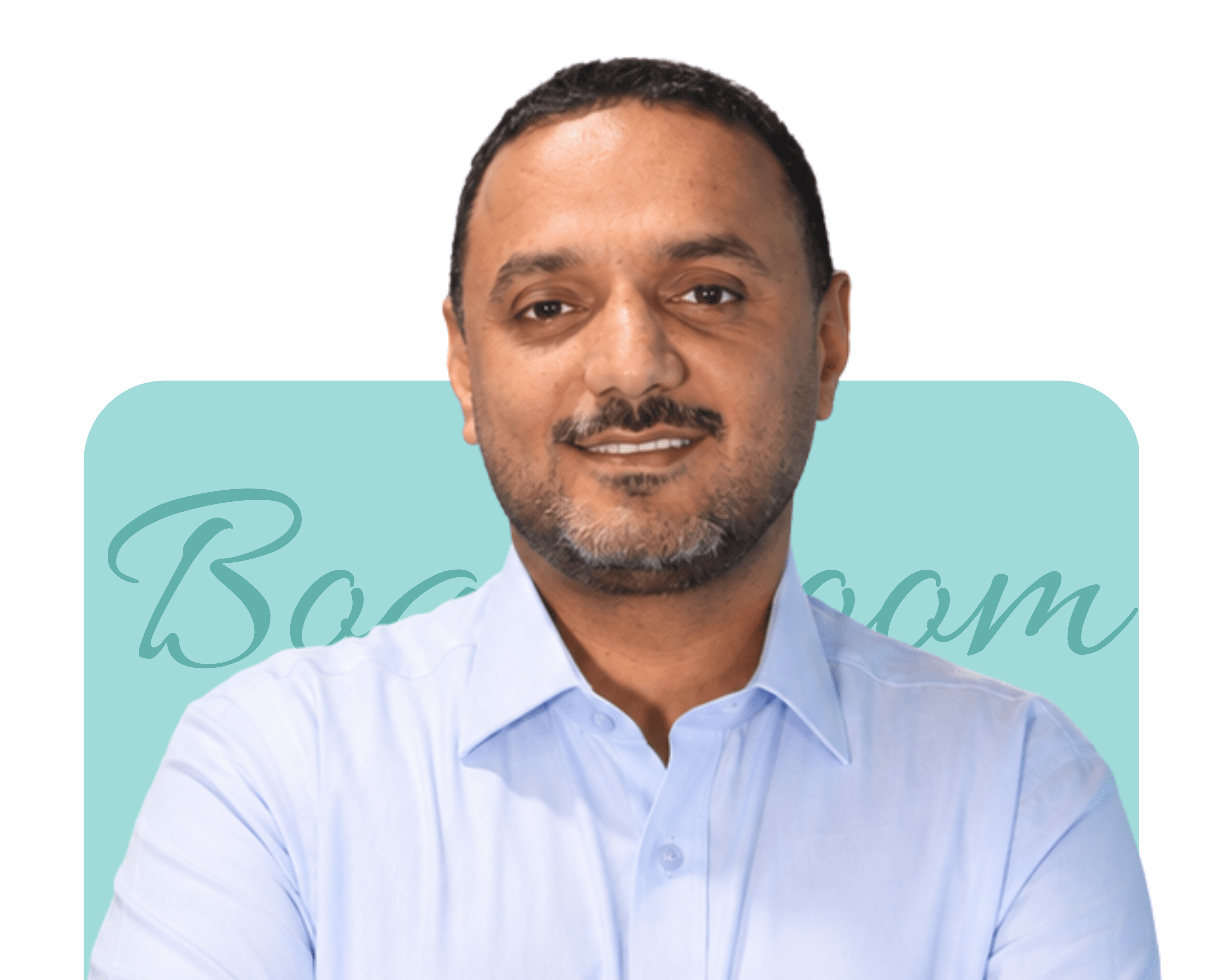
Saqib Naqvi shares insights on leadership, entrepreneurship, technology, and building a stronger, export-driven Pakistan. A conversation on creating value, empowering people, and turning local potential into global opportunity.
BOARDROOM: Kindly share your professional journey and what inspired you to pursue this profession?
Saqib Naqvi: My journey has been less about choosing a profession and more about following problems that needed solving.
Over the years, I have had the opportunity to build and scale businesses from scratch—scaling 200+ private-label brands, working with 280+ manufacturers, and contributing to an ecosystem that has generated 10 million+ orders and created 10,000+ direct and indirect jobs.
I have also invested in 20+ startups, evaluated and mentored 500+ entrepreneurs, and worked with 15+ universities and business incubation centres.
But numbers only tell you how far you travelled. The people you enabled along the way tell you why the journey mattered.
BOARDROOM: How would you describe your leadership style, and how has it evolved over the years?
Saqib Naqvi: My leadership style has evolved from giving answers to asking better questions.
Earlier, I believed a leader had to know everything. Experience taught me that the real role of a leader is to create clarity, empower people, and build an environment where better ideas can emerge.
I don't want to build followers. I want to build people who can lead without me.
BOARDROOM: What has been the most difficult decision you have made in your professional life, and what did you learn from it?
Saqib Naqvi: The hardest decisions are often the ones where there is no perfect answer.
I have learned to make decisions based on reality rather than attachment—whether that means changing direction, letting go of an idea, or accepting that something isn't working.
Sometimes growth begins with the courage to let go of what you once believed in.
BOARDROOM: Every leader faces setbacks. Can you please share an example of how you navigated a major challenge and built resilience from it?
Saqib Naqvi: I have experienced both extraordinary growth and difficult setbacks.
One of the most defining experiences was taking a business from zero to approximately $20 million in scale and raising around $5 million in funding. The journey taught me that growth looks glamorous from the outside, but internally it is often a series of difficult decisions, uncomfortable conversations, and constant uncertainty.
Setbacks taught me something success never could: how little control we actually have, and how much responsibility we still carry.
Resilience is not avoiding storms. It is learning how to keep moving while you're in one.
BOARDROOM: In your view, what role do governance, ethics, and accountability play in building sustainable organizations?
Saqib Naqvi: Growth can make a business bigger; integrity makes it sustainable.
Governance creates structure, accountability creates ownership, and ethics creates trust.
Eventually, every organization becomes a reflection of the values it refuses to compromise.
BOARDROOM: How do you balance tradition with innovation, especially in an environment where disruption is constant?
Saqib Naqvi:I don't believe tradition and innovation are opposites.
Tradition tells us where we came from; innovation asks where we can go next.
Today, technology allows us to rethink even the most traditional parts of commerce. Through our AI-enabled CRM, 100+ brands are already using technology to manage more than 150,000 customer interactions daily while processing 35,000+ orders every day.
Technology should not replace wisdom. It should amplify it.
BOARDROOM: What strategies do you use to motivate and empower your teams to perform at their best?
Saqib Naqvi: People rarely give their best simply because they are told to.
They perform when they have purpose, ownership, trust, and the freedom to make decisions.
When you are processing tens of thousands of orders every day, no single leader can be everywhere. Systems and people have to work together.
My job as a leader is to create clarity and then get out of the way.
If everything depends on the leader, the leader has failed to build a scalable organization.
BOARDROOM: Who have been your mentors or role models, and what lessons have you carried from them into your own leadership?
Saqib Naqvi: I have learned from many people—successful entrepreneurs, colleagues, team members, mentors, and even failures.
Working with and mentoring 500+ startups has also taught me that learning is never one-directional. Sometimes the person you are mentoring teaches you something you could never learn from a textbook.
One lesson continues to stay with me:
Every person you meet knows something you don't.
Leadership becomes stronger when curiosity remains stronger than ego.
BOARDROOM: What do you see as the biggest opportunities and challenges for Pakistan's business ecosystem in the coming years?
Saqib Naqvi: Pakistan's greatest opportunity is its people—young, ambitious, entrepreneurial, and increasingly connected to the world.
We have the manufacturing capacity, entrepreneurial talent, technology, and a large domestic market. We now need to connect these strengths with global demand.
I believe the next big opportunity is export-led digital commerce—enabling Pakistani manufacturers and sellers to reach international customers through technology.
That is also the mission I am pursuing today: to enable Pakistani sellers with technology so they can compete globally and help increase Pakistan's exports.
Our challenge is not a shortage of potential.
It is turning potential into systems, consistency, and execution.
BOARDROOM: What advice would you give to young professionals and entrepreneurs who aspire to leadership roles?
Saqib Naqvi: Don't chase the title. Chase the ability to create value.
I have evaluated and mentored hundreds of startups, and one pattern is clear: great ideas are common; disciplined execution is rare.
Start with a problem, not a business idea. Learn to sell, build, fail, recover, and understand people.
And remember:
Your first business may not make you successful, but it can make you capable.
BOARDROOM: How do you maintain a balance between professional responsibilities and personal well-being?
Saqib Naqvi: I have stopped thinking of balance as dividing life equally between work and everything else.
Some seasons demand more work; others demand more reflection and family.
Building businesses, mentoring entrepreneurs, and working with the ecosystem can consume enormous energy, but I have learned that sustainability applies to people just as much as businesses.
You are building a life, not just a business.
Success loses its meaning if you have no time to experience it.
BOARDROOM: Looking back, what impact do you hope to leave behind on your industry, organization, or community?
Saqib Naqvi: I don't want my legacy to be defined by the companies I built, the orders we processed, or even the 3 million+ pairs of shoes we sold.
I would rather be remembered by the people who built something because they believed they could.
If our work can help more Pakistani businesses adopt technology, reach global markets, create jobs, and turn local capability into international exports, that would be meaningful.
My mission today is bigger than building another company.
I want to help build a Pakistan that doesn't just consume from the world, but builds, sells, and exports to it.
Because ultimately, the greatest legacy of building is what others become capable of building after you.