Hiriq is transforming the way organizations approach recruitment by bringing AI into the early stages of hiring. From understanding job requirements and analyzing CVs to matching candidates, conducting pre-screening and dynamic AI-led interviews, Hiriq helps recruiters move through the hiring process faster and with greater structure. Rather than replacing recruiters or making decisions on their behalf, Hiriq provides meaningful evidence, detailed assessments and interview insights that allow hiring teams to make more informed decisions. Its vision is to move recruitment beyond traditional applicant management toward intelligent candidate evaluation, while keeping human judgment, context and trust at the center of the hiring process.
Boardroom: What inspired you to establish Hiriq, and what recruitment challenges were you determined to solve?
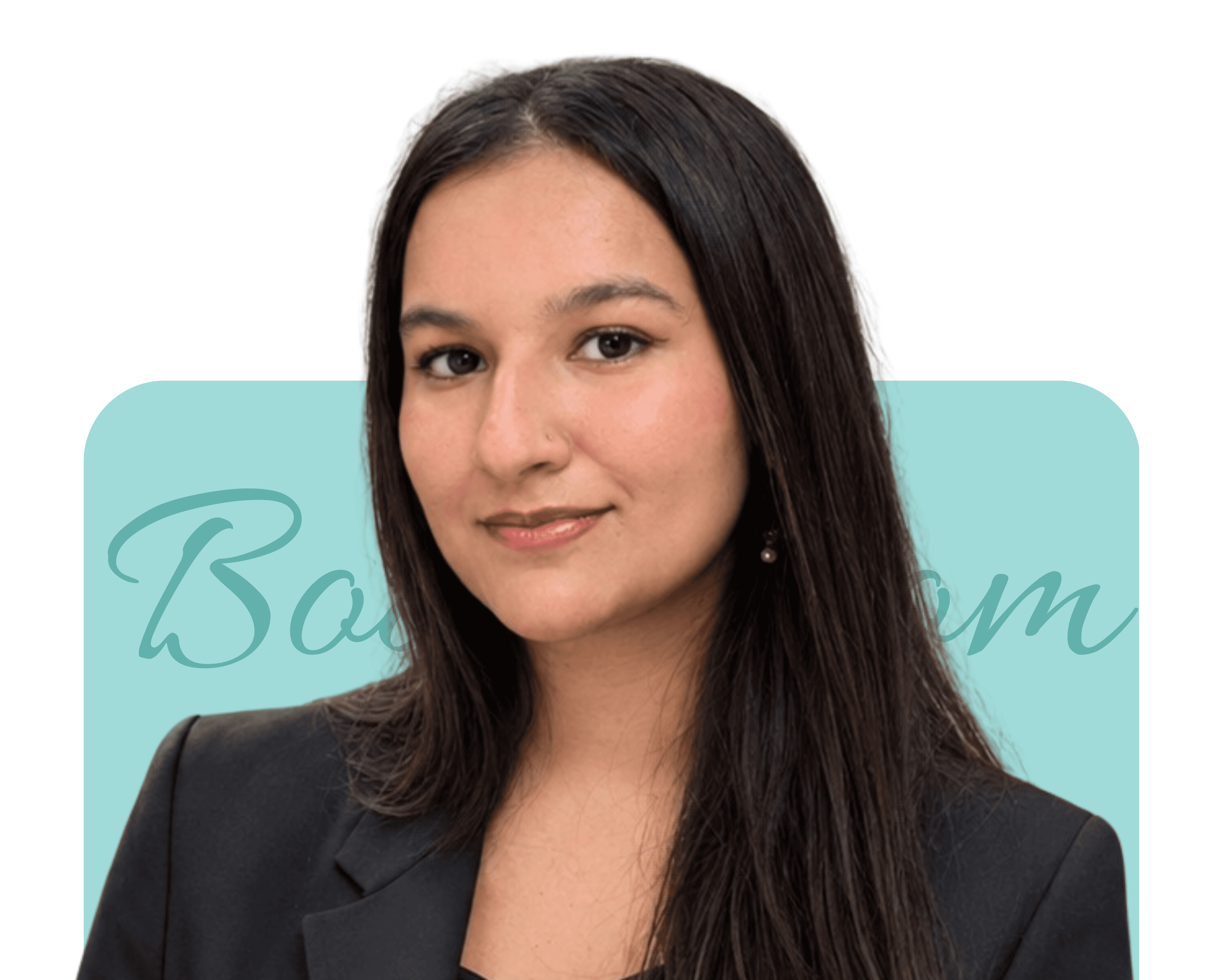
Ayesha Khaldoon: Hiriq really started with a simple observation: recruitment is still far too manual for how fast businesses operate today. A company can receive hundreds of applications for one position, and someone still has to go through those CVs, shortlist people, coordinate with candidates, conduct initial screenings and then repeat the same process for the next position. What particularly stood out to me was how much time gets lost even before the actual hiring decision happens. Something as simple as arranging an initial conversation can turn into days of back-and-forth. At the same time, AI was becoming capable of understanding language, evaluating information and having real-time conversations. So, I started thinking: why shouldn't the repetitive first stages of recruitment be automated as well? That's where Hiriq came from. The idea isn't to replace recruiters. It's to remove the repetitive work around them so they can spend more time on the candidates and decisions that actually need human judgment.
Boardroom: How would you describe Hiriq's mission, and what long-term vision are you pursuing for the future of hiring?
Ayesha Khaldoon: Our mission is pretty straightforward: make hiring faster, more structured and more intelligent without taking the human element out of it. Today, recruiters are often managing information rather than actually evaluating people. They might have hundreds of CVs sitting in an ATS, but someone still has to figure out who is actually worth interviewing. Hiriq is designed to take that process much further. It can help a company go from a job requirement to candidate matching, pre-screening, AI-led interviews and a structured assessment of the candidate. Hiriq isn't meant to be another ATS with an AI feature added to it. We have built it as an intelligence layer for the early stages of hiring: one that understands the requirements of a role, evaluates candidates, conducts structured assessments and gives recruiters meaningful evidence to make better decisions. We're starting with Pakistan, the GCC, the UK and the US, but the ambition is much bigger than those initial markets. I want to build Hiriq into a globally significant recruitment technology company originating from Pakistan and competing with some of the strongest products in the international market.
Boardroom: What makes Hiriq different from conventional recruitment platforms and Applicant Tracking Systems?
Ayesha Khaldoon: I think the easiest way to explain it is: A traditional ATS helps you manage applicants. Hiriq goes a step further by helping you evaluate them. An ATS is very useful for organizing jobs, applications, candidate stages and recruitment data. But ultimately, the recruiter still has to do most of the actual screening. With Hiriq, the workflow can go from: Job requirements → CV analysis → candidate matching → pre-screening → AI interview → structured evaluation → recruiter decision. And the interview itself isn't just a fixed list of generic questions. A recruiter can define the role, industry, focus areas, difficulty and question types. Hiriq then conducts the interview dynamically, asking technical, behavioral, situational and role-specific questions, following up on a candidate's responses, probing areas that need deeper assessment, and evaluating the evidence gathered throughout the conversation. We also have interview-integrity monitoring, so recruiters can see relevant indicators if something unusual happens during an interview. The important part is that Hiriq doesn't say, "AI has decided this person should be hired." Instead, it gives the recruiter structured evidence about the candidate. The final decision remains with the person who actually understands the organization's context.
Boardroom: Artificial Intelligence is transforming talent acquisition. How do you see AI reshaping recruitment over the next five years?
Ayesha Khaldoon: I think we're going to see a shift from applicant management to candidate intelligence. A lot of recruitment today involves collecting information that already exists somewhere—CVs, applications, interview answers—and then having humans manually process it. AI can do a lot of that work much faster. Over the next five years, I expect AI to become involved much earlier in the recruitment process. It will understand the requirements of a role, identify relevant candidates, conduct initial conversations, ask follow-up questions and organize the evidence recruiters need to make a decision. But I don't think the future is "AI replaces recruiters." Hiring is ultimately a human decision. There are things like culture, team dynamics, leadership and context that can't simply be reduced to a score. So I see the future as AI doing the heavy lifting and humans making the important decisions. That's essentially the philosophy we're building Hiriq around.
Boardroom: How does Hiriq ensure fairness, transparency, and minimize bias in AI-driven hiring decisions?
Ayesha Khaldoon: This is something we take seriously because hiring is a high-impact area for AI. Our principle is simple: AI should provide evidence, not act as an unquestionable authority. Hiriq evaluates candidates against the requirements and competencies of the role and gives recruiters both quick insights and the ability to dive deeper. They can see the overall assessment, but also access the complete transcript, detailed evaluation, candidate responses and relevant behavioral and interview-integrity indicators. So the recruiter isn't simply given a score and asked to trust it—they can see the evidence behind it. The AI supports the decision; the recruiter makes it.
Boardroom: What were the biggest challenges you faced while building Hiriq, and how did you overcome them?
Ayesha Khaldoon: Honestly, one of the biggest lessons was that building the product and building the business are two very different things. You can build something technically impressive, but that doesn't automatically mean you've solved the problem in the way a customer actually wants. When we started taking Hiriq into the market and speaking with potential employers, those conversations taught us a lot. We learned what recruiters actually spend their time doing, which parts of hiring they're comfortable automating, where they want human control and what makes them hesitant about AI. Some conversations went further than others, and that's completely normal at this stage. But every conversation gave us information that we could take back into the product. Technically, Hiriq is also quite complex because we're bringing together CV intelligence, matching, pre-screening, real-time voice interviews, dynamic question generation, transcription, evaluation and interview-integrity monitoring. So one of the biggest lessons for me has been that AI isn't just about having a good model. The real product is everything around the model; the workflow, reliability, user experience and trust.
Boardroom: As a startup founder, what leadership principles have been most instrumental in building your team and company culture?
Ayesha Khaldoon: For me, the biggest one is ownership. In a startup, everyone has to care about the outcome, not just whether they completed their assigned task. The second is staying close to the customer. I don't want us building features just because they sound impressive. We should always be able to answer: what problem does this solve, and why would a recruiter actually use it? And probably the most important one is consistency. Building a company isn't about having one great day or one great idea. It's about showing up every day, learning, improving the product and pushing it forward, even when things aren't going perfectly. I also believe strongly in iteration and having a team that challenges ideas. In AI, things move incredibly quickly, so being willing to question your assumptions and adapt is essential.
Boardroom: How important is data security and candidate privacy in AI-powered recruitment, and how does Hiriq address these concerns?
Ayesha Khaldoon: Data security and candidate privacy are extremely important to us because recruitment involves highly sensitive personal and professional information. We’ve built Hiriq with strong access controls and company-level data isolation, ensuring recruiters only have access to the information they’re authorized to see. We also take a privacy-first approach to our interview-integrity features. Hiriq does not use third-party, server-based facial-analysis systems, and facial data is not maintained as part of a candidate’s profile. Limited visual information may only be captured when a specific interview-integrity event is triggered, such as a potential cheating flag, and is automatically deleted after a defined period. We also don't retain raw interview audio as a permanent recording. The information retained is what is needed for the recruitment assessment, such as the transcript and relevant evaluation results. Ultimately, trust is fundamental to recruitment technology, and privacy and security will remain priorities as Hiriq grows.
Boardroom: What opportunities do you see for Pakistan to become a regional leader in AI and HR technology?
Ayesha Khaldoon: I think Pakistan has a very real opportunity here. We already have a large technology talent pool, and we're producing engineers and developers who are capable of building products for global markets. The opportunity now is to move from simply providing technology services to building technology products ourselves. AI makes that particularly interesting because you can build a product in Pakistan and sell it globally. For Hiriq, we're looking at Pakistan, the GCC, the UK and the US because the underlying recruitment problem isn't unique to one country. And I think that's an important mindset for Pakistani startups: solve something locally if that's where you understand the problem best, but build it with a global market in mind. There is no reason products built in Pakistan can't compete internationally.
Boardroom: As a woman leading a technology startup, what message would you like to share with aspiring female entrepreneurs?
Ayesha Khaldoon: I think one of the biggest things is not waiting until you feel completely ready. There will always be a reason to think you need more experience, more knowledge or more confidence before taking the next step. At some point, you just have to start and you learn incredibly quickly once you're actually doing it. And you have to believe in yourself without underestimating what you're capable of. There will be bad days, setbacks, things that don't work and decisions you get wrong. I've learned that the ability to recover quickly, take the lesson and move forward is just as important as getting things right. You don't have to fit a certain image of what a technology founder is supposed to be. You have to believe in what you're building, keep learning, and keep showing up.
Boardroom: Where do you envision Hiriq over the next five years, both locally and globally?
Ayesha Khaldoon: I think Hiriq can become much bigger than a recruitment platform. Over the next five years, I want Hiriq to become a globally recognized AI company that fundamentally changes how organizations hire. We're starting with Pakistan, the GCC, the UK and the US, but I see those as our starting points, not the boundaries of the company. The vision is to make the entire early-stage hiring process intelligent, from understanding what a company actually needs, to identifying the right candidates, screening them, conducting meaningful interviews and giving hiring teams the evidence they need to make better decisions. And I believe this can eventually extend far beyond simply automating interviews. There is an enormous amount of intelligence that can be built around how companies understand talent and make hiring decisions. I want Hiriq to be a company that is built in Pakistan but competes globally at the highest level of the HR technology industry. I want us to build something that isn't just another successful Pakistani startup, but a major technology company with a global footprint and a product used by organizations around the world. The ambition is not to build a better ATS. It's to rethink how hiring itself works. And I genuinely believe Hiriq has the potential to do that.
Boardroom: What is your vision for the future of work, and what role do you believe AI-powered innovation will play in shaping Pakistan's business landscape?
Ayesha Khaldoon: I don't think the future of work is going to be humans versus AI. I think it's going to be humans with AI versus humans without it. There is an enormous amount of work in businesses today that is repetitive, administrative and time-consuming. AI can take a lot of that work away and allow people to spend more time on judgment, creativity, relationships and strategy. For Pakistan, I think that's a huge opportunity. We have the talent. We have a large young workforce. We have an increasingly strong technology ecosystem. What we need to do is turn that talent into products that solve real problems and can compete beyond Pakistan. That's ultimately what I'm trying to do with Hiriq. I want to build a company from Pakistan that tackles a problem that exists everywhere, not just here, and uses AI in a way that creates real business value rather than simply putting "AI" on a product label. For me, that's what the future of work looks like: technology handling more of the repetitive work, while people have more time to do the work that actually requires people.