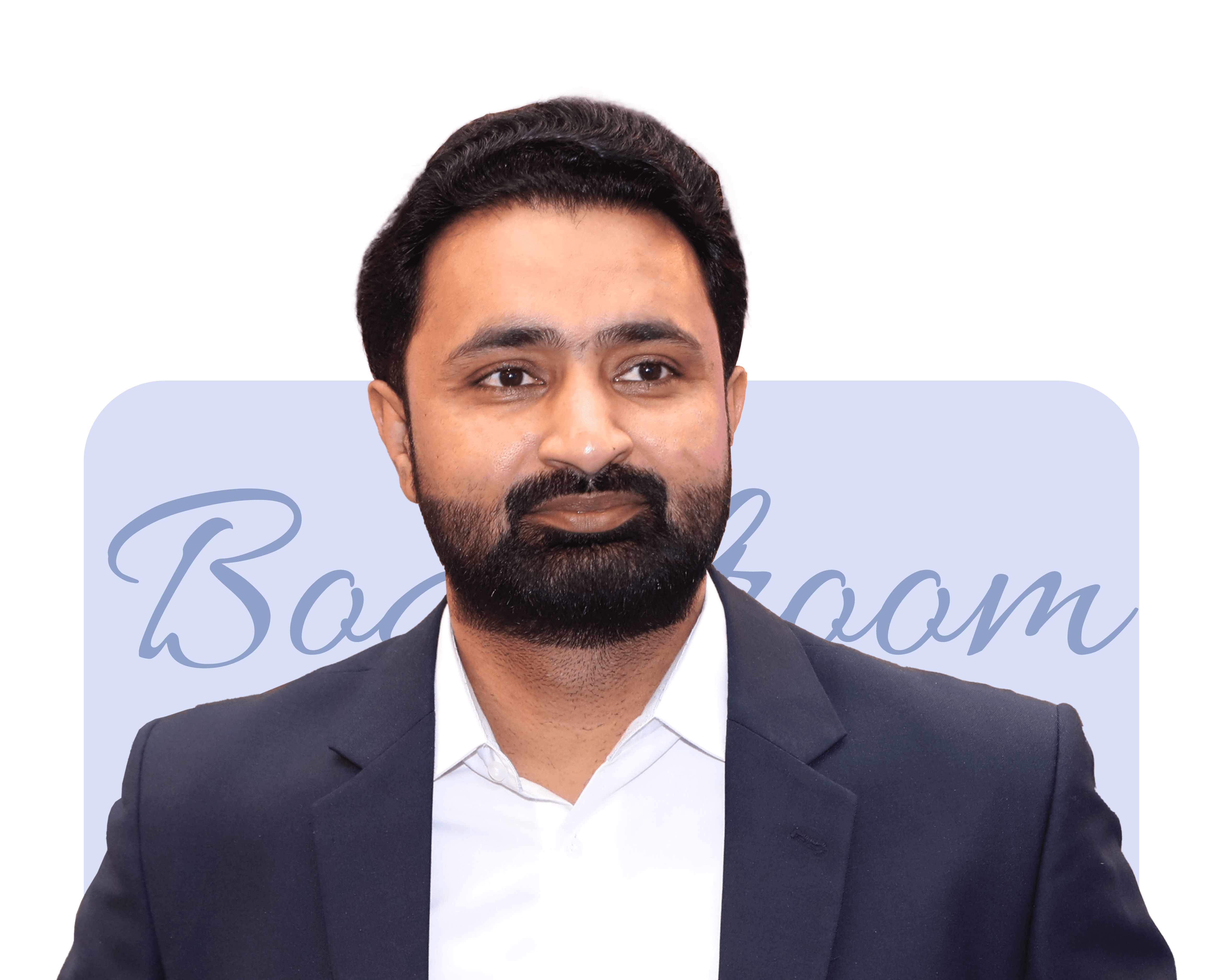
Farhan Esar is the Founder and Chief Executive Officer of Collab P, an enterprise project collaboration and market-access platform designed to connect technology companies, professionals, universities, and service providers with large-scale business and government contracting opportunities.
His professional journey spans information technology, consulting, business development, international contracting, and strategic project execution. After working across Saudi Arabia, Iraq, and the United States, he developed specialized expertise in navigating the U.S. government contracting ecosystem, particularly the State, Local, and Education, or SLED, market.
BOARDROOM: How would you describe your leadership style, and how has it evolved over the years?
Farhan Esar: My leadership philosophy is built around strategic clarity, collaboration, accountability, and execution.
Early in my career, I believed leaders were expected to solve every problem themselves. Experience taught me that sustainable organizations are built by empowering capable people with the right systems rather than depending on individual decision-making.
I consider myself a collaborative but highly execution-oriented leader. Every initiative begins with understanding the larger strategic objective before breaking it into measurable execution milestones. My role is to ensure every individual understands not only what they are doing but why it contributes to the organization's long-term vision.
I believe leadership requires balancing vision with operational discipline. A compelling vision without execution remains an idea, while execution without vision limits innovation. Effective leaders continuously align both.
As Collab P expanded into multiple sectors including government contracting, digital transformation, consulting, education, and international partnerships, my leadership evolved from managing projects to developing ecosystems.
Today I focus on building partnerships instead of transactions, creating systems instead of dependencies, and developing future leaders instead of followers.
I encourage open communication, challenge assumptions through data, and welcome constructive disagreement because innovation rarely emerges from consensus alone.
Leadership is not about authority; it is about creating an environment where talented individuals consistently achieve outcomes beyond what they believed possible.
BOARDROOM: What has been the most difficult decision you have made in your professional life, and what did you learn from it?
Farhan Esar: The most significant decision was choosing to invest years in building Collab P instead of pursuing conventional consulting opportunities that offered immediate financial returns.
Developing an entirely new business model around U.S. SLED market intelligence required extensive research, technology development, relationship building, and market validation before generating meaningful commercial outcomes.
There were moments when the easier path would have been to continue traditional consulting assignments. However, I believed the long-term opportunity of building scalable infrastructure for international government contracting would create far greater value.
This decision required patience, resilience, and long-term thinking.
It also required investing in technology before revenue, building partnerships before products, and earning credibility before market recognition.
The experience reinforced several leadership principles:
• Long-term vision often requires short-term sacrifice.
• Sustainable businesses are built on solving structural problems rather than temporary market trends.
• Innovation requires persistence because markets rarely understand transformative ideas immediately.
Most importantly, I learned that entrepreneurs must be comfortable making decisions with incomplete information while remaining disciplined enough to adapt when new evidence emerges.
BOARDROOM: Every leader faces setbacks. Can you please share an example of how you navigated a major challenge and built resilience from it?
Farhan Esar: Building credibility in the U.S. government contracting ecosystem as an international company was one of the greatest challenges we faced.
Government procurement is built on trust, compliance, experience, and long-term relationships. Organizations naturally prefer working with proven partners who understand procurement regulations, contractual obligations, and operational requirements.
Rather than viewing this as a barrier, we approached it as a learning opportunity.
We invested heavily in understanding procurement frameworks across all fifty U.S. states, analyzed thousands of solicitations, studied procurement regulations, mapped prime contractors, and developed structured methodologies for opportunity qualification and teaming.
Instead of competing directly with established contractors, we positioned ourselves as strategic collaborators who could strengthen delivery capacity through global expertise.
This approach transformed a market entry challenge into a competitive advantage.
The experience reinforced that resilience is not simply recovering from setbacks. It is continuously adapting strategy while remaining committed to the long-term mission.
Every challenge became an opportunity to improve our processes, expand our knowledge, and strengthen our partnerships.
BOARDROOM: In your view, what role do governance, ethics, and accountability play in building sustainable organizations?
Farhan Esar: Governance, ethics, and accountability form the foundation of sustainable leadership.
Government contracting particularly demonstrates why these principles matter. Organizations entrusted with public funds must maintain transparency, regulatory compliance, financial integrity, and ethical decision-making throughout every stage of project delivery.
Strong governance enables consistent decision-making.
Ethics builds stakeholder confidence.
Accountability creates organizational credibility.
Without these elements, growth eventually becomes unsustainable regardless of financial success.
At Collab P we emphasize documented processes, measurable performance indicators, compliance-driven execution, and transparent communication across every engagement.
Organizations earn trust gradually but can lose it instantly.
Therefore governance should never be viewed as an administrative requirement. It is a strategic competitive advantage.
BOARDROOM: How do you balance tradition with innovation, especially in an environment where disruption is constant?
Farhan Esar: Innovation should improve established systems rather than replace them unnecessarily.
Many organizations assume digital transformation means abandoning traditional processes. I believe successful innovation begins with understanding why existing systems were originally created.
Government procurement provides an excellent example.
The fundamental principles of transparency, fairness, accountability, and competition remain unchanged despite advances in artificial intelligence, automation, and digital collaboration.
Technology should strengthen these principles rather than undermine them.
At Collab P we combine traditional procurement expertise with AI-driven opportunity intelligence, collaboration platforms, data analytics, and workflow automation.
Our objective is not to replace human judgment but to improve decision quality through better information.
Innovation succeeds when it respects institutional knowledge while preparing organizations for future challenges.
BOARDROOM: What strategies do you use to motivate and empower your teams to perform at their best?
Farhan Esar: People perform best when they understand purpose, possess ownership, and have opportunities for continuous growth.
I ensure every team member understands how their contribution supports our broader mission of expanding international business opportunities.
We encourage continuous learning because industries evolve rapidly.
Knowledge sharing, structured mentoring, measurable objectives, and collaborative problem-solving are integrated into our organizational culture.
I also believe recognition should be based on measurable outcomes rather than hierarchy.
Employees should feel trusted to make decisions while remaining accountable for results.
Empowerment is created by combining responsibility with capability development.
When people understand both the destination and their role in achieving it, motivation becomes intrinsic rather than dependent on external incentives.
BOARDROOM: Who have been your mentors or role models, and what lessons have you carried from them into your own leadership?
Farhan Esar: I have learned from many leaders rather than following a single individual.
Throughout my career I have been influenced by entrepreneurs, government officials, technology executives, procurement professionals, and business strategists who demonstrated integrity, long-term thinking, and disciplined execution.
From experienced government contracting professionals I learned that relationships and credibility often determine success more than technical capability alone.
From entrepreneurs I learned resilience, adaptability, and the willingness to pursue opportunities others overlook.
From institutional leaders I learned the importance of governance, strategic planning, and stakeholder management.
Perhaps the greatest lesson has been understanding that leadership is a continuous learning process.
Every project, partnership, success, and failure contributes to becoming a more effective leader.
BOARDROOM: What do you see as the biggest opportunities and challenges for Pakistan's business ecosystem in the coming years?
Farhan Esar: Pakistan possesses one of the region's largest pools of talented technology professionals, engineers, consultants, designers, and knowledge workers.
The country's greatest opportunity lies in expanding exports of professional services rather than relying solely on traditional outsourcing.
Global government contracting, digital transformation, consulting, engineering services, cybersecurity, artificial intelligence, healthcare technology, education technology, and professional services collectively represent multi-trillion-dollar markets.
If Pakistani companies learn how to navigate international procurement systems, comply with global standards, and establish strategic partnerships with international prime contractors, the country's export potential could increase substantially.
However, several challenges remain.
Many businesses lack awareness of international procurement ecosystems.
Compliance capabilities require strengthening.
Access to market intelligence remains limited.
Industry collaboration must improve.
Universities and industry should work more closely to produce commercially relevant skills.
Government, academia, and the private sector must operate as an integrated innovation ecosystem rather than separate institutions.
If this alignment is achieved, Pakistan can become a globally recognized exporter of high-value knowledge services.
BOARDROOM: What advice would you give to young professionals and entrepreneurs who aspire to leadership roles?
Farhan Esar: Develop expertise before pursuing titles.
Invest in learning continuously.
Understand your industry more deeply than your competitors.
Build credibility through consistent execution rather than personal branding alone.
Do not fear starting with small opportunities because major achievements are built upon disciplined execution over many years.
Learn financial management, communication, negotiation, technology, compliance, and strategic thinking.
Most importantly, build relationships based on trust.
Networks create opportunities, but credibility sustains them.
Leadership is earned through consistent contribution, ethical conduct, and delivering value over time.
Success should not be measured solely by personal achievements but by the opportunities created for others.
BOARDROOM: How do you maintain a balance between professional responsibilities and personal well-being?
Farhan Esar: Leadership requires maintaining both physical and mental discipline.
I believe productivity is closely connected with health, continuous learning, and family support.
Managing multiple projects requires structured planning, prioritization, delegation, and disciplined time management.
Equally important is creating time for reflection.
Some of the most valuable strategic decisions emerge when leaders step away from operational pressures and evaluate long-term direction.
Maintaining balance also means recognizing that sustainable performance cannot depend on constant activity.
Organizations become stronger when leadership develops capable teams that operate independently while remaining aligned with shared objectives.
BOARDROOM: Looking back, what impact do you hope to leave behind on your industry, organization, or community?
Farhan Esar: I hope my legacy will not simply be the company I built, but a shift in how businesses in Pakistan think about growth, international markets, and business development.
One of the biggest challenges I see is that many businesses expect immediate returns. They invest today and expect profits tomorrow. Sustainable business does not work that way. Real growth requires investing consistently in relationships, market access, knowledge, and long-term capability. If you invest ten dollars in business development with the right strategy, discipline, and persistence, it has the potential to generate one hundred dollars in future opportunities. But that only happens when you commit your time, resources, and effort consistently. There are no shortcuts. As the saying goes, God helps those who help themselves. Success comes from showing up every day, working on opportunities with discipline, and continuously improving.
This is the philosophy behind Collab P.
Our mission is to give companies access to opportunities that were previously beyond their reach. We provide early access to U.S. government opportunities before contracts are awarded, when prime contractors are actively selecting strategic partners. We connect businesses with established U.S. prime contractors, ranging from innovative small businesses to global organizations generating billions of dollars in annual revenue.
However, access alone is not enough. We help organizations understand the opportunity through decoded procurement intelligence, Statements of Work, market insights, capture strategy, and guidance on positioning themselves as valuable delivery partners. Whether a company specializes in IT, engineering, architecture, design, finance, consulting, audit, construction, healthcare, or education, there is a place within the U.S. government contracting ecosystem. Success depends on understanding where your capabilities fit and engaging at the right time, particularly during the pre-bid stage when teaming decisions are made.
My vision is that Pakistani companies begin investing consistently in business development rather than waiting for opportunities to arrive. Even a modest monthly investment in developing international market access can create opportunities worth millions of dollars over time. The objective is not simply winning contracts, but building globally competitive companies that become trusted long-term partners within international supply chains.
If, in the years ahead, thousands of Pakistani businesses adopt this mindset, invest in long-term capability, compete confidently in global markets, and generate sustainable export revenue, I will consider that the greatest achievement of my professional journey. That, to me, is a legacy worth leaving behind.