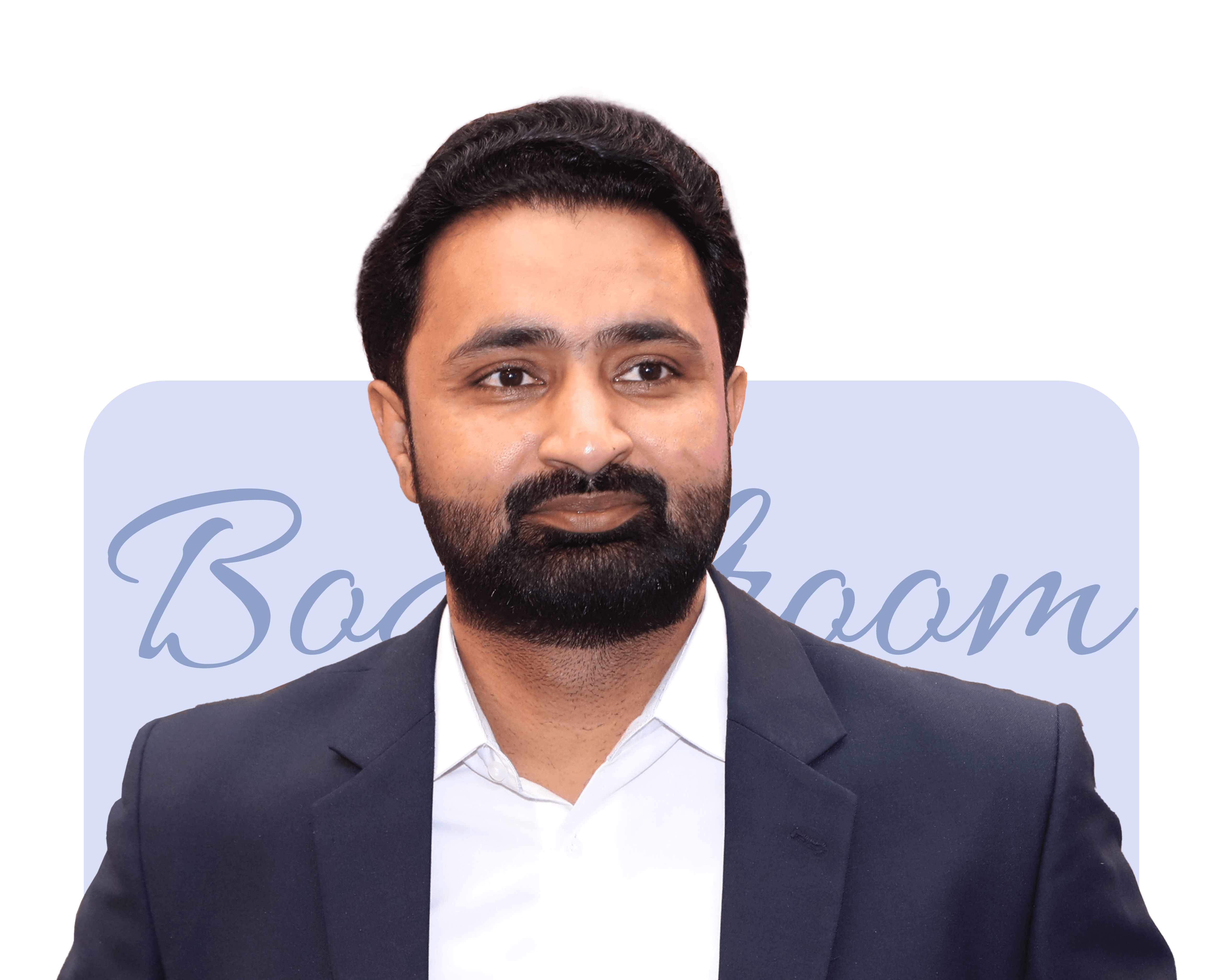
Hammad Rabbani, FCA shares 25+ years of insights on finance, telecom infrastructure, commercial strategy, financial inclusion, governance and leadership.
Boardroom: As a Fellow Chartered Accountant (FCA) who has navigated key strategic financial roles across leading organizations, could you walk us through the defining moments of your career journey and how your professional discipline shapes your executive leadership philosophy today?
Hammad Rabbani: My career began at KPMG Pakistan, where I spent nearly four years in audit and business advisory. That experience gave me a discipline that has remained central throughout my career: before forming a view, understand what the evidence is telling you. Numbers are important, but it is equally important to understand the business behind those numbers. Furthermore, being able to distinguish between information, assumptions and conclusions is also an essential quality
From KPMG, I moved into commercial banking, internal audit and housing finance, including a CFO role where I gained valuable exposure to working with the Board and understanding how strategic decisions are shaped at that level. I then moved into microfinance, serving as CFO at Kashf Microfinance Bank and later at Waseela Microfinance Bank, where I was involved in establishing core finance, treasury and risk functions and supporting the launch of new institutions and financial services.
A significant turning point came in 2013, when I moved beyond traditional finance into telecom infrastructure strategy at Pakistan largest Mobile Operator. I was involved in site-sharing, tower strategy, commercial negotiations and regulatory engagement with the PTA, including the work involved in establishing an independent tower company.
That experience subsequently led me to Axiata group tower company and then Pakistan’s largest independent Tower company, where my responsibilities became increasingly focused on commercial strategy, revenue growth, contract negotiations and business development.
Looking back, the defining thread across my career has not been a particular job title or industry. It has been applying the discipline of a Chartered Accountant beyond the finance function itself, bringing rigor to numbers while being equally comfortable in commercial, regulatory and strategic conversations.
Today, at Cratus Technologies, I am applying that same approach across finance and procurement as the company develops its local market position and evaluates international growth opportunities.
Boardroom: In today's dynamic economic climate, the role of financial leadership has evolved from risk mitigation to driving core growth. How do you balance fiscal conservatism with aggressive market expansion and innovation?
Hammad Rabbani: I do not see financial discipline and ambitious growth as opposing forces. I see financial discipline as the foundation that allows growth to be ambitious without becoming reckless.
In telecom infrastructure companies, where I spent several years, growth depends on long-term commercial agreements, pricing structures, tenancy expansion, infrastructure sharing and revenue assurance. Every growth opportunity therefore has to be evaluated not only for its headline revenue potential, but also for its underlying economics, risks, capital requirements and sustainability.
My approach has always been to stress-test the assumptions before committing resources. What is the real customer requirement? What drives the cost? How does the pricing model behave under different scenarios? What regulatory or contractual issues could affect the economics?
I learned the importance of this approach early in my career in microfinance, where we established risk-management structures and a dedicated credit-risk function alongside business growth. The objective was not to slow down growth, but to ensure that growth remained sustainable.
I apply the same philosophy today. Whether evaluating a new market, a new customer or a new product, the question is not simply, “Can we grow?” It is, “Can we grow in a way that creates sustainable value?”
At Cratus, that also means looking closely at every major cost component, understanding the implications of import and export classifications and ensuring that capital and operating expenditure translate into maximum value for both customers and shareholders.
Boardroom: The convergence of telecom, digital services, and financial inclusion has redefined customer engagement in Pakistan. From your seat in executive finance, what are the key leverage points for sustainable profitability in digital-first operations?
Hammad Rabbani: I have had the opportunity to see this convergence from both sides. At Waseela Microfinance Bank (Now Mobilink Microfinance Bank), I was involved in the development and launch of the branchless banking business with Pakistan’s largest Mobile Operator, which later evolved into Jazz Cash. I subsequently spent years on the infrastructure side of the telecom industry—the towers, power, fiber and other assets that enable digital services to reach customers.
That experience has led me to think about digital profitability at two interconnected levels.
The first is infrastructure efficiency. Sharing infrastructure, whether through passive infrastructure, RAN sharing, fiber or other network assets can significantly reduce the capital burden associated with expanding digital connectivity. That efficiency can ultimately support greater affordability and wider adoption.
The second is the service layer, where trust, reach, regulatory compliance and operational discipline become critical. Financial services delivered digitally can only scale sustainably when the underlying controls and regulatory requirements are designed into the business from the outset.
For me, sustainable digital growth therefore comes from connecting these two layers: efficient infrastructure on one side and trusted, compliant digital services on the other. The opportunity is not simply to digitize existing services, but to build an ecosystem where infrastructure efficiency, financial inclusion and commercial sustainability reinforce one another.
Boardroom: Operating within highly regulated structures requires exceptional agility. How do you ensure governance standards remain robust while maintaining operational speed across major business initiatives?
Hammad Rabbani: My experience across banking and telecom has taught me that governance and speed do not have to be in conflict. The real issue is how governance is designed.
If regulatory, legal and control requirements are introduced only at the end of a project, they can become obstacles and create delays. If they are incorporated into the business model from the beginning, they become part of the execution process.
I experienced this directly during the establishment of the independent tower company at Pakistan largest Mobile Operator. The initiative required commercial execution alongside regulatory and legal requirements. The way to maintain momentum was to incorporate those requirements into the business plan and transaction structure from the outset rather than treating them as a final approval step.
I saw the same principle in banking. At Waseela Microfinance Bank, the institution was launched within five months of my joining, while the team was simultaneously addressing the necessary SECP and SBP requirements and developing the business plans and financial models required to operate the business.
My philosophy is therefore quite simple: governance moves faster when it is designed into the business rather than added to it afterward.
That principle remains equally relevant at Cratus as we strengthen processes and compliance while pursuing both local and international growth.
Boardroom: Looking back at your professional career, what stands out as your single most impactful achievement and what valuable operational lesson did it teach you?
Hammad Rabbani: If I had to identify one, it would be my involvement in establishing Pakistan largest Mobile Operator's independent tower company from the initial concept through the regulatory process and ultimately into the operation of the business.
It was much more than a transaction. It involved building the commercial and operational foundation of a new business while simultaneously developing infrastructure-sharing arrangements with operators and tower companies.
We achieved a 25% site-sharing benchmark, delivered approximately 30% revenue growth for three consecutive years and reduced the working-capital cycle by four months. We also achieved significant operational cost efficiencies and approximately $18–20 million in capex savings through shared rollout arrangements in 2016.
But the numbers are only one part of the story.
The bigger lesson was that transformational change in a regulated industry is rarely about the transaction itself. It is about aligning the legal structure, regulatory requirements, commercial model and operating processes before you can sustainably create value.
The deal-making usually gets the attention. The structural groundwork is what makes the growth possible.
Boardroom: Macroeconomic volatility often tests an organization's structural strength. Could you share an instance where strategic financial planning successfully insulated your organization from broader market pressures?
Hammad Rabbani: One example was the shared rollout arrangements we negotiated with mobile operators during my time at Pakistan largest Mobile Operator. These arrangements generated approximately $18–20 million in capex savings in 2016.
In an environment where currency movements and imported equipment can make capital expenditure increasingly expensive and unpredictable, infrastructure sharing provides a direct way of reducing capital exposure. Instead of each operator duplicating infrastructure investment, sharing allows the industry to use existing assets more efficiently.
Another important experience came during the inflationary and macroeconomic pressures of 2022. Tower companies operate under long-term commercial contracts, while many underlying costs can move much more rapidly. This creates a structural challenge: revenues may be contractually committed while the cost base is exposed to inflation and other economic changes.
This required a commercial mechanism that could recognize movements in the underlying cost structure while maintaining a workable proposition for both the Tower company and the operator. My finance background, combined with my understanding of the operational cost drivers, was particularly useful in developing and negotiating a CPI-linked escalation mechanism.
The broader lesson for me is that financial planning is not simply about protecting an organization after volatility occurs. It is about designing commercial structures that recognize volatility before it becomes a problem.
Boardroom: Modern boardrooms demand multidisciplinary finance leaders. How do you mentor high-performing finance teams to think beyond financial statements and act as strategic co-pilots for business growth?
Hammad Rabbani: My own career has reinforced the importance of this approach. I trained as a Chartered Accountant, but much of my later career moved into commercial strategy, contract negotiation, regulatory engagement and business development.
I encourage finance professionals to get close to the commercial reality behind the numbers.
Understand what drives the customer's economics. Understand what drives the company's costs. Understand how revenue is generated. Participate in contract negotiations rather than reviewing the financial terms only after the commercial agreement has been reached.
Finance should not be the last stop before a decision goes to the Board. It should be part of shaping the decision.
At Pakistan’s largest independent Tower company, for example, we developed strategic dashboards that brought together financial information, market intelligence and customer insights to support decision-making. The objective was to give management a more complete picture of the business rather than simply present historical financial performance.
For the next generation of finance leaders, I would encourage curiosity beyond the ledger. The strongest finance professionals understand the business well enough to challenge assumptions, identify opportunities and contribute meaningfully to strategy.
Boardroom: With rapid advancements in AI and automated analytics, how are you integrating modern technology frameworks into standard financial forecasting and enterprise decision-making?
Hammad Rabbani: I have always viewed technology pragmatically. The first objective should be to remove unnecessary manual effort and improve the reliability of the underlying process.
In my recent roles, including at Pakistan’s largest independent Tower company and Cratus Technologies, automation has been applied to areas such as technical and financial reconciliations, invoicing and contract compliance. In a business where revenue assurance depends on accurately matching technical data with commercial agreements, automation can reduce manual errors and allow teams to spend more time on analysis rather than reconciliation.
I see AI and advanced analytics as an extension of that journey.
However, I believe there is an important sequence to follow. Before asking AI to make increasingly sophisticated predictions, an organization needs reliable data, clearly defined processes and strong controls. Automation should first make the existing process more efficient and reliable; analytics can then turn that reliable information into better insight.
The same principle applies to forecasting and Board-level decision support. Technology should not replace management judgment. It should improve the quality, speed and breadth of information available when that judgment is exercised.
For me, the real value of AI is therefore not technology for its own sake. It is using technology to reduce friction, improve visibility and allow people to focus on decisions that require judgment.
Boardroom: Telecom operators manage substantial social mandates—from contributing to Universal Service Funds (USF) to executing Corporate Social Responsibility (CSR) programs. As a financial leader, how do you optimize CSR capital allocation to move beyond compliance, ensuring these investments deliver measurable socio-economic impact while preserving shareholder value?
Hammad Rabbani: My experience in both microfinance and telecom has shaped the way I look at inclusion.
At Waseela and Kashf Microfinance Bank, financial inclusion was not an activity separate from the core business. The purpose was to extend access to financial services to segments of society that had historically been underserved.
Telecom infrastructure creates a similar opportunity. When connectivity reaches previously underserved areas, it creates an enabling platform for a much wider range of digital services, including digital financial services.
I therefore believe the greatest opportunity comes from identifying areas where commercial investment and social impact reinforce each other.
The question should not simply be how much is allocated to CSR. It should also be: what measurable outcome are we trying to create? Does an investment expand access? Does it improve connectivity or digital literacy? Does it enable economic participation? Can the outcome be measured over time?
When commercial strategy and inclusion objectives overlap, an organization can potentially create both broader socio-economic value and sustainable shareholder value.
That requires moving beyond viewing social investment simply as a cost or compliance obligation and instead asking how the organization can use its capabilities, infrastructure and partnerships to create lasting impact.
Boardroom: If you were to frame your ultimate advice to the next generation of financial executives and C-suite leaders entering today's boardrooms in a single guiding principle, what would it be—and what legacy do you aim to build through your leadership?
Hammad Rabbani: My guiding principle would be simple:
Let your numbers earn you a seat in the commercial conversation, not just a seat at the reporting table.
Every meaningful transition in my career came from moving beyond the traditional boundaries of a finance role from serving as CFO of newly established financial institutions to moving into telecom commercial strategy, infrastructure sharing, contract negotiation and regulatory engagement.
The discipline of an accountant, rigor, evidence and structure is most valuable when it is applied where business decisions are actually being made.
For the next generation of finance leaders, I would encourage them not to define themselves too narrowly by their functional title. Understand the customer. Understand the operating model. Understand the economics. Understand the regulatory environment. Then bring the financial discipline into that broader conversation.
As for the legacy I would like to build, it is relatively simple: organizations and teams where financial rigor and commercial ambition become part of the culture rather than occasional exceptions.
Whether that means building a sustainable infrastructure business, expanding access to financial services or developing new markets, I believe the strongest organizations are those that can combine disciplined decision-making with the courage to pursue meaningful opportunities.
If the next generation of finance leaders in Pakistan can take that combination into their own boardrooms, that would be a legacy I would be proud to leave.