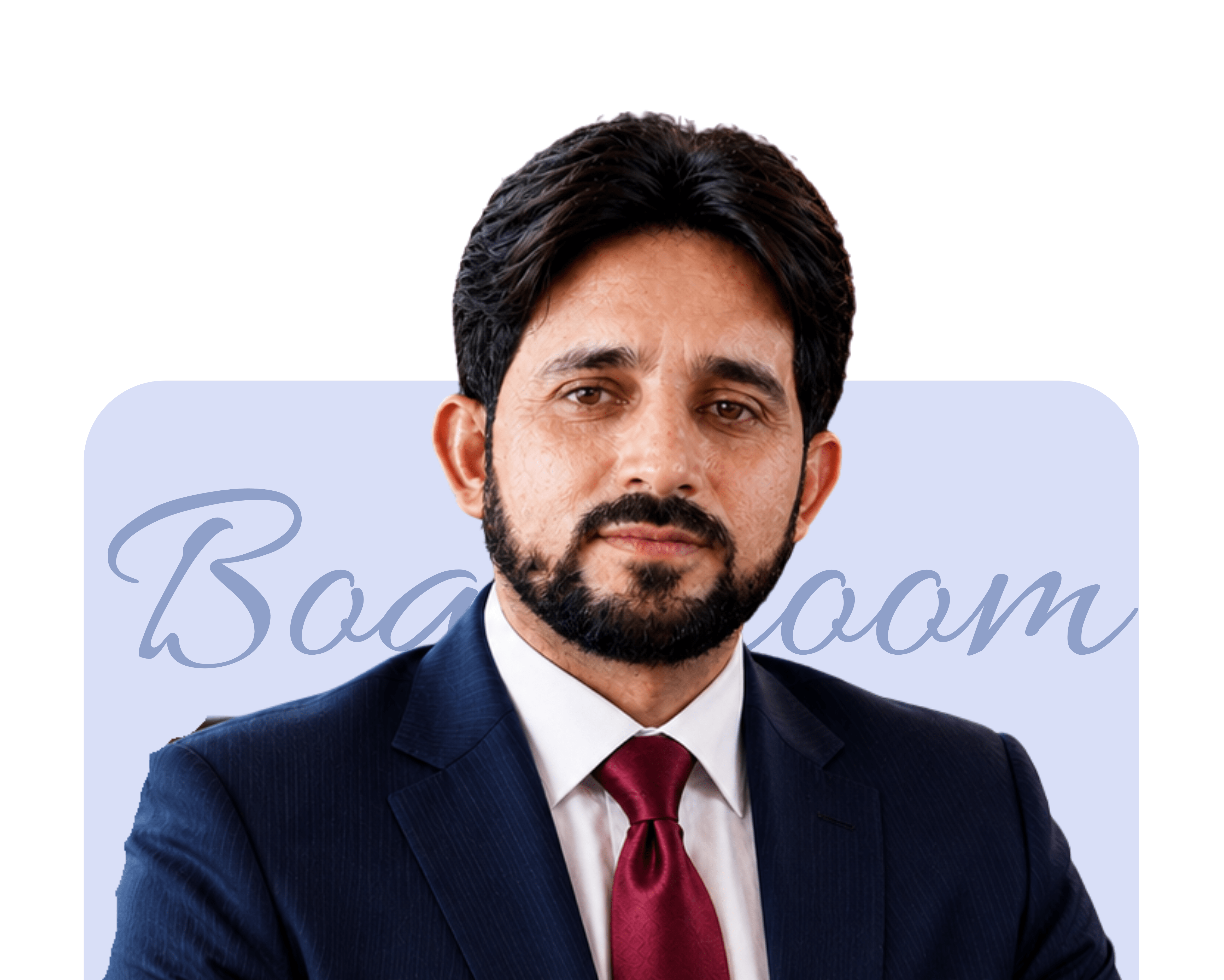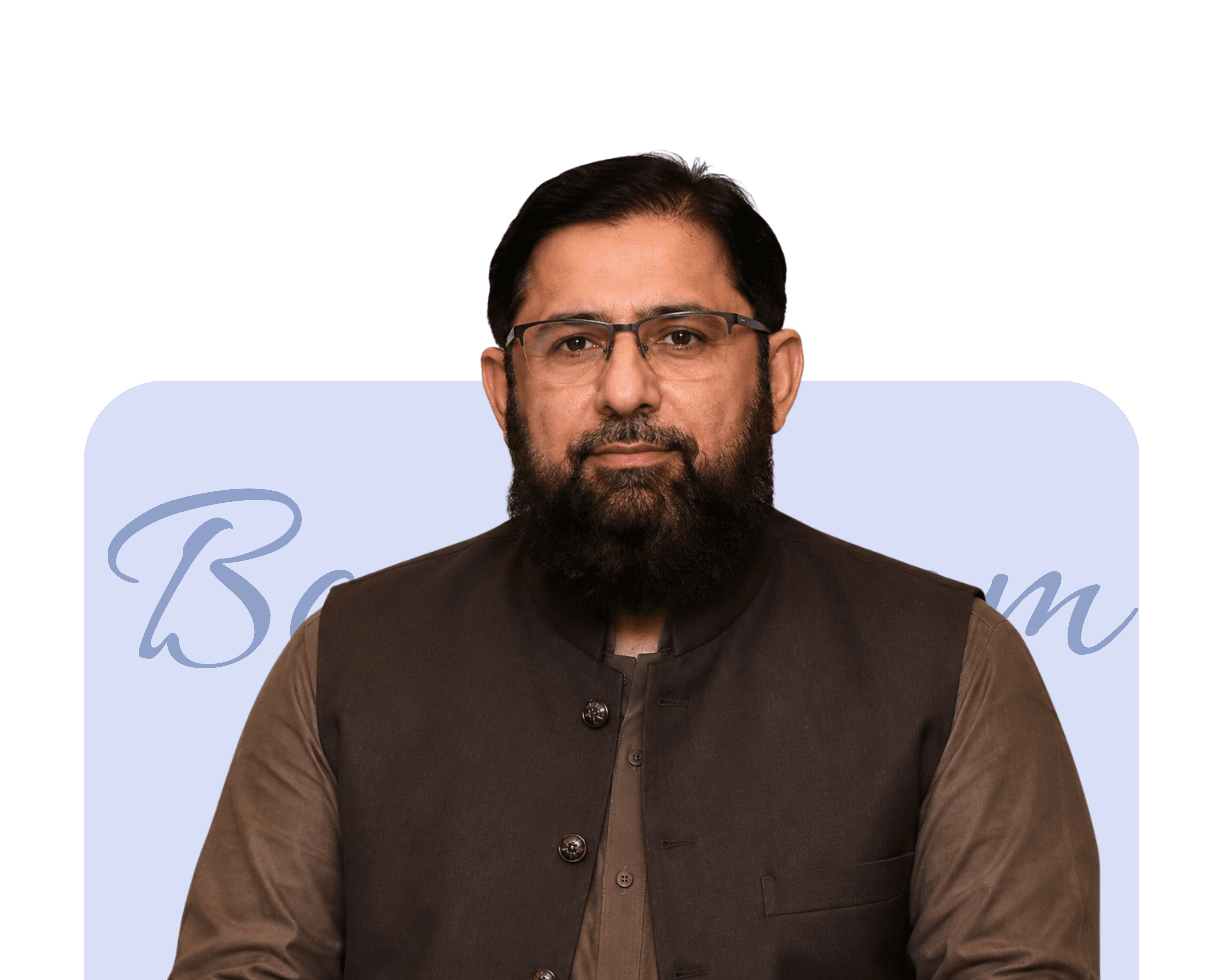
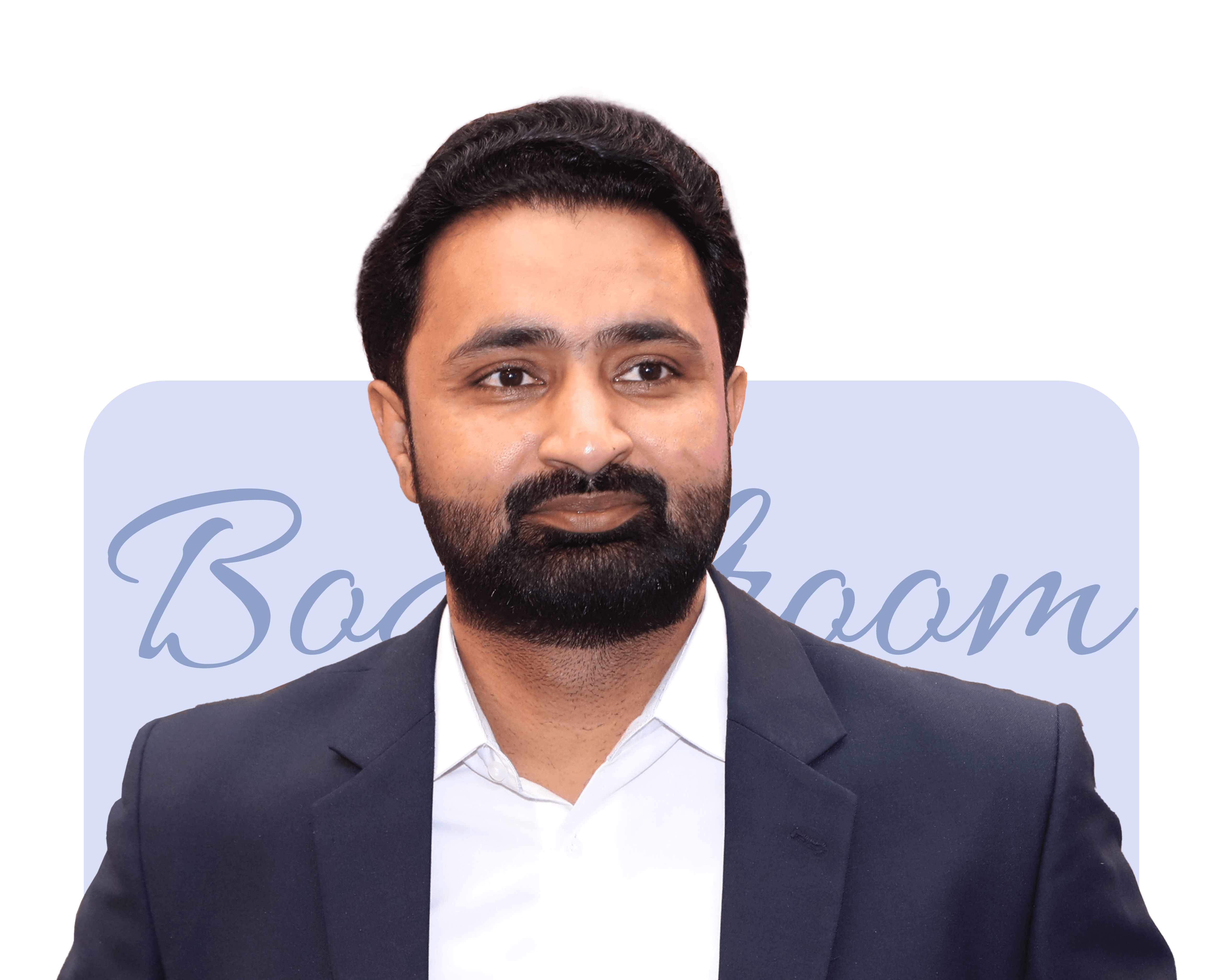
From a humble rural background to the C-suite, Islam Ul Hassan shares his journey of resilience, people-centric leadership, ethical decision-making and building sustainable organisations. As CHRO of Gourmet Group, he discusses the evolving role of HR, AI, talent development and his vision for a corporate culture where people always come first.
Boardroom: Could you please share your professional journey and what inspired you to build a career in HR?
Islam Ul Hassan: I was initially interested in genetics, but I naturally found myself listening to people's problems and helping them manage difficult situations. I enjoyed people management, and that is what drew me toward HR. My first choice was the CSS examination, but when that did not materialize, I chose HR and built my career in the field. I come from a rural background. I completed my graduation from Burewala Degree College and my master's from G.C. Faisalabad. I studied throughout government schools. I am one of those children who did not have benches to sit on initially; we studied on the floor and got a bench in class five. I built my career from that background and remained focused from the beginning.
Boardroom: At a very young age, what key leadership experiences shaped your approach as the CHRO of one of Pakistan's most diversified groups?
Islam Ul Hassan: When I started my career, my perspective was limited to the organization I was working in. I initially thought I would remain with one organization and perhaps retire as a General Manager. However, after spending five years there, I entered the wider market and realized that I was far behind current HR practices. What I had been doing was conventional administration rather than modern HR. That realization encouraged me to move into an environment where I could learn more. I joined Wilshire Group, where I was fortunate to have excellent mentors. The CEO, Mr. Ghazanfar Ali Jawa, was an exceptionally passionate leader, and I learned a great deal from him. I also learned HR from Mr. Khubaib, who later moved into the CHRO profession. Through that experience, I understood that HR is fundamentally about developing people and taking them forward. That is when I set myself the goal of becoming a CHRO and entering the C-suite by the age of 40. I identified my gaps and worked continuously on myself to close them.
Boardroom: Looking back, what has been the defining milestone of your HR career?
Islam Ul Hassan: I believe I have achieved the milestone I set for myself. Now my focus is on sustaining it. I am grateful that the plans I made were fulfilled with Allah's help. My current plan is to continue serving for another ten years and then retire. Beyond that, I do not have a fixed plan; I would like to continue doing something that benefits people.
Boardroom: Gourmet operates across multiple industries, including beverages, catering, restaurants, furniture and more. How do you create a unified people strategy while addressing the unique workforce requirements of each business?
Islam Ul Hassan: There are essentially two categories of professionals. The first consists of functions such as HR, finance, IT and, to some extent, supply chain. These are group-level functions, so we bring in people who have experience serving at the group level and who can manage a diversified business environment. The second category consists of technical functions such as production and sales, where subject matter expertise is essential. For these positions, we bring in people with relevant industry experience. Every business has its own environment. Running a news channel is completely different from running a sugar mill; beverages have their own dynamics, and entering the bakery business is another chapter altogether. Dairy, ice cream and R&D also require different approaches. In our research segment, for example, the people are scientists, and managing scientists requires a different understanding and leadership style. Therefore, we look for professionals who have both the expertise and the ability to work within a diversified environment.
Boardroom: What is currently the biggest challenge within the bakery business?
Islam Ul Hassan: My major responsibility in HR is to give sustainability to the business so that it can continue its long-term growth rather than becoming stagnant or moving toward decline. For this, we are designing departmental structures in a way that makes the business self sustainable. If owners or directors have to make every decision themselves on a daily basis, the organization becomes vulnerable if an individual is unavailable due to health or any other reason. Instead, decisions should be taken by capable professionals within a strong governance mechanism, with oversight from the family, board and executive leadership. We are strengthening governance and developing systems so that if a particular person is not available, the organization does not stop functioning. This is why we place significant emphasis on governance policies, SOPs and standardized structures.
Boardroom: How closely is HR involved in strategic decision-making at the executive level?
Islam Ul Hassan: HR must be part of organizational strategy. If HR is not included, an organization has missed a core element of its business: people. HR represents the people, and businesses operate through people. We have established four major strategic pillars that participate with equal ownership: HR, finance, supply chain and commercial. Supply chain encompasses production, planning, engineering and related functions, while commercial includes sales, marketing and other commercial activities. We conducted our first major strategy session last year and developed a three-year plan looking toward 2028. What is particularly important is that our strategy is participative rather than simply imposed from the top. When strategy is developed only at board level and enforced downward, people do not necessarily feel ownership. We instead involve managers and operational teams so that they can identify challenges and define what they need to achieve the required growth. When people contribute to the strategy, they feel ownership and belonging. That ownership makes execution much stronger.
Boardroom: As IT and AI become increasingly integrated into organizational systems, how do you see HR coping with this transformation?
Islam Ul Hassan: We have been discussing this for the past year and a half. Unfortunately, AI is often presented through fear, particularly the idea that 25 to 40 percent of people will lose their jobs. I do not view it that way. AI is an enabling tool that can improve performance and efficiency. Work that previously took four hours may be completed in thirty minutes with AI. However, someone still has to make the decision. AI is not the brain; it is an assistant. The human being remains the decision-maker. AI should speed up repetitive tasks and make people's working lives easier. When people are not constantly occupied with repetitive work, their minds have more capacity to think, innovate and create. AI should therefore be viewed as a tool for improving efficiency and performance rather than something to fear.
Boardroom: How do you ensure that people across different business units feel equally valued and connected to the organization's vision?
Islam Ul Hassan: There are two important parts to this. First, we define the values of the organization. When we began this journey two years ago, we first established our values and then developed a code of conduct in both Urdu and English. Employees were taken through the process, signed the code and were made aware that they were accountable for acting according to it. Second, we recognize employees who demonstrate these values. We introduced a Value Champion system to recognize people who support others, mentor colleagues or demonstrate positive behavior beyond the formal requirements of their roles. These employees are recognized and their contributions are highlighted. Interview Transcript – Gourmet Group Another important aspect is ensuring that celebrations and recognition are not limited to head office. If there is a celebration at the head office, employees at our other units and retail locations should experience the same sense of belonging. For example, when we celebrate Independence Day at head office, similar celebrations take place across multiple locations with the same system and gifting. Representatives from head office also visit retail outlets to celebrate with the teams. If the people contributing to the business do not feel included in its celebrations, they can become disconnected and disengaged. Our objective is to eliminate that disconnect.
Boardroom: What initiatives have HR introduced to support employee well-being, welfare, mental health and work-life balance?
Islam Ul Hassan: The starting point is understanding the biggest problems employees face and then developing policies around those needs. When we conducted our engagement survey and held town halls down to the worker level, we identified healthcare as a major concern, particularly for lower-income employees. We therefore introduced health insurance for minimum-wage employees. This is an important initiative because such employees often spend a significant portion of their income on medical needs. Another concern is financial security for families if an employee passes away. We introduced a pay continuation plan under which, if an employee dies while performing their job, Gourmet provides the family with the employee's salary for 36 months. We also provide three meals a day at our premises. During Ramadan and other periods when employees face additional expenses, we provide packages to support them. These may appear to be basic measures, but meeting basic needs can significantly improve mental satisfaction and overall well-being. Our next focus is education. We are exploring partnerships that would provide discounted schooling opportunities for children of workers and lower-paid officers. Ultimately, our focus is on three fundamental areas: food, healthcare and education. Employees need to be able to support their families, maintain their health and provide their children with opportunities for a better future.
Boardroom: What are the biggest HR challenges facing Pakistan's retail, hospitality and FMCG sectors today?
Islam Ul Hassan: The biggest challenge is the drainage of talent from Pakistan. Talent is leaving the country at a very high rate, and we are not fully recognizing the long-term implications. Another concern is the gap between education and employability. Every year, many graduates enter the market, but even some of the strongest graduates lack basic professional skills. We have experienced this through our management trainee programmes. Even talented graduates can become frustrated when they do not see sufficient growth opportunities or when they lack the practical skills required by industry. There is also a broader concern around investment and the resulting employment pipeline. When investment moves outside Pakistan, opportunities for local employment and development are also Interview Transcript – Gourmet Group affected. We need stronger collaboration between educational institutions and industry to address these challenges.
Boardroom: If you could implement one major change in Pakistan's corporate HR landscape, what would it be?
Islam Ul Hassan: I would like corporate HR professionals to become actively involved in education policy and curriculum development. HR leaders should have a meaningful role on university and college boards so that education is aligned with the skills industry actually needs. Universities also frequently approach organizations for internships. I believe organizations should take this further by giving students practical exposure and by allowing senior functional leaders— such as heads of food technology, finance and other disciplines—to engage with students during their studies. The HR community can also collaborate through professional forums and organizations to increase this contribution. We can see the challenges Pakistan may face over the next 10 to 20 years, and we have a responsibility to prepare the next generation. Instead of inviting corporate leaders to universities only to give speeches, institutions should create regular sessions where HR and business leaders spend an hour with students, explain the challenges they will face in professional life and tell them what skills they need to develop. This would help students prepare for the realities of the workplace.
Boardroom: Who has been the greatest influence on your leadership philosophy?
Islam Ul Hassan: My grandfather has been my greatest influence, followed by Mr. Jawa
Boardroom: Could you share an incident involving your grandfather that continues to shape your leadership philosophy?
Islam Ul Hassan: There are many incidents, but one from around 2001 remains particularly memorable. I had recently completed my matriculation and was spending a great deal of time with my grandfather. A woman came to meet him. She was a widow and the mother of three daughters. She explained that her husband had died and that her house had been taken over. She wanted to sell it, purchase a smaller house and use the remaining money to support her daughters, but she needed help in recovering possession. The person who had taken possession was politically influential and could provide thousands of votes in the area. My grandfather nevertheless called him and told him to vacate the property before Maghrib, making it clear that he would personally come to take possession if necessary. Afterward, I asked my grandfather whether he had considered the potential loss. He told me that a person who sees a loss in humanity loses throughout his life. From that experience, I learned that immediate benefit should not be valued above humanity and ethics. If something is wrong, you must call it wrong; if it is right, you must call it right, regardless of the position or influence of the people involved. Interview Transcript – Gourmet Group That lesson has stayed with me throughout my career: you cannot compromise on ethics simply because doing the right thing may carry a short-term cost.
Boardroom: How do you personally maintain resilience while managing organizational challenges?
Islam Ul Hassan: For me, resilience developed from an early age. I came from a background where we studied in government schools and faced difficult circumstances. In the first few classes, during winter we would study wherever there was shelter, and in summer the entire class would move with the shade. That experience taught us resilience. Later in my career, when I joined Wilshire, I worked alongside four other managers who were English-medium graduates with multinational experience. I was the only person from a more traditional local background. Initially, I was nervous, but by the third day I decided that there was no point in being intimidated; I had to compete on merit. I accepted the challenge, and eventually I became the head of those four managers, who then reported to me. Resilience does not always come naturally. It is developed through difficult experiences and challenges. One of my mentors used to say that every person's life has a 'doomsday before the doomsday'. If such an experience comes early, it can make a person mature. Maturity is not simply a matter of age; it is a mindset.
Boardroom: What advice would you give young HR professionals aspiring to become future CHROs, HODs or GMs?
Islam Ul Hassan: There are a few simple principles. First, there are no shortcuts. Young professionals often want to progress very quickly, but meaningful growth requires patience and time. For example, if someone wants to become a manager within eight years, they may be able to achieve it in six through focused development, but trying to reach that position in two years may prevent them from building the experience required to sustain it. Second, keep your learning curve active throughout your career. No one can ever become perfect. The moment a person believes they have learned everything, their decline has already begun. Set clear goals and work consistently toward them. Most importantly, develop the habit of self-reflection. In my experience, self-reflection is one of the qualities most lacking among young professionals. It is important to understand your own strengths, weaknesses and areas for improvement.
Boardroom: What legacy would you like to leave at Gourmet Group and within Pakistan's HR profession?
Islam Ul Hassan: In simple terms, I want to leave behind a People First approach. When I joined Gourmet, one of the challenges was attracting professionals to the organization. We worked with management to introduce and establish a People First philosophy, and management supported the initiative. Our code of conduct is also aligned with values that are consistent with Islamic teachings. We have tried to build a value system based on principles of humanity, ethics and responsibility. I believe Interview Transcript – Gourmet Group this is the legacy I would like to see continue: an organization that puts people first and operates according to strong ethical values. If that philosophy continues, I believe the organization's growth can continue as well.