
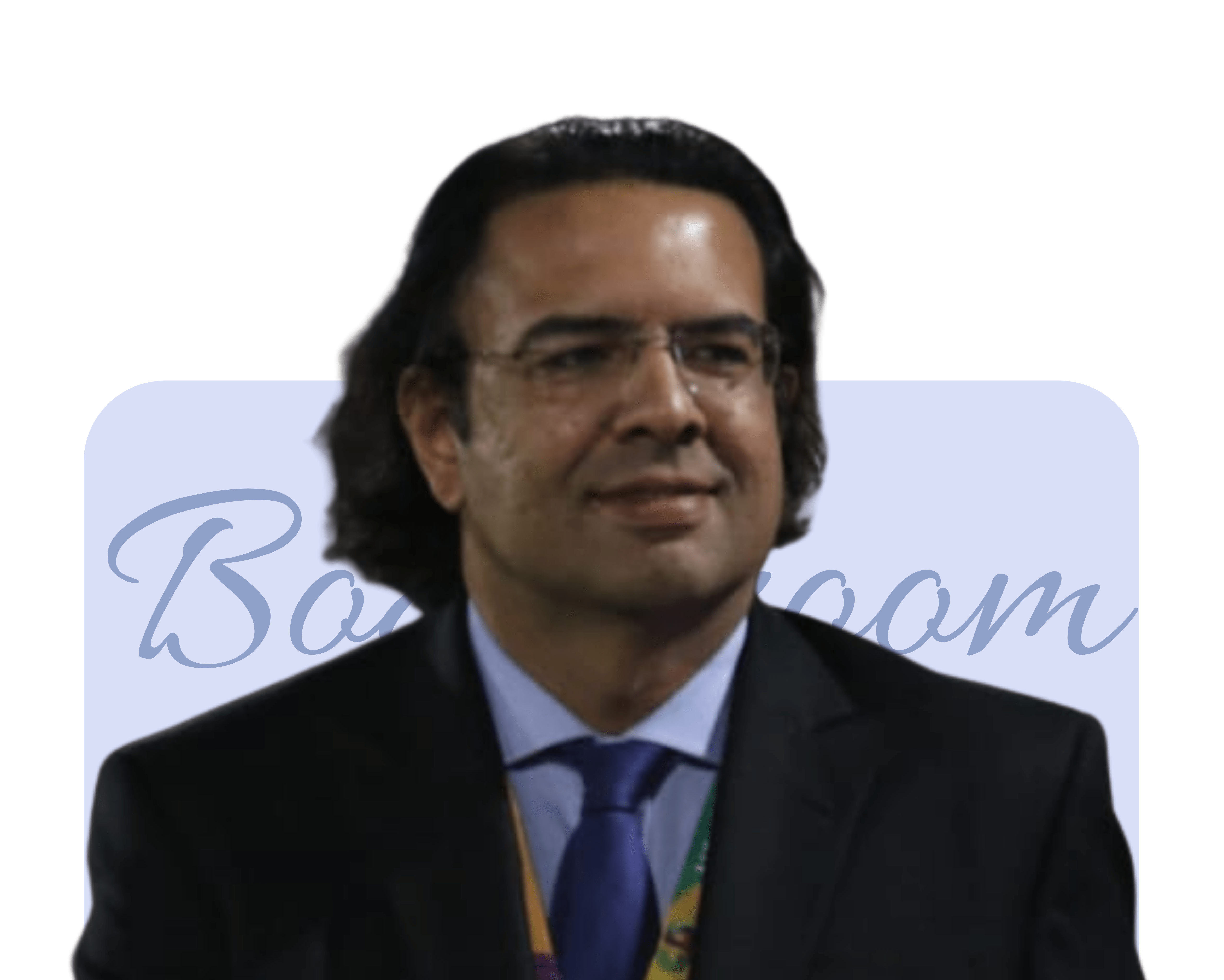
Usman Wahla shares his vision for Pakistan cricket, focusing on PSL growth, talent development, women’s cricket, technology, and world-class standards.
Boardroom: Could you take us through your professional journey and the key experiences that led you to the Pakistan Cricket Board and the PSL? Which specific moments have most profoundly shaped your approach to cricket administration and leadership?
Usman Wahla: I had the privilege of growing up in Pakistan during a golden era of sports, witnessing our athletes achieve world-champion status in cricket, hockey, and squash. For my generation, that instilled a profound, foundational belief: Pakistan cannot just compete, but can actively defeat the very best in the world.
My lifelong passion for sports naturally centered on cricket. I still vividly recall my first live match—Pakistan versus the West Indies at Gaddafi Stadium in 1987—which cemented my devotion to the game. After completing my studies abroad, returning to Pakistan gave me a nuanced, analytical perspective on the institutional and structural challenges facing local organizations. Joining the PCB allowed me to analyze and address these challenges from the inside out.
The tragic 2009 attack on the Sri Lankan cricket team was a definitive turning point for me. It underscored the devastating cultural and economic loss our nation suffered by being isolated from hosting international cricket. From that moment on, seeing international crickets restoration to Pakistan became an overriding determination.
Later, I transitioned into the PSL, heading cricket operations during its inaugural season. What began as an ambitious, high-risk startup has matured into a foundational pillar of Pakistan’s sports economy. Throughout this journey, my leadership philosophy has remained constant: true administrators do not merely identify or complain about systemic problems—they engineer scalable solutions.
Boardroom: From your perspective, what are the most critical structural changes Pakistan cricket requires today to become more globally competitive, financially sustainable, and internationally respected?
Usman Wahla: The cornerstone of sustainable global competitiveness is a robust domestic ecosystem and a world-class academy structure. Historically, Pakistan has faced challenges because competitive sports often receive minimal structural integration within the school system. This gap leaves many young athletes without standardized facilities, professional coaching, or elite development pathways.
Despite these structural hurdles, Pakistan’s raw talent pool is virtually unmatched. To maximize this potential, our current strategic focus is directed toward reinforcing high-performance academies, intensifying youth development, expanding women’s cricket, and formalizing school-level cricket opportunities.
Concurrently, the PSL has fundamentally revolutionized our cricketing landscape by offering domestic players an elite professional environment and financial security. Securing the return of international cricket was a monumental milestone. For years following the 2009 attack, our teams were forced to play in exile. Through rigorous, synchronized cooperation between the PCB, federal government agencies, and state security apparatuses, we systematically restored international confidence. Today, packed stadiums, a thriving PSL, and a steady pipeline of elite talent are tangible proof of how far our sports administration has progressed.
Boardroom: Looking at your background, you didn't just transition from playing to administering; you were highly educated, joined the corporate sector, and intentionally developed an executive leadership skillset. What distinct advantage does an operational leader with a corporate background bring to a sports organization compared to a former player entering administration directly?
Usman Wahla: Elite athletes dedicate their youth entirely to physical and technical mastery on the field, which frequently leaves them with limited opportunities to acquire formal higher education or corporate governance experience. While their profound institutional knowledge of the game is invaluable, corporate and sports administration requires a distinct, highly specialized set of competencies.
I believe an effective sports administrator's role is not to dictate on-field strategy, but to establish the institutional frameworks that empowers coaches, performance staff, and players to excel. Furthermore, the PCB must create more structured post-career pathways to help transitioning players acquire the corporate acumen necessary for executive roles.
The growth of the PSL stands as a premier example of what disciplined, corporate-style administration can achieve. Since inception, our primary mandate has been maintaining uncompromised operational standards and elite cricket quality. Early in my career, I learned an absolute rule: your operational output must consistently sit at 100%. If you allow institutional standards to slip even slightly, inefficiencies multiply. In the face of complex operational challenges, unwavering professionalism and absolute consistency remain an organization's most definitive response.
Boardroom: Pakistan possesses an immense, natural talent pool. How can the organization build a more seamless, sustainable pathway from grassroots and domestic cricket to the international arena?
Usman Wahla: For a nation of 250 million people, administrative decentralization is a strategic necessity. It is mathematically and logistically impossible to service a population of this scale through a single, highly centralized framework. We must expand the broader sporting ecosystem, deliberately shifting resources and opportunities into regional hubs and secondary cities.
Pakistan has never lacked raw talent or the intrinsic drive to improve. Our institutional objective is to ensure that whenever a player enters our system, they are optimized physically, mentally, and technically. In elite sport, becoming a world champion often hinges on razor-thin margins and elements of fortune, but exceptional preparation positions you to capitalize on those moments.
The PSL has proven that when you build visible, merit-based pathways, you inspire an entire generation to pursue cricket professionally. Exceptional talent exists globally across Pakistan, particularly in underserved regions. The administrative key is simply building the infrastructure to discover it. Every major city requires access to modernized academies and structured club cricket to ensure talent is identified, nurtured, and systematically advanced.
Boardroom: Building on that domestic ecosystem, what specific systemic reforms do you believe are non-negotiable to make the domestic structure more competitive and effective at producing future international stars?
Usman Wahla: First and foremost, we require a nationwide modernization and standardization of facilities. Upgrading playing surfaces, embedding regional high-performance academies, and enforcing uniform pitch and training standards are absolute prerequisites for player development.
Equally vital is structural continuity. For decades, Pakistan cricket has suffered from frequent, disruptive overhauls to its domestic format—often in an attempt to replicate foreign models from England, Australia, or India. However, models that thrive in different economic and cultural landscapes do not automatically translate to Pakistan. We must build a system tailored to our unique realities.
Our primary long-term challenge is aligning elite sports development with formal education. In nations like Australia, England, and South Africa, youth pathways seamlessly integrate academic schooling with high-performance cricket training. Pakistan must forge similar institutional partnerships, giving young athletes a secure, structured environment where they can realistically dare to dream of representing their country. Ultimately, upgrading our cricket requires both structural modernizations and a sustained, aggressive financial investment in facilities nationwide.
Boardroom: How are advanced technology, analytics, and data-driven decision-making transforming the sport? What role should collaboration between the PCB and academia play in driving research, sports science, and high-performance capabilities?
Usman Wahla: At the international level, the PCB has significantly advanced its integration of modern sports science, biomechanics, and medical rehabilitation. Our specialized biomechanics labs and AI-driven performance tracking tools allow us to analyze player metrics with scientific precision, managing workloads and identifying subtle areas for technical improvement.
In the modern sporting era, advanced technology is no longer an optional luxury; it is a competitive necessity. We are exploring AI-powered remote scouting applications, which allow young talent in remote areas of Pakistan to upload performance data via mobile devices for professional evaluation by elite coaches.
From a commercial perspective, technology has been equally transformative. The PSL has grown into an elite digital media asset. Social media and streaming architectures have fundamentally changed how global audiences consume sport. To remain commercially dominant, we must continuously innovate our digital product.
No sports institution can ever afford complacency or believe its operational blueprint is complete. If we fail to provide clear, digitized pathways for the youth, we risk losing a generation of athletes to alternative entertainment and career sectors.
Boardroom: What strategic role does women's cricket play in the PCB's long-term organizational vision, and what concrete steps are being taken to expand opportunities for female cricketers?
Usman Wahla: The PCB’s strategic vision for women’s cricket is anchored on a philosophy of equity: it is cricket for everyone, period. We do not look at the men's and women's games as separate entities requiring disparate levels of institutional commitment. Women constitute approximately half of Pakistan's population; they earn the right to identical high-performance facilities, elite coaching, and institutional backing.
While macroeconomic and financial constraints mean this total equalization cannot be achieved overnight, our progress is accelerating. Our women's national and developmental squads are receiving unprecedented financial investment, elite international coaching, and high-profile commercial exposure—including strategic integration alongside major properties like the PSL.
This aligns with our overarching commercial philosophy. The PSL has evolved from an unproven tournament into an elite, multi-million-dollar global brand, experiencing exponential growth across broadcast rights, corporate sponsorships, and franchise valuations. This commercial success underscores the vital importance of understanding your core product, competing aggressively on the global stage, and constantly scaling your institutional vision. Sustainable sports growth demands bold leadership, commercial agility, and structural consistency.
Boardroom: Speaking of institutional excellence, as a Director at the PCB and within the PSL, what do you believe separates a merely talented cricket team from a consistently dominant, high-performing organization? How do we institutionalize that elite culture at every level of Pakistan cricket?
Usman Wahla: Talent is a raw commodity that exists abundantly, but it remains latent without elite infrastructure, world-class coaching, and continuous opportunity. My foundational message to our organization and players is absolute: we must completely reject a victim mentality. Operational and environmental challenges will always exist, but sustainable progress is unlocked exclusively through relentless work ethic, unbridled ambition, and disciplined teamwork.
Looking at our strategic roadmap for the next five years, my focus is explicitly clear: to fortify the PSL and elevate Pakistan’s broader cricketing ecosystem. We will measure our success through aggressive commercial expansion, increased franchise and sponsorship valuations, stadium infrastructure upgrades, and the realization of a sustainable home-and-away tournament format.
Most importantly, the financial dividends of this commercial success must look beyond our top-tier international stars. We are structurally re-engineering our domestic financial model to provide viable, lucrative professional careers for the next tier of 150 to 200 emerging domestic cricketers. True institutional transformation means creating a secure, prosperous, and elite pipeline for Pakistani cricket at every single tier.
Boardroom: If you possessed the unilateral authority to execute one singular, transformational change in Pakistan cricket—one definitive decision to fundamentally alter the future of the game—what would it be and why?
Usman Wahla: If I could institutionalize one definitive transformation across our entire cricket apparatus, it would be the absolute standardization of elite execution. We must enforce a non-negotiable policy across every single department: our training, sports science, operational planning, and commercial execution must operate at a 100% global benchmark—matching or exceeding the highest international standards set by organizations like Cricket Australia, the England and Wales Cricket Board (ECB), and the BCCI.
Once you guarantee 100% execution in your preparation, you drastically minimize the margins of error. In elite sport, that final step to becoming a world champion often requires a stroke of luck, but if your foundational preparation is flawless, you survive the unpredictable moments. If we embed this uncompromising mindset into the DNA of every administrative department, team manager, and athlete wearing the green star, our potential is limitless.
This is fundamentally a team game. We must cultivate a culture where individual success is entirely subservient to the success of the collective organization. I have never viewed my contributions as isolated achievements; they are the result of highly coordinated teamwork. The deliverables we have secured are massive: restoring international cricket to Pakistani soil, establishing the PSL, executing successful tournaments through the unprecedented logistical crises of the COVID-19 pandemic, and overcoming complex geopolitical externalities. No matter the challenge, our institutional mandate remains absolute: the show must go on.
We hold the extraordinary privilege of building and fulfilling the dreams of millions. Whether you operate in an academy, manage women’s cricket, or drive corporate partnerships, you must perform at a world-class level. Look at physical fitness as an objective metric. We have communicated unequivocally to our athletes: your fitness benchmarks must equal the highest global standards. If your fitness lags behind the world elite, you will not even qualify for a semi-final, let alone lift a world trophy.
Our recent historical dips in international rankings are a direct symptom of inconsistent standards and frequent, reactionary disruptions to our domestic foundations. For example, when club cricket structures were abruptly dismantled in the past, hundreds of domestic cricketers suddenly lost their livelihoods. This underscores the profound gravity of sports governance; administrative decisions directly impact lives and national sports legacies. We must look at the tragic decline of hockey in Pakistan as an institutional cautionary tale. Complacency and internal friction destroy sports ecosystems.
To lead the PCB into the future, we must benchmark ourselves directly against the global standard-bearers of sports business and performance. We have made tremendous strides, but we must eliminate small-minded, retrospective thinking. Internal political friction or professional jealousy only serves to decelerate our collective progress.
When I first joined the international department, I faced a highly traditional environment with zero formalized onboarding. I chose to actively seek out the historical operational blueprints left by forward-thinking executives before me, using them to self-educate and build an understanding of what a world-class international operations department should look like. If every administrator enters this building driven by the ambition to build the absolute best department in the world, the entire organizational ecosystem rises. True leaders are never threatened by the excellence of their peers; excellent work elevates the collective. We must think globally, operate with corporate precision, and work seamlessly as one team. If we achieve that institutional alignment, the sky is the limit for Pakistan cricket.