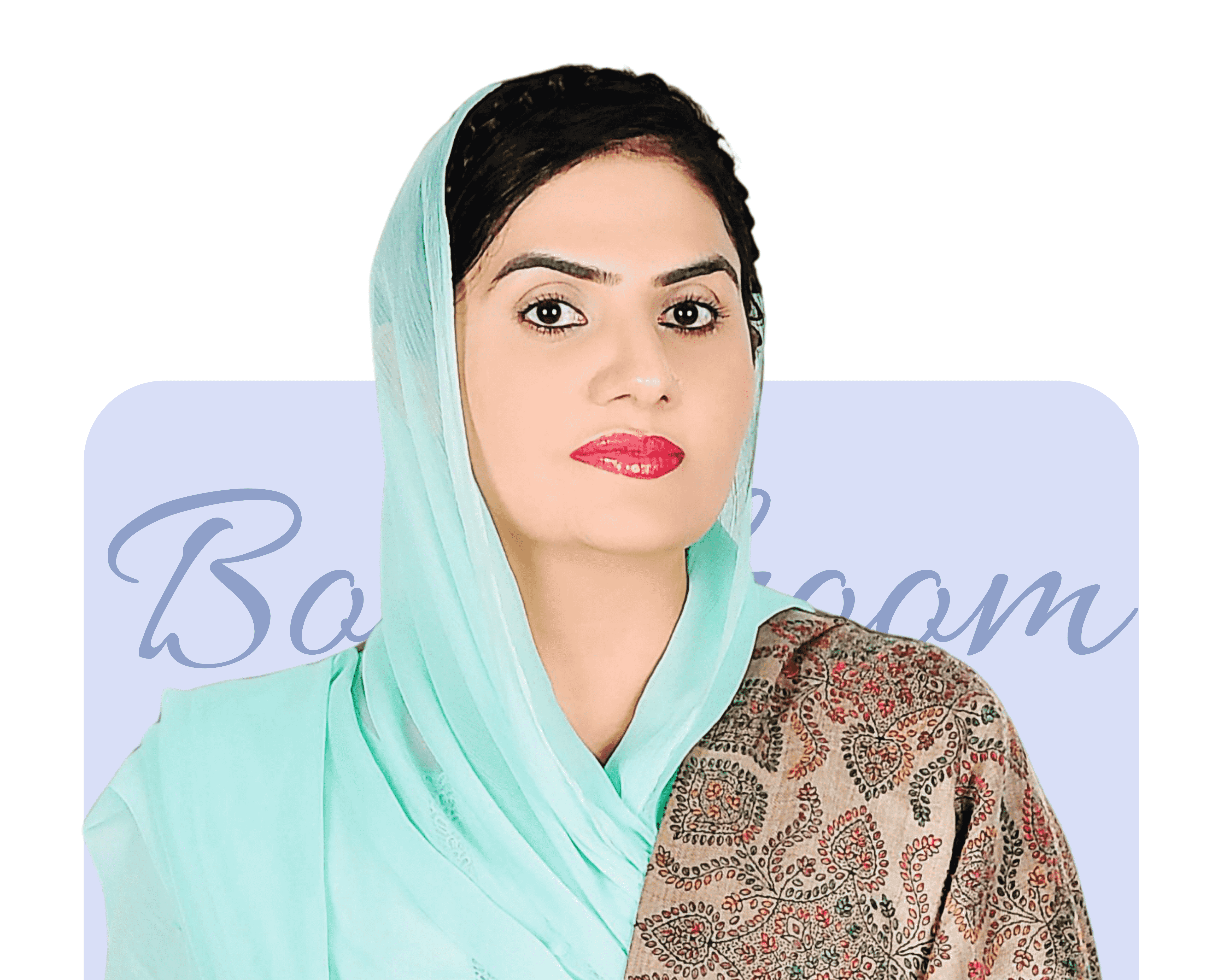
Dr. Mahwish Batool Kaifi’s journey is a powerful story of leadership, resilience, service, and meaningful change. From Pakistan’s public sector to senior HR leadership in the UAE, her career has been shaped by a deep commitment to empowering people, strengthening institutions, and serving communities.
A humanitarian, writer, poetess, and advocate for human rights, Dr. Kaifi believes that true leadership goes beyond titles and positions—it is about integrity, empathy, accountability, and the ability to create opportunities for others. Through her professional career, humanitarian initiatives, literary work, and advocacy, she continues to turn purpose into lasting impact.
In this exclusive conversation, Dr. Mahwish Batool Kaifi reflects on the defining moments of her journey, the courage it takes to embrace change, the importance of ethical leadership, and her vision for empowering the next generation of leaders.
Boardroom: Kindly share your professional journey and what inspired you to pursue this profession.
Dr. Mahwish Batool Kaifi: My professional journey has been guided by an enduring desire to create meaningful impact through leadership and public service. Tracing this calling back, it began in my earliest years, growing up in a household where serving others was never an occasional gesture but a way of life. That upbringing instilled in me the belief that a career only becomes truly worthwhile when it moves beyond personal achievement toward collective good. I began my professional life in an executive position within Pakistan's Government Sector. Those years built my foundation in governance reform, community development, and institutional capacity building, a foundation I continue to draw upon today. Working within the machinery of government showed me firsthand how policy either translates or fails to translate into real change in people's lives, and it left me with a lasting respect for institutions as instruments of public good. From there, my path took an international turn, first into Human Resources, and today into a senior HR role within the Information Technology sector, alongside the advocacy, literary, and humanitarian work outlined above. What ties these different chapters together isn't the sector I happened to be working in at the time, but a consistent underlying motivation: a belief that institutions, communities, and individuals all grow stronger when someone is willing to invest in them without expecting immediate return. Human rights sit at the centre of how I understand this work. Whether I am organizing an Eye Care Camp, supporting a daughter's marriage through the Foundation, or representing PHIRO's advocacy, the common thread is a belief that dignity, protection, and access to basic needs are not privileges to be earned, they are rights every person is owed. That conviction is what turns scattered acts of charity into a coherent mission, and it's the lens through which I now view leadership itself: an institution or a career only has lasting value if it protects and expands the rights of the people it touches. Above all, I consider myself a lifelong learner who believes leadership is ultimately about serving people, strengthening institutions, and creating opportunities that leave a lasting, positive impact. I don't stop to learn; I keep learning to grow, in every role, at every stage. Every chapter of my journey has been, in its own way, an expression of that single conviction.
Boardroom: Who have been your mentors or role models, and what lessons have you carried from them into your own leadership?
Dr. Mahwish Batool Kaifi: My greatest sources of inspiration have been my late father, the renowned writer and poet Ch. Karam Ali Kaifi, author of 23 books and recipient of the title "Safeer-e-Madina" from the Government of Pakistan, and my mother, Mrs. Shameem Kaifi. Both of them worked and served quietly, often without any expectation of acknowledgment, and that model has stayed with me in every professional role I've held. Watching my father write, reflect, and engage with society through his words taught me that ideas have the power to shape societies, a belief that continues to inform every role I take on, whether in a boardroom, a community centre, or on a page. My own writing, referenced in my introduction above, feels like a natural continuation of his legacy and my own voice. My mother, in turn, has been my quiet inspiration in humanitarian service. Her compassion, selflessness, and steadfast dedication to helping others, often in ways that went unnoticed and unrecorded, shaped my own belief that leadership must always be rooted in service to people rather than visibility. Her efforts to make society better demonstrated that true influence is earned through character, humility, and dedication to society, never through position or recognition. On a professional level, I have also drawn valuable lessons from senior leaders across government, academia, and the corporate sector, each of whom modelled a different facet of leadership: one taught me discipline under pressure, another taught me how to hold a difficult conversation with compassion, another taught me the patience required for institutional change. Each, in their own way, reinforced the enduring importance of ethical leadership, lifelong learning, resilience, and a genuine commitment to serving others before oneself.
Boardroom: What has been the most difficult decision you have made in your professional life, and what did you learn from it?
Dr. Mahwish Batool Kaifi: One of the most consequential decisions of my career was leaving a secure government position to pursue international opportunities. On paper, it looked like an easy trade, stability for opportunity. In reality, it meant relinquishing a career I had built for years, a familiar system I understood intimately, an established professional network, and a title that carried real standing. I was beginning again in a highly competitive environment, largely without the institutional recognition that had taken me years to earn. There were moments of real doubt. But that experience reinforced an important truth: meaningful growth rarely occurs within the boundaries of comfort. Authentic leadership demands the courage to embrace uncertainty, the discipline to continuously reinvent oneself, and an unwavering commitment to lifelong learning. I had to relearn how to prove myself, this time through international certifications, a new professional vocabulary, and a track record built from scratch. Looking back, it was the decision that shaped everything that followed, including the work I do today.
Boardroom: Every leader faces setbacks. Can you share an example of how you navigated a major challenge and built resilience from it?
Dr. Mahwish Batool Kaifi: Relocating internationally required me to rebuild my professional identity from the ground up. Entering a new market meant adapting to unfamiliar organizational cultures, employment systems, and professional expectations: the assumptions that had served me well in Pakistan's public sector often didn't translate directly into a multinational HR environment in the UAE. Rather than perceiving this as a setback, I chose to treat it as an invitation to invest in developing globally relevant competencies through continuous education, deliberate professional networking, and hands-on HR experience built one role at a time. It wasn't a quick transition, and there were periods where progress felt slow and invisible. But that journey strengthened my resilience considerably and affirmed that adaptability, not credentials alone, remains one of the most valuable leadership qualities in today's rapidly evolving world. I now see resilience less as a single dramatic act of endurance and more as a set of small, repeated choices to keep adapting. That transition also gave me a close-up view of how differently HR is practised across markets. In Pakistan, HR structures have traditionally leaned heavily on hierarchy, relationship-based decision-making, and administrative compliance, valuable strengths in their own right, but often with less emphasis on structured performance frameworks or standardized global practices. In international markets, HR tends to be far more data-driven, policy-codified, and strategically embedded at the leadership table, with a stronger emphasis on measurable outcomes, employee experience, and compliance with global labour standards. Neither approach is inherently superior; each reflects the context it grew out of. But navigating both has convinced me that Pakistan's HR sector stands to gain enormously from adopting more structured, technology-enabled practices, without losing the relationship-centred strengths that make its workplaces distinct.
Boardroom: How would you describe your leadership style, and how has it evolved over the years?
Dr. Mahwish Batool Kaifi: I subscribe to a philosophy of servant leadership grounded in accountability, empathy, and integrity. But this wasn't a philosophy I arrived at overnight; it evolved through experience, reflection, and, at times, hard lessons, including the setbacks and career decisions described above. Early in my career, particularly during my years in public service, my focus was primarily on delivering results: meeting targets, closing files, or ensuring compliance. That focus was necessary, and it taught me discipline, but over time I came to recognize that lasting success is built not on managing processes, it's built on developing people. A well-run process without invested people eventually stalls. A well-developed team, on the other hand, keeps improving the process long after a leader has moved on. Today, my leadership approach emphasizes trust, empowerment, continuous learning, and ethical decision-making. I try to create environments where people feel safe to disagree with me, where mistakes are treated as data rather than failures, and where growth is expected rather than optional. I actively encourage diverse perspectives, invest in cultivating future leaders rather than simply managing current ones, and hold firmly to the belief that leadership should be measured not by authority, but by the positive influence one leaves behind, in the people who go on to lead well themselves.
Boardroom: In your view, what role do governance, ethics, and accountability play in building sustainable organizations?
Dr. Mahwish Batool Kaifi: Governance, ethics, and accountability are not mere compliance requirements, they are strategic assets. I say this from having worked on both sides: within government structures where governance is formal and codified, and within corporate HR where ethics often live in the grey areas of everyday decision-making, in how a grievance is handled, how a promotion is decided, and how transparently a policy is communicated. Organizations that uphold transparency and ethical leadership cultivate stronger stakeholder trust, attract higher-caliber talent, and sustain long-term growth, because people, employees, partners, and communities alike, can sense when an organization's stated values match its actual conduct. Ethical leadership fosters cultures in which innovation thrives, precisely because employees feel respected, valued, and psychologically safe enough to take risks and speak up. Ultimately, sustainable organizations are built on a foundation of integrity that precedes profitability; profitability without integrity tends to be short-lived.
Boardroom: How do you balance tradition with innovation, especially in an environment where disruption is constant?
Dr. Mahwish Batool Kaifi: Innovation should enhance an organization's core values, not replace them. I think of tradition not as a constraint on progress but as the identity that gives progress direction. Institutions must safeguard their founding principles while embracing technologies that improve efficiency, productivity, and the overall employee experience. Within Human Resources specifically, artificial intelligence, workforce analytics, and automation should be leveraged to empower people rather than substitute for human judgment. The digital shift happening across every industry has made this urgent rather than optional; organizations that still treat HR as a purely administrative function are already falling behind those using AI-driven tools for hiring, performance insight, and workforce planning. I've seen both extremes: organizations that resist any technological change and stagnate, and organizations that adopt every new tool without asking whether it serves their people and end up with efficient systems and disengaged employees. The organizations that will define the future are those that successfully combine technological innovation with human-centered leadership, using data and automation to free up time and attention for the human judgment that no algorithm can replace. I often describe HR as the soul of every department, because no function operates in isolation from its people. Finance, operations, sales, technology, each depends on HR to attract the right talent, sustain morale, and build the culture that allows strategy to actually get executed. As digital transformation reshapes how every department works, HR's role isn't shrinking; it's becoming more central, precisely because someone still has to ensure that technology serves people rather than replacing the human element that holds an organization together.
Boardroom: What strategies do you use to motivate and empower teams to perform at their best?
Dr. Mahwish Batool Kaifi: People perform at their best when they understand the purpose underlying their work, not just the "what" of a task, but the "why" behind it. My approach centers on establishing clarity around expectations and goals, recognizing achievement consistently rather than only at year-end reviews, encouraging continuous development through learning opportunities, and entrusting individuals with meaningful ownership of their responsibilities rather than micromanaging outcomes. I also place considerable emphasis on psychological safety. Teams become measurably more innovative when they are confident that their ideas are valued and their contributions genuinely matter, and when they know that raising a concern or admitting an error won't be held against them. In practice, this means creating regular, low-pressure spaces for feedback, being visibly open to being challenged, and following through visibly when a team member's idea shapes a decision, because people notice when their input actually changes something.
Boardroom: What do you see as the biggest opportunities and challenges for Pakistan's business ecosystem in the coming years?
Dr. Mahwish Batool Kaifi: Pakistan possesses extraordinary human capital, particularly among its youth, who represent one of the country's most under-leveraged assets. With strategic investment in education, technology, entrepreneurship, governance reform, and digital transformation, the country holds significant potential to emerge as a regional innovation hub, especially given how much of its population is under thirty and increasingly digitally fluent. That said, long-term success will depend heavily on policy consistency, institutional stability, investor confidence, and stronger public-private collaboration. I've seen firsthand, through my years in public service, how promising initiatives can lose momentum when policy direction shifts too frequently for institutions or investors to plan around. Cultivating globally competitive talent while fostering a culture of innovation will be essential to achieving sustainable economic growth, and this requires not just funding or infrastructure but a genuine, sustained commitment from both government and industry to build systems that outlast any single administration or leadership cycle.
Boardroom: What advice would you give to young professionals and entrepreneurs who aspire to leadership roles?
Dr. Mahwish Batool Kaifi: Never stop learning. A degree may open doors, but it is character, competence, and consistency that ultimately determine how far one travels through them. I've watched talented people plateau because they assumed a qualification was a finish line rather than a starting point, and I've watched less conventionally "credentialed" people rise because they kept learning long after formal education ended. Invest deliberately in global skills, cultivate meaningful relationships, embrace challenges as opportunities for growth rather than obstacles to avoid, and uphold integrity in every decision you make, even the small ones that no one else is watching. My own path, from Pakistan's public sector to international HR, was built on exactly this: continuous certification, deliberate networking, and a willingness to start over when necessary. Leadership, at its core, is not about titles but about creating opportunities for others and leaving every organization better than you found it.
Boardroom: How do you maintain a balance between professional responsibilities and personal well-being?
Dr. Mahwish Batool Kaifi: My journey is, in many ways, a testament to what courage and determination can achieve. Being single, the decision to move abroad was not an easy one; it meant navigating a major life transition largely on my own, in a new country, without the built-in support systems that come with an established life. What made it possible was unwavering family support and the willingness to accept that the path forward wouldn't look like anyone else's. That leap taught me what growth truly looks like: you may fail if you try, but you will certainly fail if you never try at all. Balance, in my experience, is achieved through discipline rather than perfection. I've stopped chasing the idea of a perfectly even split between work and life, and instead focus on consistent, deliberate investment across the things that matter: continuous learning, writing, community service, and dedicated time for reflecting on long-term goals rather than only reacting to immediate demands. Humanitarian work, literature, and research offer me perspective beyond the scope of professional responsibility: they are a constant reminder that success is meaningful only when it contributes positively to society at large, and that reminder, more than any schedule or routine, is what keeps me grounded.
Boardroom: Looking back, what impact do you hope to leave behind on your industry, organization, or community?
Dr. Mahwish Batool Kaifi: Allah has been so kind to me. Everything I have been able to build, professionally and personally, is because of His blessings, countless prayers, and the unconditional efforts of my parents, who made me who I am today. It is His blessing that He has selected me to serve humanity in different dimensions, at both a professional and a personal level. I hope to be remembered as someone who built people, strengthened institutions, and used leadership as a force for positive, lasting change, rather than as someone who simply occupied positions of authority. Whether through Human Resources, humanitarian initiatives, literature, mental health advocacy, education, or public service, my aspiration is to create opportunities that continue to benefit communities long after my direct involvement has ended: a foundation that keeps supporting families, a daycare centre that keeps serving children, a poem that keeps resonating with a reader I'll never meet. I mention the specific milestones and recognitions elsewhere, not because they define the journey, but because each one marked a moment where that underlying motivation was tested, and thankfully, validated. If my work inspires even a small number of individuals to lead with integrity, compassion, and courage, I will consider my journey a success. That, more than any award or title, is the legacy I hope to leave.